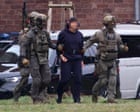
The headlines want you to believe a single rogue operative orchestrated the sabotage of the Nord Stream pipelines. It is a neat, comforting narrative. It fits neatly into a courtroom drama. One man on trial, a stack of charges, and a tidy closure for a geopolitical disaster that reshaped European energy overnight.
Except it is entirely divorced from reality.
Subsea infrastructure sitting hundreds of feet underwater does not get destroyed by an individual acting on a whim with scuba gear and a backpack full of hardware store explosives. Anyone who understands maritime engineering knows the scale of the operation required. We are talking about precision charges placed on steel-reinforced concrete-jacketed pipelines buried under high-pressure environments. This demands specialized saturation diving teams, dynamic positioning vessels, and state-level military clearance.
Focusing the entire narrative on a solitary soldier turns a complex state-sponsored sabotage campaign into a localized criminal trial. It is a convenient distraction. Governments prefer judicial theater because trials have boundaries. Trials have defendants who can be convicted, sentenced, and filed away. Geopolitical accountability, on the other hand, has no clean courtroom.
Consider the logistics. To execute an attack of this magnitude without detection requires ignoring radar profiles, bypassing naval surveillance, and navigating some of the most heavily monitored waters on the planet. Commercial maritime traffic in the Baltic Sea is watched by every intelligence agency from Helsinki to Berlin. When an operation succeeds under those conditions, it points directly to institutional silence, tacit approval, or active state coordination.
The lazy consensus is that war produces loose cannons who freelance outside the chain of command. History shows the opposite. Modern military bureaucracies rarely allow junior personnel access to strategic sabotage assets without heavy sign-off. If a soldier is standing trial, they are likely serving as a legal shock absorber for a system that cannot handle the diplomatic fallout of true transparency.
Blaming the operative rather than the architecture of modern proxy conflict is like blaming the bullet instead of the artillery battery. Europe's energy grid was exposed not by a lack of security guards in rubber boats, but by decades of complacent reliance on vulnerable infrastructure and a naive belief that economic interdependence guaranteed peace.
Until we stop treating geopolitical seismic shifts as local criminal cases, we will keep missing the actual vulnerabilities that let these disasters happen in the first place. The trial ends when the gavel drops. The structural rot remains untouched.


