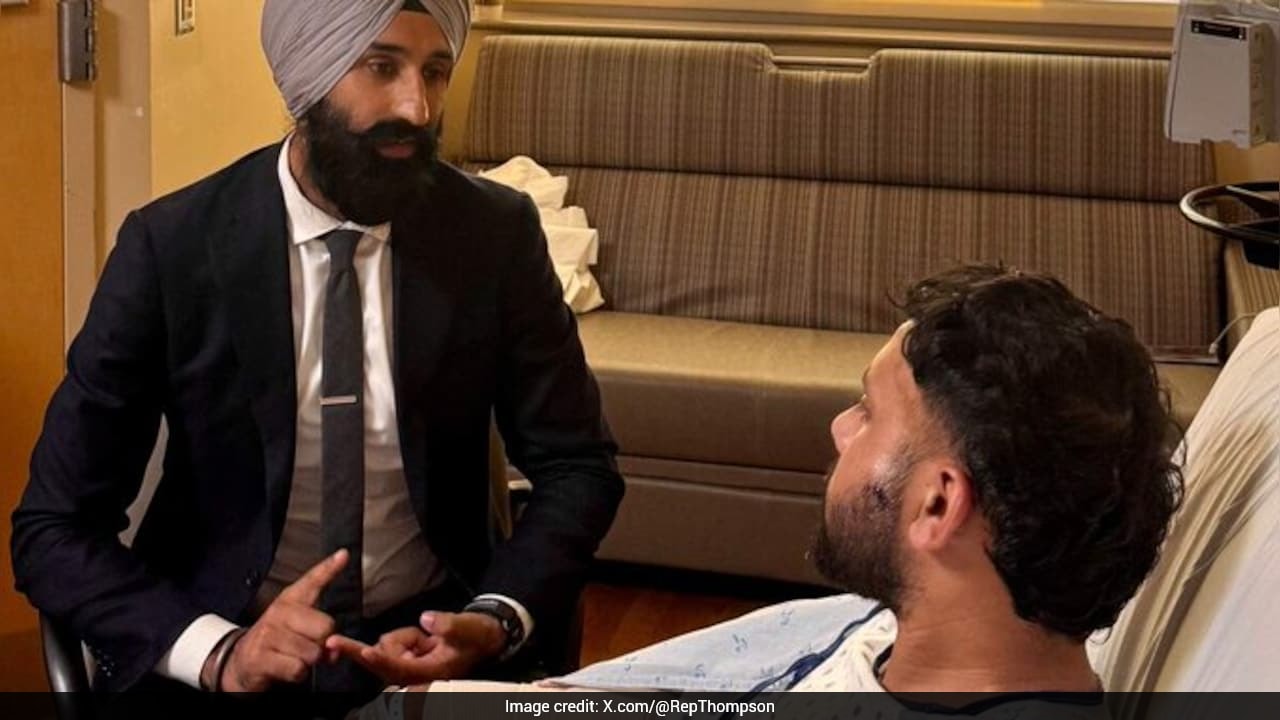
The media has a dirty little secret. It prefers a neat, tidy narrative over a complicated, systemic truth. When a Sikh rideshare driver in the United States is brutally stabbed seventeen times, and the internet immediately connects the bloodshed to a high-profile political social media post involving a name mix-up, the headline writers pop champagne. They have their villain, they have their inciting incident, and they have their clicks.
It is a clean line from a tweet to a knife. And it is entirely, dangerously misleading.
Accepting the mainstream framing that a single partisan post caused this horrific act of violence feels satisfying to those eager to score political points. But it fundamentally misunderstands the rot eating away at American public safety. It reduces a multi-layered crisis of economic precarity, algorithmic rage-farming, structural isolation, and untreated mental illness down to a Twitter beef.
If we keep pretending that deleting a bad post or issuing a public relations apology solves the vulnerability of immigrant workers on American streets, we are actively guaranteeing the next attack.
The Comfort of the Monocausal Lie
Human beings crave causality. When something horrific happens, our brains demand a direct line between cause and effect. A politician's campaign account posts something clumsy or offensive, a minority worker is attacked days or hours later, and commentators draw a glowing red thread between the two events.
This monocausal explanation is popular because it requires zero cognitive heavy lifting. It allows media outlets to feed pre-existing tribal biases without doing actual investigative reporting into the conditions that actually breed street-level violence. If the fault lies entirely with one specific political team's social media staff, then the solution is simply for that team to log off or hire better copyeditors.
That is a comforting lie. The real world is far uglier.
Street violence against immigrant drivers does not spawn in a vacuum because of a single internet post. It is the cumulative product of an environment where dark forces intersect: extreme economic isolation, the absolute failure of gig economy safety standards, a culture saturated in random hostility, and an attention economy that rewards public cruelty.
When we blame the entire tragedy on a single online gaffe, we let everyone else off the hook. We absolve the tech platforms profiting from rage algorithms. We absolve the gig economy giants who treat drivers as disposable line items rather than human beings needing protection. Most importantly, we ignore the daily, grinding reality of what it means to drive an anonymous car alone through hostile American cities at three in the morning.
The Gig Economy Death Trap and Corporate Cowardice
Let us talk about the economic reality that commentators gloss over while they argue about tweets.
Driving for a ride-hailing or delivery service in modern America is a high-risk occupation. The statistics on workplace violence for gig workers are appalling, yet corporations like Uber, Lyft, and food delivery networks treat basic safety infrastructure as an unnecessary expense that cuts into profit margins. Drivers are isolated inside metal boxes, navigating unfamiliar neighborhoods, interacting with strangers whose identities are often unverified, and carrying no physical protection or real-time security backup.
When an attack occurs, the corporate response is invariably a sterile automated message expressing concern, followed by a quiet legal team working overtime to ensure the company bears no liability. They classify workers as independent contractors precisely so they can wash their hands of duty-of-care obligations.
Yet, when a violent incident happens to coincide with a political news cycle, corporate executives and political pundits alike suddenly discover a conscience—not to fix the underlying structural danger, but to weaponize the tragedy for branding purposes. One side uses the victim to prove that their opponents are bigoted extremists. The other side minimizes the hate crime or changes the subject entirely.
Meanwhile, the driver is in intensive care, facing astronomical medical bills and a life forever altered, while the app pings with another ride request fifty feet from the crime scene. The corporate machine never stops grinding, regardless of whose blood is on the upholstery.
Algorithmic Radicalization and the Manufacturing of Targets
We must confront how modern information architecture works. The digital sphere is not a neutral town square. It is a slaughterhouse of attention where outrage is currency.
When political campaigns push content that plays on ethnic or cultural identities—whether through clumsy outreach attempts, deliberate dog-whistling, or tone-deaf stereotyping—they are not operating in an empty room. They are plugging directly into a hyper-polarized populace already primed for paranoia.
However, blaming a specific political post for radicalizing an attacker assumes that violent criminals are rational political actors reading campaign feeds with analytical detachment. They are not. The kind of person who stabs a driver seventeen times is typically operating at the intersection of severe mental instability, substance abuse, acute social alienation, and an online diet of pure venom.
Social media algorithms serve a steady diet of grievances to individuals who are already unmoored from reality. The specific text of a "Mr Singh" post or any other campaign stumble matters less than the generalized climate of hostility that algorithms cultivate twenty-four hours a day. Every tech platform on earth makes billions of dollars by making people hate their neighbors. When a tragic assault occurs, pointing fingers at a single political staffer is like blaming a single match for a forest fire that has been fed by decades of dry timber and corporate arson.
The Invisible Burden of Identity Misidentification
There is another layer of cruelty in these hate-motivated or xenophobic assaults that mainstream commentary routinely fumbles: the indiscriminate nature of prejudice.
Sikh Americans have lived in the crosshairs of American xenophobia for decades, starting long before the current social media era. In the paranoid aftermath of September 11, visibly identifiable Sikhs—distinguished by turbans and beards—were routinely targeted by attackers who lacked the intellectual capacity or historical literacy to distinguish between entirely different religious and cultural traditions.
Attackers do not check passports or read religious treatises before they strike. They see someone who looks different, someone who speaks with an accent, someone they perceive as an outsider, and they project their personal demons onto that body.
When a major political entity posts clumsy content that centers on specific cultural names or tropes, it acts like gasoline thrown onto an existing grease fire. It validates the worst instincts of people who are already looking for an excuse to hate. But treating this as a brand-new phenomenon born entirely from today's partisan landscape erases the long, painful history of immigrant vulnerability in America. It pretends that anti-immigrant violence was invented last week on social media, ignoring the systemic xenophobia woven into the nation's fabric.
Moving Beyond Performative Outrage
So what happens next in the typical news cycle? The story trends for forty-eight hours. Cable news anchors furrow their brows with practiced gravity. Politicians issue carefully crafted statements expressing profound sorrow and condemnation. Fundraisers are set up. Then, the news cycle turns. A new scandal erupts, a new viral video captures the public's fleeting attention, and the injured driver is left alone in the dark to deal with the physical and psychological wreckage.
This cycle of performative outrage followed by collective amnesia is a feature, not a bug, of our media ecosystem. It allows everyone to feel like they participated in a moral crusade without actually having to change anything structural.
If we genuinely want to stop these atrocities, we have to stop treating them as isolated political footballs and start treating them as systemic emergencies.
What would actual accountability look like? It would mean forcing gig economy monopolies to spend a fraction of their billions on serious driver safety protections, verified rider identities, panic buttons that instantly summon armed law enforcement rather than an offshore customer service chat, and guaranteed medical coverage for workplace trauma. It would mean rebuilding mental health infrastructure that currently leaves violent, unstable individuals to roam public streets unchecked. It would mean holding tech platforms accountable for recommendation engines that radicalize the vulnerable.
Instead, we get tweets. We get fierce debates over whether a political campaign account should apologize or fire a communications director. We get partisan warriors treating a human tragedy as ammunition for the next election.
The man who was stabbed seventeen times does not care about your Twitter ratios or your press releases. He cares about whether he can feed his family and whether he will ever feel safe walking down the street again.
Until we stop playing partisan games with real human lives and start dismantling the actual engines of violence—economic exploitation, algorithmic radicalization, and institutional neglect—these attacks will continue. The blood will keep flowing, the cameras will briefly turn on, and the pundits will keep cashing their checks for pretending to care about a problem they have no intention of fixing.
Stop looking at the screen. Look at the street. That is where the real horror lives, and that is where the work has to begin.