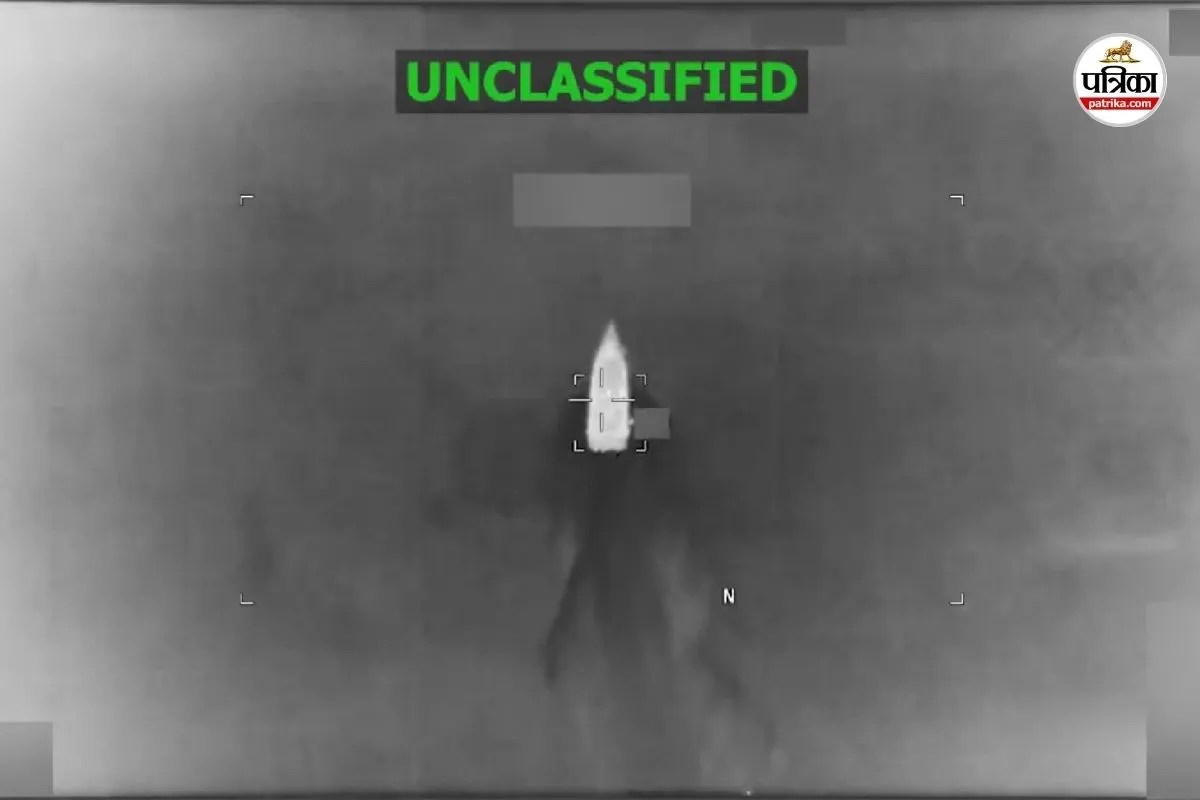
Four dead on a boat in the Caribbean. Press release from U.S. Southern Command. Another headline claiming a victory in the war on drugs.
Look closer at what that story actually says. A military command states that a vessel on a known route was hit and four people were killed. No cargo manifest on a dock. No courtroom. No supply chain mapped to a kingpin's bank account. Just smoke over water and a headcount.
Standard coverage treats every SOUTHCOM announcement like a scoreboard update. More boats hit equals more drugs stopped. Four dead equals four criminals removed. That is lazy consensus disguised as reporting.
I have spent years watching security budgets, maritime interdiction programs, and compliance regimes burn nine-figure sums on visible force while missing how illicit markets actually clear inventory. You do not fix a high-margin distribution problem by turning cheap hulls into scrap at sea. You just raise the insurance premium baked into the wholesale price.
The Scoreboard Trap in Maritime Interdiction
When a headline announces that U.S. forces struck a suspected smuggling boat and killed four people, the reader's brain defaults to a simple equation: minus one boat, minus four traffickers, minus whatever cargo was aboard.
That equation fails on three levels.
First, attribution is thin by design. Public releases around these kinetic strikes rarely produce seized physical evidence or independent forensic verification. Legal scholars and human rights monitors have flagged the obvious risk of treating suspected smugglers as military targets without due process. Even if intelligence analysts have high confidence, confidence is not a chain of custody.
Second, maritime logistics is built for redundancy. Caribbean and Eastern Pacific routes move volume across thousands of square miles of open water, fishing lanes, and island chains. Losing a single fast boat with a small crew hurts the local operator who fronted the fuel and hull. It barely registers on the cartel's quarterly ledger.
Third, kinetic destruction destroys intelligence. When the Coast Guard boards a vessel, seizes bales, arrests crew, and flips a mechanic or navigator, you learn which port loaded the cargo, which broker wired the advance, and which corrupt official turned a blind eye. When a strike vaporizes the boat, the paper trail and the human trail vanish in the same fireball.
What Smuggling Economics Actually Reward
Think about how a mid-level trafficking syndicate prices risk. Imagine a scenario where a network budgets for ten boat runs across a quarter. Suppose each run costs $180,000 in vessel lease, high-horsepower outboards, fuel, and crew pay, with an expected wholesale payout of $2.4 million if the load lands. Even if two or three vessels are lost to interdiction or strikes, the remaining runs still print cash. The network does not pack up and go home. It splits the load across smaller hulls, shifts departure windows, or routes through secondary transshipment points.
Now compare that to how real supply-chain disruption works in financial crime and trade enforcement.
During my time advising risk teams on trade-based money laundering and port logistics, I watched institutions pour millions into surface-level screening—flagging individual shipments or celebrating isolated seizures—while ignoring the choke points that actually move money. A shipment is replaceable. A clearing account, a customs broker license, a cold-storage warehouse lease, or a ship-chandler front company takes months or years to build.
When enforcement targets those bottlenecks, the cost to the network compounds. When enforcement blows up a boat, the network buys another hull next week.
Why "Narco-Terrorism" Framing Skips the Hard Work
Labels do heavy lifting in security briefings. Calling a smuggling crew "narco-terrorists" shifts the mental frame from law enforcement and customs prosecution to military strike doctrine.
Once the frame shifts, uncomfortable questions get waved away:
- Who verified the identity of the four people on board?
- Were any of them coerced deckhands or local fishermen recruited for a single night run?
- What happens when regional governments push back on sovereignty or civilian risk?
Notice how clean a press release looks compared to a multi-jurisdictional indictment. A press release takes hours to clear and delivers instant political optics. A financial and port-level takedown takes years of mutual legal assistance, port-state inspections, and banking subpoenas. Officials prefer the fast headline because fast headlines look decisive.
A Better Way to Measure Maritime Security
If you want to judge whether Caribbean counter-narcotics policy is working, stop counting dead smugglers or destroyed hulls. Look at four harder metrics instead:
- Conviction-to-interdiction ratio. How many cases actually reach a courtroom with seized contraband and actionable testimony?
- Asset forfeiture and financial tracebacks. Are investigators freezing the accounts of the financiers who underwrite the boats, or just the crew sitting on the gunwales?
- Port-level corruption cases. Have port authorities, harbor pilots, and customs officers in transit hubs been prosecuted and removed?
- Wholesale price and purity shifts in destination markets. A real supply shock shows up in street-level scarcity, purity drops, and sustained price spikes—not in a single weekend's casualty count.
Let me be candid about the downside of shifting away from kinetic strikes toward investigative and financial choking. It is slow. It produces fewer dramatic videos. Politicians hate telling voters that a multi-year financial investigation is underway while smugglers keep moving boats. And financial pressure without physical interdiction still lets contraband slip through when ports are weak.
Still, pretending that four deaths on a Caribbean boat equal meaningful progress is a delusion. You cannot bomb a commodity market into compliance.
Stop grading maritime security by how loudly the boats blow up, and start asking who still gets paid when the smoke clears.


