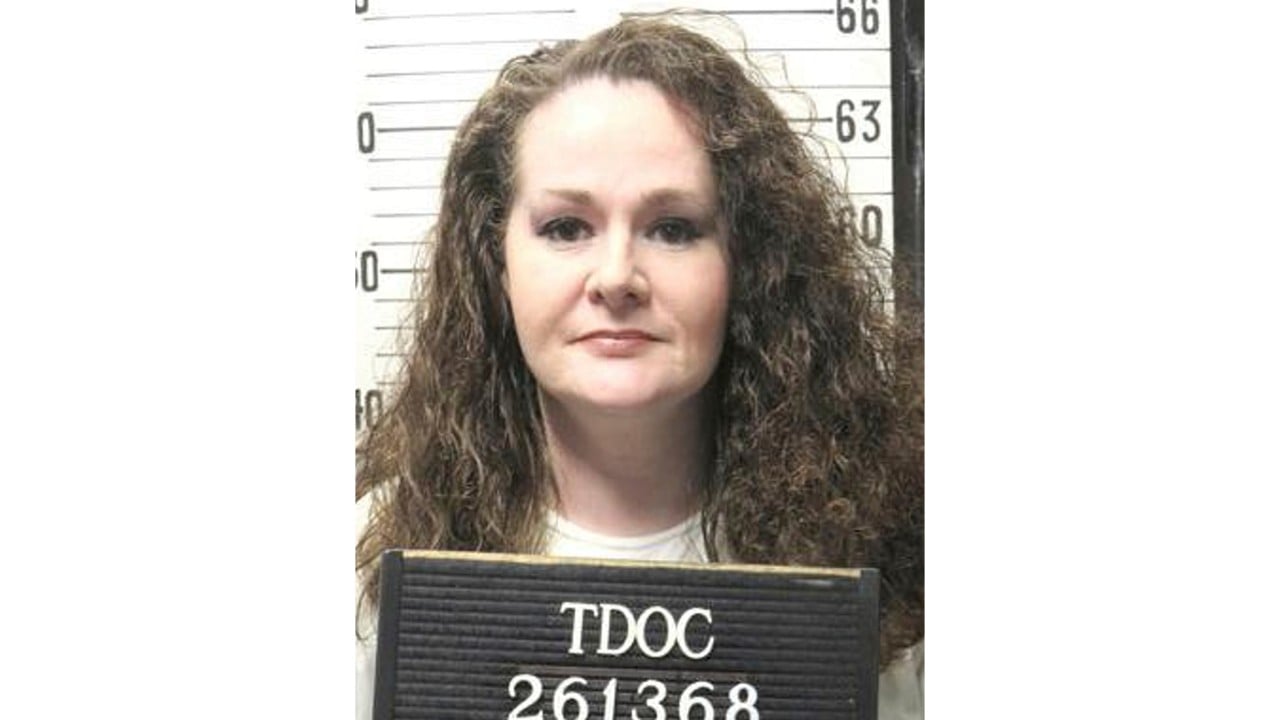
The machinery of capital punishment broke down in Tennessee on September 30, 2026, when the state attempted to execute Christa Pike. As the only woman on Tennessee's death row, Pike became the center of a national firestorm after two doses of pentobarbital failed to end her life, leaving her hospitalized in critical condition. Instead of a swift, routine procedure, witnesses watched a prolonged ordeal unfold inside the Riverbend Maximum Security Institution. Pike was conscious, moving, and in apparent agony while state executioners struggled.
This catastrophic failure forced Governor Bill Lee to halt all remaining executions for the rest of the year and order an independent review. But beyond the immediate political pause lies a deeper, darker question. What happens when the state fails to kill someone it legally set out to execute, only to spend days administering emergency medical care just to keep them alive for a potential second attempt? You might also find this related article interesting: Inside the Cockpit Security Crisis That Nearly Brought Down a Jet Bound for Tel Aviv.
Inside the Execution Chamber on September 30
The timeline of what went wrong on that Tuesday evening exposes systemic flaws in how lethal injections are carried out. Witnesses entered the viewing room at 6:41 pm, but the blinds didn't lift until 7:26 pm. Behind those curtains, execution teams had already spent more than an hour frantically trying to establish an intravenous line, using roughly ten needles across multiple sites on her arms.
Pike made her final statement at 7:30 pm, telling witnesses she was at peace and ready to go. Minutes later, the first dose of pentobarbital was pushed. Things quickly derailed from the state's script. Pike complained that her vein felt like it was about to burst, laughed, blinked, looked toward her arm, and kicked off her sheets. Media witnesses and legal counsel observed her moving, breathing, and struggling against the restraints as the protocol demanded a second dose. As reported in recent coverage by The Guardian, the implications are worth noting.
When the execution failed to take effect, legal chaos ensued. Attorneys scrambled to reach judges and emergency contacts while prison officials finally called an ambulance. Pike was rushed off-site to a hospital, intubated, placed on a ventilator, and treated for severe burns, blistering, and potential tissue damage caused by botched chemical infiltration.
The Legal and Ethical Paradox of Saving a Life to Take It
The situation created an extraordinary ethical contradiction. The state of Tennessee spent thousands of taxpayer dollars on emergency medical care, critical ICU support, and round-the-clock nursing to pull a condemned prisoner back from the brink of death. Why? Because the legal mandate of her death sentence remains active.
Pike regained consciousness after a week on a ventilator and was eventually discharged back to the Deborah K. Johnson Rehabilitation Center in mid-October. Her lawyers immediately pushed to preserve evidence, requesting access to examine the syringes, IV equipment, and leftover pentobarbital. Meanwhile, the state attorney general fought back, warning that disclosing details about their confidential drug suppliers could permanently cut off Tennessee's access to execution chemicals.
Legal scholars point out that surviving an execution doesn't automatically grant freedom. Under historical precedent like the 1947 Supreme Court ruling in Louisiana ex rel. Francis v. Resweber—where a teenager survived a botched electrocution—subsequent execution attempts are generally permitted if the first failure was an accident. However, defense teams argue that gross negligence, chemical burning, and potential brain damage from oxygen deprivation during a botched lethal injection cross the line into unconstitutional cruel and unusual punishment.
A History Marked by Extreme Isolation and Trauma
You cannot separate Christa Pike's current legal battle from her background. Convicted in 1996 for the 1995 murder of fellow Job Corps student Colleen Slemmer when Pike was just eighteen years old, her case has always carried heavy emotional and psychological baggage. Court records and clinical evaluations document a childhood defined by severe abuse, neglect, and trauma starting at age two—experiences that psychologists noted were almost incomprehensible in their severity.
For over thirty years, Pike sat in de facto solitary confinement on Tennessee's death row, surrounded by constant fluorescent lighting and the psychological distress of maximum-security isolation. Slemmer's family, understandably, has spent decades fighting for finality. When the execution failed, victims' advocates voiced profound frustration that the state couldn't even manage to carry out its own sentence competently, dragging grieving families back through a fresh wave of trauma.
What Happens Next in Tennessee
The botched execution of Christa Pike isn't an isolated incident; it marks Tennessee's second major execution failure within a six-month window. The compounding errors have triggered widespread scrutiny of the state's Department of Correction, leading incoming leadership and political figures to re-evaluate how capital punishment is handled moving forward.
Whether Tennessee will attempt a second execution on Pike remains an open legal battleground. Her defense teams are preparing a wall of constitutional motions focused on medical ethics, state negligence, and the physical trauma inflicted during the September procedure. As the courts weigh these arguments, the broader debate over capital punishment grows sharper. When a state botched an execution so badly that doctors must perform lifesaving intervention just to preserve a death warrant, the entire system stands exposed.