The air in an old, neglected cabin has a specific weight. It smells of dry rot, ancient pine needles, and the sharp, metallic tang of dust that hasn't been disturbed since the previous summer. You step inside, squinting against the dim light, and see it: a scatter of dark, grain-like droppings on the laminate counter. You reach for a broom. It is a natural, domestic impulse. You want to sweep away the mess and reclaim the space.
Stop.
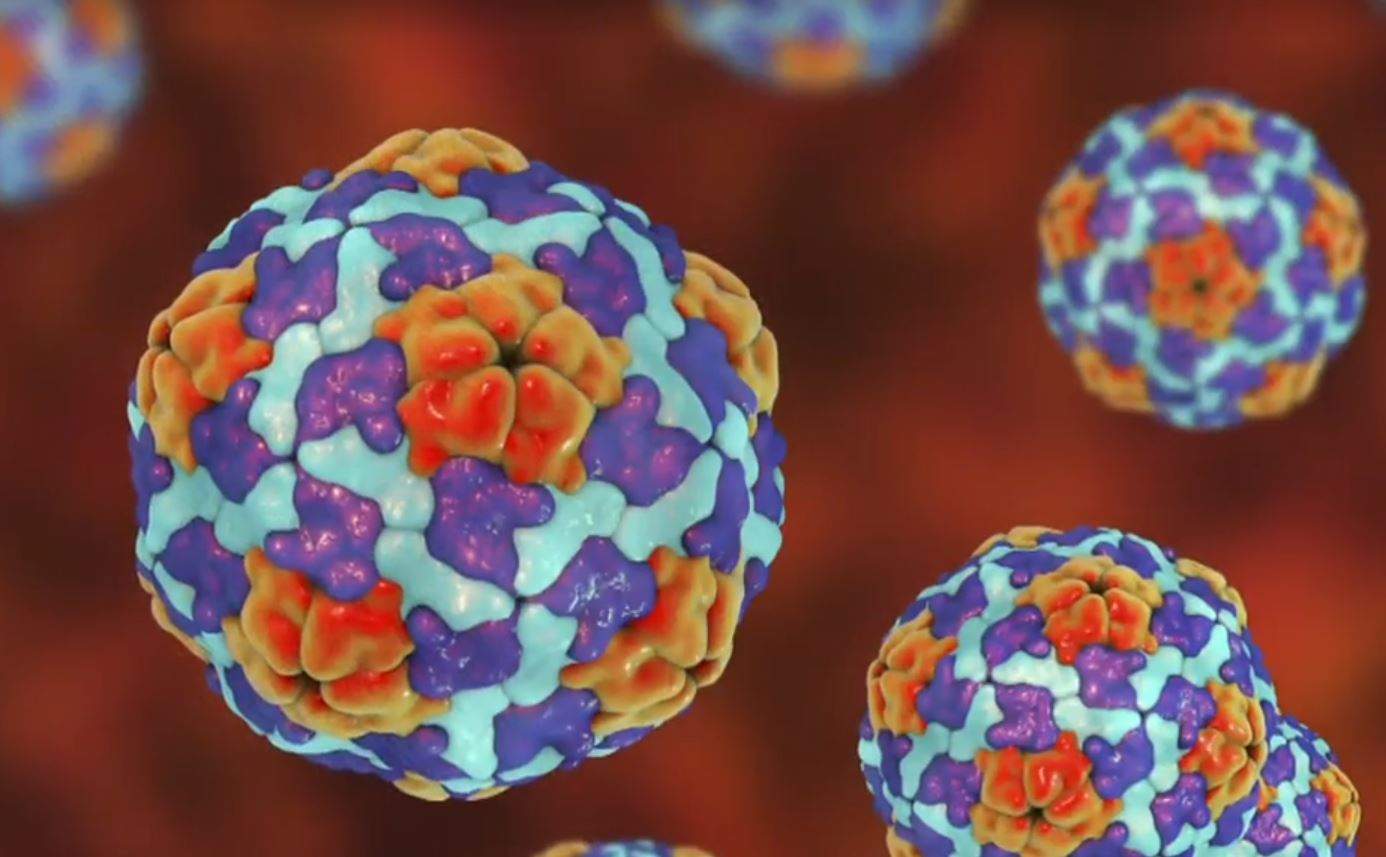
That simple flick of a bristle can change everything. When you stir that dust, you aren't just cleaning; you are potentially aerosolizing a pathogen that most people only know from terrifying, whispered headlines. This is the world of Hantavirus. It is a virus that lives in the shadows of our crawlspaces and the rafters of our sheds, waiting for a moment of human intrusion to hitch a ride into a pair of lungs.
Recently, reports have trickled out from health agencies and news wires, including the CDC, regarding the current state of risk in the United States. The official word is clear: the risk to the general public remains low. But "low risk" is a mathematical abstraction. It feels very different when you are the one standing in a dusty garage in the American West, wondering if the mouse nest behind the lawnmower is a biological landmine.
The Biology of a Shadow
To understand why this virus commands such outsized respect from doctors despite its rarity, you have to look at the way it moves. Hantavirus Pulmonary Syndrome (HPS) isn't like the flu. It doesn't drift through crowded subways or leap from person to person during a shared meal. In North America, it is a lonely disease. It belongs to the rodents—specifically the deer mouse, with its large eyes and white underbelly, looking far more like a children’s book character than a vector for respiratory failure.
The virus is shed in the urine, droppings, and saliva of these mice. It stays dormant in the environment until the moment the nest is disturbed. Imagine a microscopic cloud of particles. You inhale. The virus travels deep, bypasses the upper respiratory defenses, and finds its way to the capillaries in the lungs.
Once there, it doesn't just attack cells. It triggers a civil war. Your own immune system, sensing a profound threat, floods the lungs with fluid in a desperate attempt to wash the invader away. The tragedy of HPS is that the body’s defense mechanism becomes the very thing that makes breathing impossible. This is why the mortality rate sits at roughly 38%. It is a staggering number. In the world of infectious disease, that is a giant.
Why the Public Can Breathe Easy
If the stakes are so high, why are the experts telling us not to panic? The answer lies in the math of exposure. For a typical person living in a suburban high-rise or a well-maintained city apartment, the odds of encountering a concentrated pocket of hantavirus are nearly zero. The virus is fragile. It hates sunlight. It dies quickly when exposed to UV rays and common household disinfectants.
The CDC tracks these cases with the precision of a forensic accountant. They see the clusters. They know that while the virus is devastating, it is also incredibly inefficient at spreading among humans. You cannot catch it from your neighbor. You cannot catch it from a cough. It requires a specific set of circumstances: a concentrated rodent population, a confined space, and a human being who unknowingly creates a dust cloud.
Consider a hypothetical scenario. A hiker in the Sierra Nevadas finds a beautiful, secluded lean-to. It looks like the perfect place to roll out a sleeping bag. But if that lean-to has been the winter home for a colony of deer mice, the floor is a carpet of risk. This is where the "low risk" label meets reality. For the hiker, the risk is high. For the millions of people staying in hotels or their own clean homes, the risk doesn't exist.
The Geography of Fear
There is a reason the American Southwest often dominates the conversation around Hantavirus. The ecology of the Four Corners region—where Utah, Colorado, Arizona, and New Mexico meet—creates a perfect storm. When a wet winter leads to a massive bloom of piñon nuts and vegetation, the mouse population explodes. More mice mean more virus. More virus means a higher statistical chance that a rancher cleaning a barn or a homeowner clearing out a cellar will cross paths with the pathogen.
But the data shows that this isn't just a Southwestern problem. Cases have appeared in almost every state in the West and several in the East. The geography isn't a wall; it’s a map of habitat. If there are deer mice, there is a possibility.
Yet, we must balance this with perspective. In a typical year, the United States sees only a few dozen cases. Compare that to the thousands of deaths from the seasonal flu or the tens of thousands of fatalities on our highways. We live in a world of tiered threats. Hantavirus is a "high-consequence, low-probability" event. It is the lightning strike of the public health world.
The Ritual of the Bleach
So, how do we live with this knowledge without becoming shut-ins? The solution is remarkably un-glamorous. It’s a spray bottle filled with a ten-percent bleach solution.
If you find yourself facing a mess in a shed, a cabin, or a basement, the golden rule is: Don't stir the air. You don't vacuum. You don't sweep. You don't use a leaf blower. Instead, you soak. You drench the area in disinfectant, effectively pinning the virus to the ground and killing it in place. You wear gloves. You wear a mask. You treat the space with a quiet, methodical reverence.
This is where the human element triumphs over the biological one. We are not helpless victims of an invisible predator. We are simply participants in a shared ecosystem. The deer mouse isn't an enemy; it's a neighbor that carries a heavy burden. By understanding their habits—how they seek warmth in the winter, how they leave behind signs of their presence—we can navigate our world without fear.
The Weight of the "Low Risk" Label
We often crave absolute certainty from our scientists. We want them to say "You are safe" or "You are in danger." But the truth is always more nuanced. When the CDC says the risk remains low, they are looking at the big picture. They are looking at 330 million people and seeing only a handful of tragedies.
But for the families who have lost someone to this virus, the "low risk" statistic is a cold comfort. Their stories are the ones that remind us why we bother with bleach and gloves. They remind us that nature, even in its smallest forms, possesses a power that demands our attention.
The real danger isn't the virus itself. The danger is complacency. It’s the "it won’t happen to me" mindset that leads someone to sweep out a dusty crawlspace without a second thought. Education is the ultimate vaccine for Hantavirus. When you know that the dust has a memory, you treat it differently.
The Silence of the Cabin
Go back to that cabin. Imagine you are standing there again, broom in hand. But this time, you remember the news. You remember the biology. You put the broom down. You walk back to the car, grab a bottle of bleach and a pair of rubber gloves, and you begin to clean, not with frustration, but with a careful, protective focus.
The sun peaks through the window, hitting the floor. In that light, you see the dust motes dancing, but they remain still, heavy with the liquid you’ve applied. You are safe. The risk remains low because you chose to respect the invisible.
The world is full of these small, hidden thresholds. Most of the time, we cross them without even knowing they were there. We walk through forests, we sleep in tents, and we clean our garages, unaware of the microscopic dramas playing out in the corners. The CDC’s report isn't a reason to look over your shoulder; it's a reminder to keep your eyes open.
Nature doesn't have a moral compass. It doesn't target us, and it doesn't spare us. It simply exists in a complex, overlapping web of survival. We occupy the same spaces as the creatures that carry these ancient codes. Our job isn't to declare war on the deer mouse or to live in a state of perpetual anxiety. Our job is to be the intelligent, observant species we claim to be.
Listen to the quiet of the shed. Respect the dust. Wet the surface.
In the end, the line between a low-risk statistic and a personal catastrophe is often nothing more than a few ounces of bleach and the willingness to slow down.