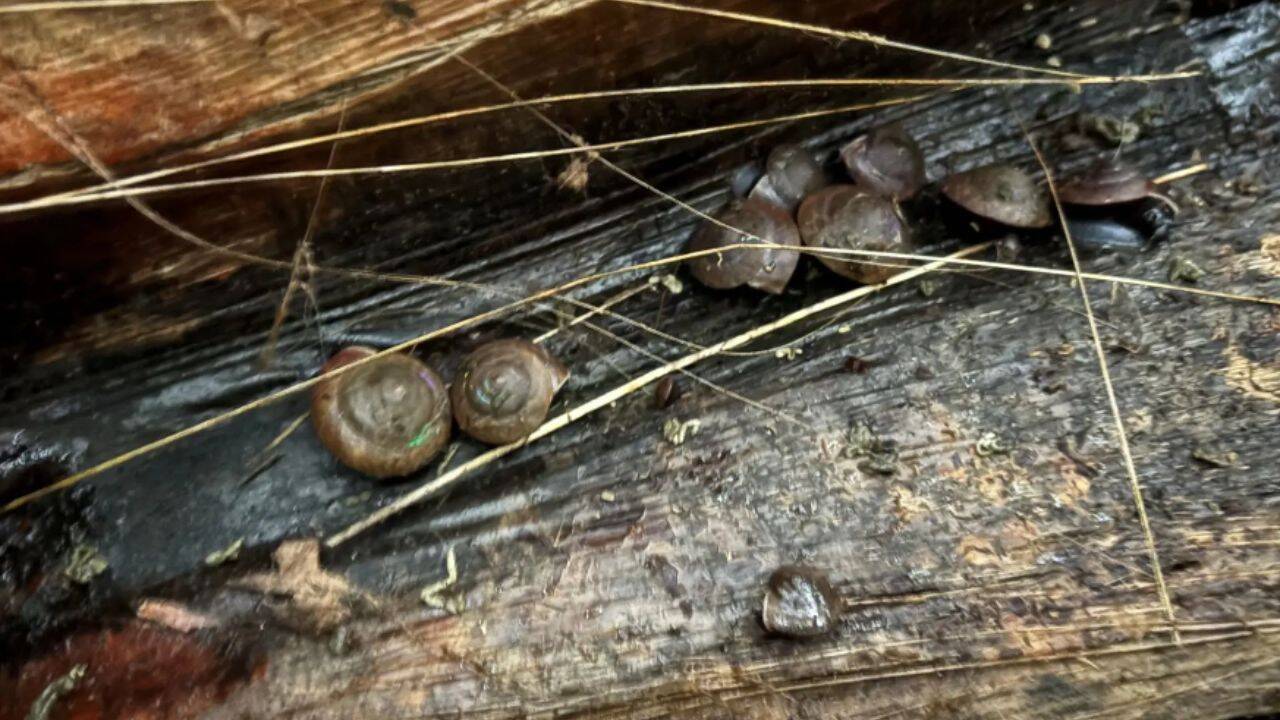
Everyone loves a good resurrection story. Drop a headline about a species marching back from the grave after three decades of assumed non-existence, and the collective media apparatus loses its mind. A thousand tiny Norfolk Island land snails released back into the wild. Cue the confetti. Cue the feel-good documentaries. Cue the applause from people who have never set foot on an island conservation site in their lives.
It makes for a fantastic headline. It is also a profound waste of capital and intellectual honesty.
I have spent years watching conservation dollars get funneled into high-profile pet projects while actual functional ecosystems collapse under the weight of climate shift and invasive pressures. We throw a massive PR party for a thousand gastropods because it offers the illusion of control. We want to believe that for every mistake humans made, we possess an eraser.
Let us dismantle the lazy consensus.
The Mirage of the Single-Species Safety Net
The standard narrative goes like this: a species vanishes due to habitat loss or predators, scientists breed them in captivity against impossible odds, and then the triumphant reintroduction fixes the broken ecosystem.
It is a fairy tale.
Nature does not operate like a save-state in a video game where you can just reload the previous version. Norfolk Island is not the island it was thirty years ago. The introduction of predatory flatworms, changing moisture profiles, and altered canopy structures have permanently rewritten the local environmental script. Dropping a thousand captive-bred snails into that landscape without fixing the foundational architecture of the habitat is not conservation. It is expensive feeding.
I have watched well-funded organizations burn millions of dollars on high-visibility releases while ignoring the boring, unsexy work of soil remediation and invasive predator eradication at scale. Why? Because you cannot put a cute, shell-shined mollusk on a fundraising poster that reads: We spent three years poisoning rats in a swamp.
The public wants miracles. The non-profit industrial complex delivers marketing campaigns disguised as biology.
The Math Problem Nobody Wants to Discuss
Let us look at the raw economics of specimen reintroduction. Captive breeding programs require climate-controlled facilities, specialized diets, genetic monitoring to avoid inbreeding depression, and logistical nightmares of transport.
When you divide the total cost of keeping a rare invertebrate alive in a lab and returning it to a hostile wild, the cost per surviving organism is astronomical.
Imagine a scenario where a mid-sized conservation trust has fifty thousand dollars to spend on a localized ecosystem. They can spend forty-five thousand of it breeding and releasing a thousand rare snails, or they can spend that money fencing off a massive tract of native forest from feral pigs and goats.
The snail route guarantees a photo op. The fencing route guarantees actual systemic survival for hundreds of species that have not yet hit the red list. Yet, organizations choose the snail every single time because media coverage pays the bills. We are funding PR stunts at the direct expense of systemic preservation.
What Real Recovery Looks Like
If you want to save endangered fauna, you have to stop treating conservation like a museum curation project. A species is not a painting you hang back on the wall when the gallery gets cleaned up. A species is an active participant in a biological web. If the web is dead, the participant dies with it, no matter how many times you drop them out of a cardboard box in the ferns.
Real habitat restoration is brutal, tedious, and deeply unphotogenic. It involves removing non-native vegetation root by root. It involves managing water tables. It involves hard choices about which species can realistically adapt to a warming planet and which ones are fighting a ghost war against a past that no longer exists.
When we pretend that a single successful release event means a species is saved, we commit a dangerous falsehood. We give politicians and developers an out. They look at the headlines, see that the Norfolk Island snail is back, and assume the environment is self-healing. They check a box and move on to the next parcel of land to pave.
The Hard Truth About Extinction
We need to redefine what extinction means in the modern era. We treat it as an absolute moral failing, a permanent black mark on human history. But nature has always been a slaughterhouse of adaptation and loss.
Trying to freeze-frame biological evolution at 1950 levels is an exercise in human arrogance. The climate is shifting. Ecosystems are transforming into novel configurations we have never seen before. Trying to force legacy species back into modern, broken niches is like trying to force a floppy disk into a USB-C port.
Stop funding the vanity projects. Stop celebrating the token returns of isolated populations while the broader biosphere burns. If we want to keep things alive, we have to protect the ground they stand on, not just celebrate the ghosts we managed to clone in a lab.
The snails are back in the dirt. Good for them. Now let us see if they survive the week without a PR team watching.


