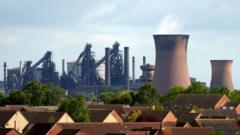
The financial press is shedding collective tears over Jingye Group’s demands for compensation. The Chinese industrial giant, which bought British Steel out of liquidation in 2020, is reportedly seeking a massive taxpayer-funded payout following the UK government's move to nationalise the Scunthorpe steelworks. The mainstream narrative is painfully predictable: a tragic tale of geopolitical tension ruining a private investment, leaving a foreign savior holding an empty bag.
It is a comforting story for corporate lobbyists. It is also entirely wrong.
Let us stop treating Jingye like an innocent bystander blindsided by British state intervention. When you buy a structurally unprofitable, carbon-heavy asset in a country with aggressive net-zero mandates, you are not buying a business. You are buying a political liability. Jingye knew this. The UK government knew this. Now, the Chinese firm wants the British taxpayer to underwrite the downside of a high-risk gamble that failed.
The consensus view says nationalisation without massive compensation destroys international trust. The reality? Jingye’s tenure at British Steel was a masterclass in delaying the inevitable while begging for subsidies. Giving in to their compensation demands would set a catastrophic precedent for industrial policy.
The Scunthorpe Sunk Cost Fallacy
To understand why compensation is an absurdity, we have to look at what Jingye actually bought. They did not inherit a thriving crown jewel; they rescued a commercial zombie. Blast furnaces are capital-intensive, high-emission relics of the 20th century. Running them in Western Europe, where carbon taxes and energy costs are punishingly high, is a mathematical nightmare.
For years, the corporate strategy for British Steel amounted to a simple formula: threaten mass layoffs, demand hundreds of millions in state aid to transition to electric arc furnaces, and repeat when the money runs out.
I have watched private equity firms and industrial conglomerates run this exact playbook across heavy manufacturing sectors for decades. They privatise the profits during brief cyclical upturns and socialise the losses when reality bites. Jingye promised a £1.2 billion investment program when they took over. Instead of self-funding that transformation, they spent years locked in gridlock with Whitehall, arguing over who would pick up the tab for greening the infrastructure.
If a government takes over an asset because the current owner refuses to operate it without permanent state lifelines, that is not an arbitrary seizure. It is an eviction notice for non-performance.
What the Pundits Get Wrong About Sovereign Risk
Critics argue that nationalising British Steel without a premium payout damages the UK’s reputation for foreign direct investment. They claim it signals that Britain is no longer a safe haven for global capital.
This argument misunderstands the nature of sovereign risk.
When an international firm invests in a critical state asset—whether it is steel, water, or the electrical grid—they are entering a deeply political contract. You cannot decouple the commercial asset from its strategic utility. Jingye did not just buy a factory; they bought a monopoly on British structural steel production.
- The Baseline Misconception: Foreign investors are entitled to guaranteed returns regardless of structural market shifts.
- The Brutal Reality: If your business model relies entirely on the host government subsidizing your energy bills and exempting you from environmental laws, your asset value is effectively zero without state charity.
When the state steps in to nationalise an asset under these conditions, the valuation should reflect its market reality, not its sentimental history. British Steel was bleeding millions of pounds a week. If the UK government had allowed it to collapse into formal insolvency again, Jingye would have walked away with pennies from a fire sale of scrap metal. Nationalisation preserved the operation; it did not rob Jingye of a goldmine.
The Myth of the Green Transition Rescue
The PAA (People Also Ask) crowd always focuses on the wrong question: Why couldn't the UK government just give Jingye the green subsidies they asked for to save jobs?
Because it was a bad trade. The plan to replace Scunthorpe’s blast furnaces with electric arc furnaces sounds noble on paper. It cuts emissions dramatically. But it also cuts jobs—up to 2,000 of them—because electric steel recycling requires a fraction of the workforce needed for virgin steel production.
Think about the warped logic of that arrangement. The British taxpayer was expected to hand over roughly £500 million to a foreign corporation to fund an upgrade that would ultimately result in mass redundancies for British workers, while the profits from the cleaner, leaner operation would flow straight back to China.
When the state nationalises the asset instead, it takes direct control of that transition. It ensures that the public money spent on decarbonisation actually serves public strategic interests, rather than propping up the balance sheet of an overseas parent company.
A Playbook for Hard-Nosed Industrial Policy
If Western governments are serious about reshoring manufacturing and protecting sovereign supply chains, they need to shed their squeamishness about taking equity stakes without paying a premium to failing operators.
Here is how a functional sovereign nation handles this without getting extorted:
- Value Assets at Liquidated Scrapyard Rates: If a business cannot survive without state subsidies, its enterprise value is zero. Compensation should be calculated on the net asset value of the physical equipment under distress, not projected future cash flows that were never going to happen.
- Enforce Capital Commitments: If a foreign buyer promises a £1.2 billion investment to win regulatory approval for an acquisition, that commitment must be legally binding. If they fail to deploy that capital from their own coffers, they are in breach of contract. This wipes out any claim to moral or financial compensation when the state intervenes.
- Ignore the Threat of Capital Flight: Global capital does not flee a country because it nationalised a collapsing, subsidised steel plant. It flees when property rights are violated unpredictably. Taking over a failing strategic asset after years of transparent negotiations is completely predictable.
The Cost of Giving In
Paying Jingye to go away would be a historic blunder. It would signal to every global conglomerate that they can buy failing Western infrastructure on the cheap, starve it of genuine private capital, threaten the state with industrial blackmail, and get paid a handsome exit fee when the government is forced to step in to save local jobs.
The UK government shouldn't write a check. They should send an invoice for the cleanup costs.
Stop treating nationalisation like a corporate robbery. In the case of British Steel, it is simply the state reclaiming an asset that the private market proved, repeatedly, it lacked the vision or the capital to run cleanly. Jingye gambled on the UK government’s desperation, lost the bet, and now they need to eat the loss. Every penny given to them is a penny stolen from the taxpayers who actually have to rebuild the industry.