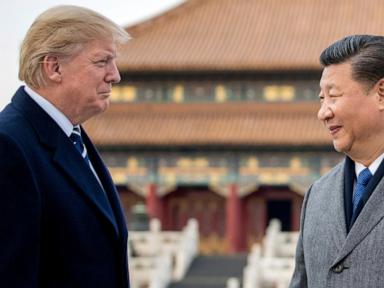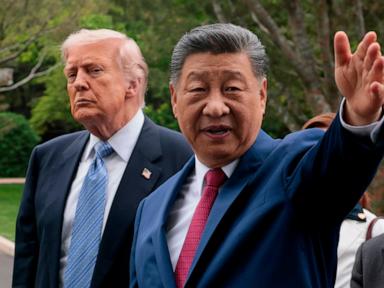
Diplomacy thrives on fiction. Nowhere is this truer than in the high-stakes theater where Washington and Beijing negotiate bilateral agreements. When Donald Trump and Xi Jinping meet, cameras capture firm handshakes and solemn nods. Officials brief reporters on monumental breakthroughs. Markets react with cautious optimism. Yet beneath the veneer of diplomatic progress lies a graveyard of unfulfilled commitments. The core reason previous agreements stall is simple. Both capitals treat enforcement as an afterthought, prioritizing immediate political optics over sustainable structural reform.
Consider the history. Decades of trade dialogues, strategic economic dialogues, and executive accords share a singular trajectory. Pomp, circumstance, ambitious targets, followed by quiet non-compliance. To understand why past pacts remain incomplete work, one must examine the fundamental mechanics of how these two superpowers negotiate. They speak entirely different languages of power, law, and obligation. Recently making waves recently: The Grounded Horizon What Happens When the Sky Goes Silent.
The Anatomy of Broken Pacts
Agreements between the United States and China often suffer from a fatal design flaw. Washington relies on legalistic, transactional frameworks designed to extract specific numerical outcomes from a market economy. Beijing operates through a state-directed system where directives flow downward through bureaucratic channels that prioritize social stability, industrial self-sufficiency, and party control above foreign trade balances.
Take the Phase One trade agreement signed during the first Trump administration. The architecture of that deal rested on a foundational delusion. Washington demanded that Beijing purchase billions of dollars in American agricultural goods, energy products, and manufactured items within a strict timeline. American negotiators treated these purchasing targets as legally binding commercial contracts. Chinese planners treated them as aspirations, subject to domestic market conditions, bureaucratic inertia, and shifting geopolitical winds. Further details on this are covered by Reuters.
Unsurprisingly, Beijing missed those purchase targets by a wide margin. When pressed, Chinese officials pointed to global market disruptions, supply chain bottlenecks, and pandemic-era economic contractions. American officials cried foul, citing bad faith. Both sides were technically correct within their respective worldviews. But the deeper truth remained hidden. Executive-level summits cannot override the structural friction of two incompatible economic systems attempting to weld themselves together through sheer political willpower.
Structural Friction in State Capitalism
The friction extends far beyond missed purchasing quotas. Deep structural reforms regarding industrial subsidies, intellectual property protection, and forced technology transfers consistently run aground upon the shores of China's state-capitalist model.
In a market economy, private corporations operate independently of government trade targets. If an American president secures a pledge from a foreign counterpart to curb industrial subsidies, implementing that pledge requires navigating independent corporate boards, shareholder pressures, and complex antitrust laws. In China, state-owned enterprises receive direct capital injections and strategic mandates from the central government. When a summit concludes with a vague communique promising market-oriented reforms, lower-level provincial officials frequently ignore the memo if those reforms threaten local employment or technological dominance in strategic sectors like semiconductors or green energy.
This creates a recurring loop of frustration. Washington demands verification and compliance mechanisms that look like intrusive auditing. Beijing views such demands as an infringement upon national sovereignty and an insult to its administrative competence. Consequently, monitoring committees meet, issue dry communiques expressing frank exchanges of views, and quietly dissolve without resolving core disputes.
The Agricultural Illusion
Agriculture serves as a prime case study in how political narratives diverge from commercial reality. American farmers are frequently deployed as pawns in bilateral trade wars and subsequent reconciliations. When a summit yields announcements of massive soybean purchases, rural communities celebrate a financial lifeline.
However, global agricultural markets do not bend easily to executive decrees. Commodities move according to price, quality, and global supply elasticity. When Chinese state-backed grain buyers are instructed to purchase American commodities to satisfy a political quota, they often find themselves constrained by price differentials with South American competitors. If Brazilian soybeans are cheaper, economic rationality dictates buying from Brazil. When Beijing chooses economic efficiency over political compliance, American export statistics fall short of the summit hype.
This dynamic breeds deep cynicism among domestic constituencies in the United States. Agricultural producers realize that headline-grabbing trade announcements rarely translate into sustained, predictable market access. The gap between summit rhetoric and shipping manifests grows wider with every passing year.
Bureaucratic Inertia and Domestic Constraints
Inside Beijing, the bureaucratic machinery is immense, opaque, and hyper-sensitive to ideological winds. When Xi Jinping makes a commitment on the international stage, translating that commitment into local administrative action requires a tortuous journey through party committees, ministerial rivalries, and regional bureaucracies. Local officials often prioritize local GDP growth and high-tech manufacturing dominance over foreign trade balance compliance. If a central directive conflicts with a regional industrial policy, the regional policy usually wins.
Simultaneously, American politics imposes its own erratic rhythms. Foreign policy toward Beijing has transformed into a rare area of bipartisan consensus in Washington, characterized by skepticism and competitive urgency. Any administration entering negotiations is constrained by domestic political optics. Showing weakness or accepting cosmetic concessions from Beijing carries a heavy domestic political penalty. Therefore, negotiators must insist on maximalist demands, knowing full well that Beijing will reject structural interference in its domestic economic planning.
This creates an institutional paralysis. Neither side can afford to walk
The Broken Blueprint Behind Every Washington Beijing Summit
news
When Donald Trump and Xi Jinping step into a summit room, the diplomatic choreography follows a rigid, exhausted script. Flashbulbs pop, statements about mutual stability echo through state media, and a fresh round of high-minded pledges is signed into the archives. Yet underneath the pageantry, an uncomfortable reality persists. Earlier bilateral compacts remain unfulfilled husks, stalled by structural design flaws, bureaucratic hostility, and a fundamental mismatch in how both superpowers interpret enforcement. If you want to understand why future negotiations between Washington and Beijing routinely collapse before the ink dries, you have to look past the press releases and examine the machinery of failure.
The Architecture of Ambiguity
Diplomacy relies on constructive ambiguity. Both sides sign documents worded carefully enough to allow domestic audiences to claim victory while leaving enough wiggle room to avoid immediate concessions. This is not an accident. It is a feature of statecraft designed to buy time.
Consider the mechanics of past trade architecture. When negotiators hammer out memorandums of understanding, they often rely on voluntary compliance mechanisms rather than binding arbitration. Washington demands structural reforms regarding intellectual property theft and forced technology transfers. Beijing agrees in principle to strengthen domestic legal frameworks.
Months later, the metrics diverge entirely. American trade representatives measure success through hard export data and quantifiable market access targets. Chinese regulators view these same agreements through the lens of state security and industrial self-sufficiency. Because the foundational definitions are never aligned, every review meeting devolves into a statistical argument. One side sees evasion. The other sees compliance within sovereign boundaries.
Bureaucratic Sabotage from Within
External treaties face an internal enemy that rarely makes the headlines. The sprawling bureaucracies of both governments actively resist compromises struck at the highest levels.
In Washington, interagency rivalry between the Department of Commerce, the Office of the United States Trade Representative, and the Department of State ensures that execution is fragmented. A deal brokered by the White House can be quietly neutralized by mid-level regulators who issue restrictive licensing guidelines or tighten export controls on dual-use technologies.
In Beijing, the state-planning apparatus operates with a similar internal logic. A directive from the upper echelons of the party to open specific sectors to foreign investment hits a wall of provincial protectionism and state-owned enterprise dominance. Local officials prioritize local employment metrics and industrial output over international trade balance sheets. When Beijing promises to purchase billions of dollars in agricultural goods or energy products, state-owned conglomerates routinely balk at market prices, preferring domestic supply chains that insulate the economy from external shocks.
The Shift from Paper to Silicon
The fundamental reason previous agreements fail to stick is that the nature of the competition has fundamentally transformed. Old trade deals focused on physical commodities, tariffs, and intellectual property theft. Today's battlefield is built on code, compute power, and supply chain sovereignty.
You cannot patch a twentieth-century trade framework onto a twenty-first-century technological cold war. When Washington imposes sweeping restrictions on advanced semiconductors and artificial intelligence hardware, traditional agreements regarding agricultural purchases or currency manipulation become obsolete overnight.
Treaties assume a baseline of economic interdependence where both nations benefit from shared efficiencies. That era is over. Both capitals now operate on a doctrine of national security paramountcy, where economic efficiency is willingly sacrificed for strategic resilience. Under this paradigm, fulfilling an old agreement that requires buying a rival's technology or opening critical domestic infrastructure to foreign actors is treated as an unacceptable security risk.
The Enforcement Vacuum
Every major bilateral accord ultimately founders on a single question. Who watches the watcher?
International law lacks a standing police force. When a sovereign state decides to reinterpret a treaty or slow-walk its implementation, the injured party has limited recourse outside of retaliation. Retaliation breeds counter-retaliation, transforming a minor compliance dispute into a full-scale trade war.
Previous compacts attempted to solve this by building bilateral working groups and periodic review mechanisms. These committees quickly devolve into diplomatic talking shops. They become venues where exhausted bureaucrats trade grievances rather than solve systemic blockages. Without an independent arbiter trusted by both capitals, enforcement mechanisms are toothless. Washington relies on unilateral tariffs to enforce compliance. Beijing relies on state-directed economic coercion and market exclusion. Neither tool encourages good-faith treaty execution.
What Happens When the Handshakes Stop
The ritual of the summit creates a dangerous illusion of progress. Markets rally on the news of a breakthrough handshake. Corporate executives breathe a sigh of relief, assuming regulatory stability is around the corner.
This optimism is misplaced. The gap between diplomatic announcements and operational reality widens with every meeting. Supply chains do not stabilize because two leaders sign a communique in a neutral capital. Instead, multinational corporations are forced to navigate an increasingly erratic environment where rules change based on the political winds of the moment.
Decoupling is no longer a theoretical debate among policy academics. It is an active, grinding reality playing out in boardrooms across the globe. Companies are duplicating supply chains, building redundancy where efficiency once reigned, and preparing for a future where cross-border trade is treated as a vulnerability rather than an asset.
The next time a high-level meeting is announced, look past the optimistic headlines. Pay attention to the enforcement clauses, the verification timelines, and the institutional mechanisms tasked with holding both sides accountable. If those elements are missing, the agreement is already dead. The handshakes are just for the cameras.