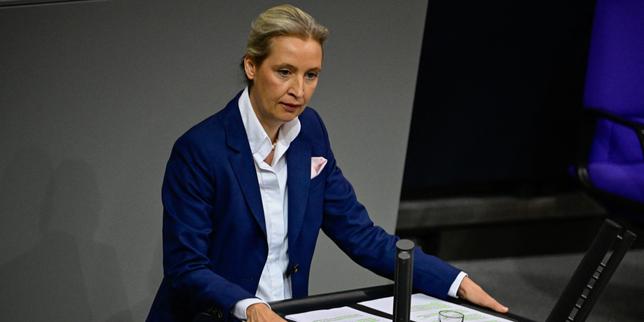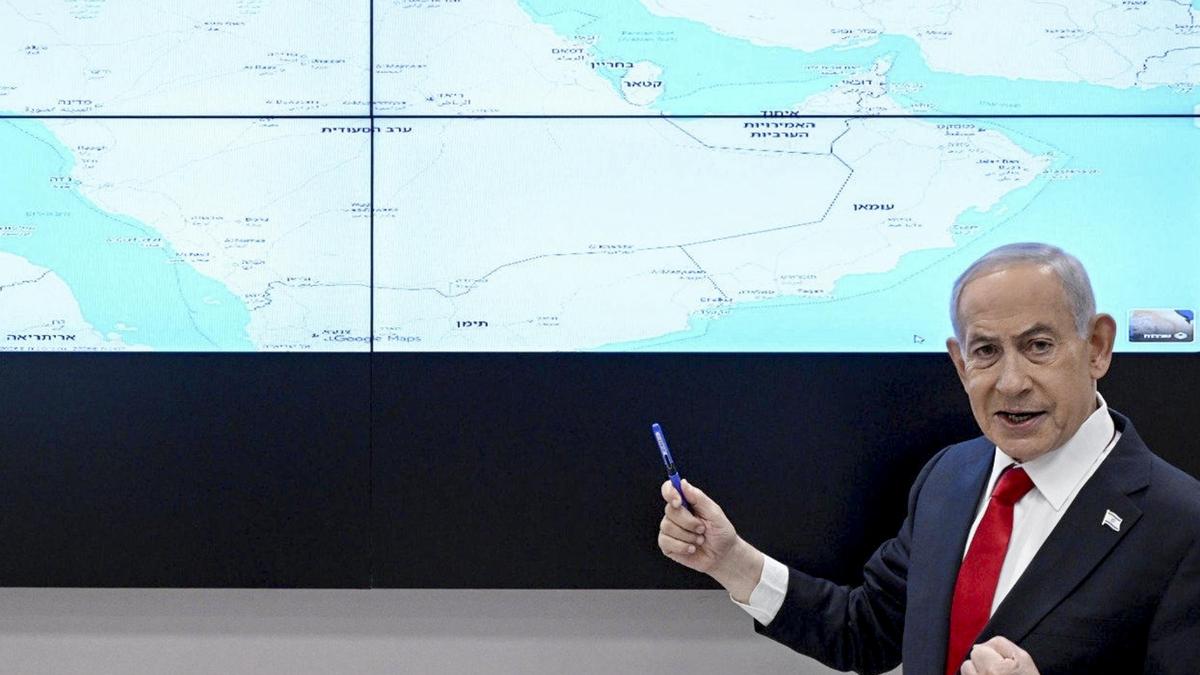
Benjamin Netanyahu’s recent declaration regarding the "erased names" on a punch card refers to the high-profile liquidations of Mohammed Deif and Ismail Haniyeh. It is a chilling metaphor for a systematic dismantling of leadership that suggests a shift in Israeli military doctrine. This is no longer just a war of attrition or a campaign for border security. It has transformed into a clinical, top-down decapitation strategy designed to leave an entire organization without a central nervous system.
The strategy rests on a singular, grim premise. If you remove the architects of a movement, the movement collapses into a collection of uncoordinated cells. While this sounds effective in a briefing room, history suggests that "erased names" often lead to the rise of more radical, less predictable successors. Netanyahu is betting his political survival and Israel's long-term security on the idea that these specific gaps in leadership are too wide to fill.
The Mechanics of Decapitation
Targeted killings are not a new tool in the Israeli shed. They have been a staple of Mossad and Shin Bet operations for decades. However, the current pace and scale represent a fundamental departure from previous operations. In the past, such strikes were often spaced out to allow for diplomatic backchannels or to gauge the enemy's response. Today, the throttle is wide open.
The "punch card" analogy is telling. It treats war as an administrative task—a checklist of human targets that must be neutralized to reach a specific outcome. This bureaucratic approach to warfare hides the immense logistical and intelligence hurdles required to pull off such strikes. Locating a high-value target in a densely populated urban environment or a foreign capital requires a level of intelligence penetration that takes years to establish. It involves a mix of signals intelligence, human assets on the ground, and persistent aerial surveillance.
When a strike occurs, it is the culmination of thousands of man-hours. The intelligence community calls this the "kill chain." It begins with find and fix, moves to track and target, and ends with engage and assess. By the time the world sees a headline about a name being erased, the machinery has already moved on to the next entry on the list.
The Psychological Front
Netanyahu’s rhetoric serves a dual purpose. Domestically, it provides a sense of tangible progress to a public that is weary of an open-ended conflict. Seeing the faces of long-time adversaries crossed out on a screen offers a form of closure that shifting front lines cannot provide. It is a scoreboard in a game where the rules are often opaque.
Internationally, it is a signal of absolute intent. By publicly embracing the role of the executioner, Netanyahu is telling regional adversaries that no one is out of reach. This is designed to degrade the morale of the rank-and-file within these organizations. The message is simple. If your leaders cannot protect themselves in protected compounds or foreign guest houses, they cannot protect you.
However, there is a risk of diminishing returns. Fear can eventually turn into a desperate, cornered-animal aggression. When the leadership layer is stripped away, the survivors are often the most hardened and ideologically rigid members of the group. These are the men who have spent their lives in the shadows, waiting for the veterans to fall so they can take the reins.
The Vacuum Problem
The most significant overlooked factor in this strategy is the nature of the vacuum left behind. Military hierarchies are resilient. When a general falls, a colonel steps up. In asymmetric warfare, this transition is even more fluid. New leaders often feel the need to prove their mettle through increased violence or more spectacular attacks to establish their authority.
History is littered with examples of "decapitation" backfiring. In 1992, Israel killed Abbas al-Musawi, the leader of Hezbollah. At the time, it was hailed as a massive victory. He was replaced by Hassan Nasrallah, who turned the organization into a far more formidable and sophisticated regional power. The name was erased, but the entity that replaced it was significantly more dangerous.
Netanyahu is gambling that the current targets are "black swans"—individuals with unique skills or charisma that cannot be replicated. While this may be true for a master tactician like Deif, it is rarely true for political figures. Politics, even in militant organizations, is a machine that produces replacements as quickly as it loses them.
The Intelligence Paradox
The success of these strikes reveals a massive paradox in the current conflict. To kill these men, Israel must have an incredibly deep and accurate picture of what is happening inside the leadership circles of its enemies. Yet, this same intelligence apparatus failed to see the events of October 7th coming.
This suggests that the "how" of the war is being executed perfectly, while the "why" and the "when" remain elusive. The focus on the punch card may be a way for the security establishment to redeem itself after a catastrophic failure. By successfully hunting down the individuals responsible, they are attempting to restore a sense of deterrence that was shattered in a single morning.
But deterrence is a psychological state, not a body count. It requires the enemy to believe that the cost of an action is higher than the benefit. If the leadership believes they are already marked for death regardless of their actions, the incentive to show restraint vanishes.
The High Cost of the Punch Card
The financial and diplomatic costs of this strategy are staggering. Each high-profile strike carries the risk of a wider regional conflagration. It complicates ceasefire negotiations and puts immense pressure on neighboring countries that are trying to maintain a delicate balance.
Moreover, the focus on personalities can distract from the underlying structural issues that fuel the conflict. You can erase every name on the card, but if the conditions that created those individuals remain unchanged, new names will be written in. This is the "mowing the grass" philosophy taken to its absolute extreme. It assumes that if you keep the blades sharp enough and the cuts frequent enough, nothing will ever grow tall enough to be a threat.
But grass always grows back.
The military-industrial complex required to maintain this level of constant surveillance and precision striking is a black hole for resources. It requires a permanent state of mobilization and a level of societal tension that is difficult to sustain over years, let alone decades. Netanyahu is pushing the nation into a future where "peace" is simply the interval between the next name being added to the list.
The Strategic End Goal
What happens when the card is empty? This is the question that Netanyahu’s critics and allies alike are asking. There is no clear political roadmap following the erase-and-replace cycle. Without a diplomatic framework or a plan for the "day after," the punch card is simply a loop.
The strategy ignores the political reality that these organizations are not just military groups; they are embedded in the social and political fabric of the regions they control. Erasing a name does not erase a grievance. It does not dismantle a social service network or change a narrative of resistance.
Netanyahu’s approach treats the conflict as a technical problem to be solved with better optics and more precise munitions. It is a veteran politician’s attempt to manage a crisis by breaking it down into individual, solvable targets. This allows for a series of small "victories" that can be sold to the public, even as the larger strategic picture remains bleak and unresolved.
The Shift in Rules of Engagement
We are witnessing a shift where the distinction between a battlefield and a civilian area has been almost entirely eroded in the pursuit of high-value targets. The "punch card" logic dictates that if the target is valuable enough, the surrounding environment is secondary. This has led to international condemnation and a growing sense of isolation for the Israeli government.
The use of AI-driven targeting systems and massive data sets to identify these individuals has also changed the nature of the hunt. It is no longer just about a spy in a trench coat; it is about algorithms that can predict movement patterns and identify anomalies in communication. This technological edge is what allows Netanyahu to speak with such confidence about the names being erased.
However, technology cannot provide a political solution. It can only make the killing more efficient. If the goal is a permanent end to the conflict, the punch card is the wrong tool. It is a tool for management, not for resolution.
The Unintended Consequences
The immediate aftermath of these strikes often sees a surge in recruitment for the very groups being targeted. Martyrs are more useful for propaganda than living leaders. Every time a name is erased, it becomes a rallying cry. It provides a new set of heroes for a younger generation that has known nothing but conflict.
By focusing so heavily on the individual, the strategy may be inadvertently strengthening the collective identity of the opposition. It creates a narrative of a David vs. Goliath struggle where the giant uses high-tech weaponry to pick off individuals one by one. This narrative is incredibly powerful in the global court of public opinion.
Netanyahu is also facing a ticking clock. The international community’s patience for this level of targeted warfare is not infinite. As the civilian toll rises and the risk of a wider war grows, the pressure to stop the "punch card" approach will become overwhelming. Even the most steadfast allies have a breaking point when the strategy seems to lead only to more of the same.
The Long Game
The ultimate success of the "erased names" strategy will not be measured by the number of funerals it causes, but by the level of security it actually provides. If the result is a fractured, leaderless, and more chaotic region, then the strategy has failed. Security is found in stability, not in the constant removal of the actors you know in favor of the actors you don't.
Netanyahu’s legacy is now tied to this checklist. He has framed the conflict as a personal battle between himself and a list of names. This is a dangerous way to run a country and an even more dangerous way to fight a war. It turns national policy into a series of hits and puts the future of millions of people in the hands of the intelligence officers tasked with finding the next name to cross out.
The punch card is not a strategy. It is a tactic masquerading as a vision. Until the focus shifts from who is being killed to how the killing can be stopped, the names will continue to be written, and they will continue to be erased, in a cycle that has no end in sight.
The list is never truly finished because the pen is held by the same forces that the strikes are meant to destroy.
Contact the defense ministry for the latest updates on operational status.