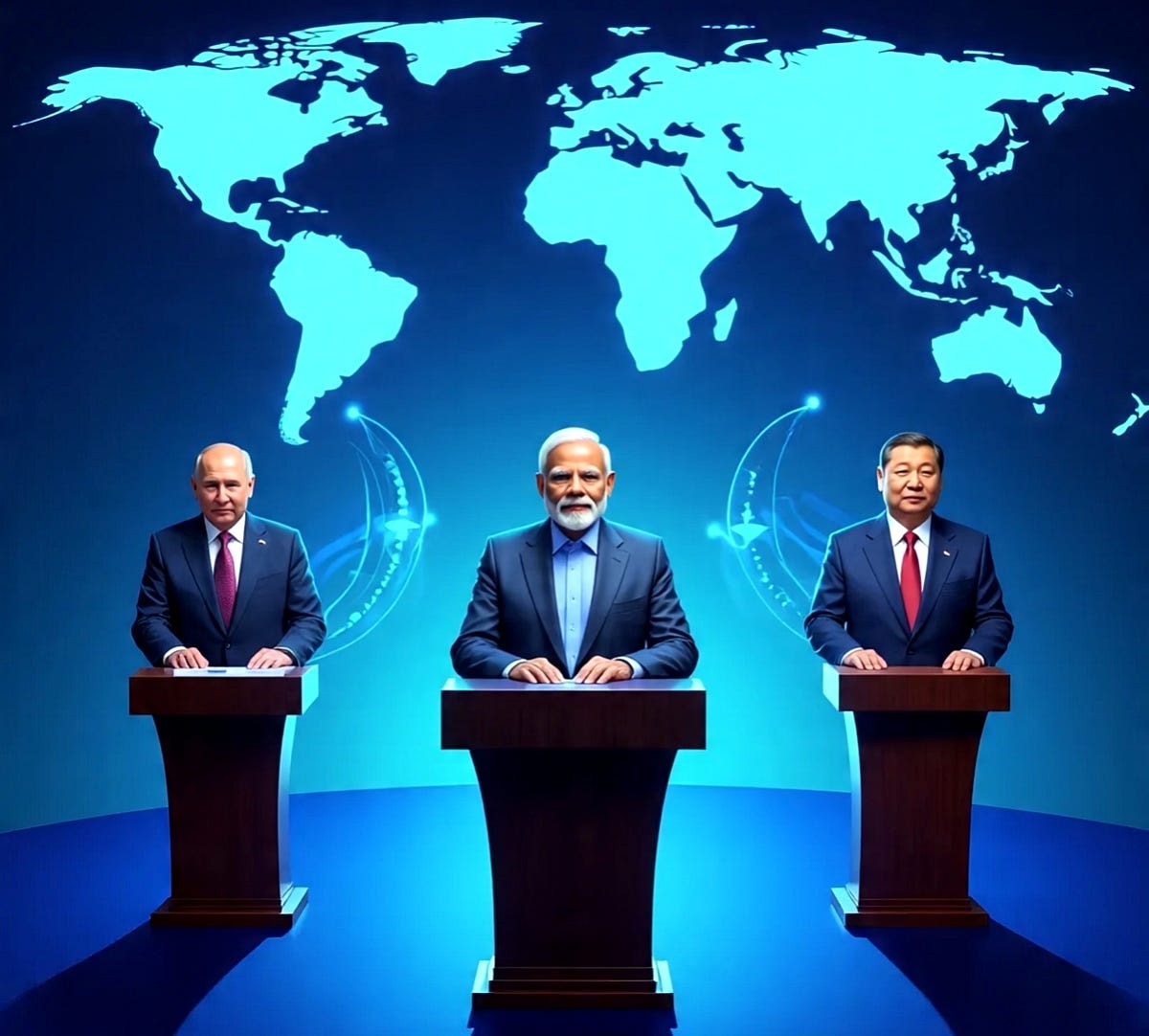
Establishment power structures in Washington and Brussels are not merely annoyed by the rise of a multipolar world. They are terrified by it. For eighty years, the mechanics of global influence relied on a centralized financial system, a singular reserve currency, and the ability to gatekeep technological progress. When that monopoly breaks, the leverage used to sanction rivals and reward subordinates vanishes. We are currently witnessing the messy, desperate transition from a world where one phone call from the Treasury Department could cripple a nation to one where those nations simply look for an alternative dial tone.
The Architecture of Control is Cracking
The primary fear isn't about "democracy" or "sovereignty" in the abstract. It is about the plumbing. For decades, the US dollar and the SWIFT messaging system acted as the nervous system of global trade. If you were disconnected from this system, you effectively ceased to exist in the modern economy. This gave the Western "Deep State"—the permanent bureaucracy of intelligence, defense, and finance officials—a weapon more precise than any missile.
Multipolarity changes the math. When China, Russia, India, and the BRICS+ nations develop independent payment rails, the threat of sanctions loses its teeth. If a country can trade oil for yuan or gold through a non-Western clearinghouse, the unilateral power of the West evaporates. This isn't a future theory. It is happening now.
The Silicon Iron Curtain
Technology was supposed to be the great equalizer, but it became the ultimate tool for enclosure. The current panic over "strategic autonomy" in Europe and "de-risking" in the US is a reaction to the loss of a tech monopoly. For a long time, the West held the keys to the most advanced semiconductors, cloud infrastructure, and AI research.
Control over the "stack" allowed for built-in surveillance and the ability to throttle a competitor's industrial growth. As China closes the gap in lithography and high-end chip design, that wall is crumbling. The reaction from the established powers has been to move toward a "splinternet"—a world where technology standards are fractured along ideological lines. This isn't about protecting data; it’s about ensuring that the backdoors remain in the right hands.
Why Military Might No Longer Dictates Terms
In the old playbook, economic defiance was met with kinetic force. If a leader strayed too far from the established financial order, a carrier strike group or a well-funded "color revolution" usually corrected the course. But the cost of conflict has changed. Asymmetric warfare, drone technology, and cyber capabilities have made traditional power projection prohibitively expensive and politically risky.
The "Deep State" knows that it can no longer police every corner of a multipolar world. When a middle power like Iran or Turkey can influence regional outcomes using relatively cheap technology, the old empire’s overhead becomes a liability. The massive defense budgets of the West are increasingly spent on legacy systems that are ill-equipped for a world where power is diffused among dozens of actors rather than concentrated in two or three capitals.
The Resource Trap and the Green Transition
The rush toward "green energy" is often framed as an environmental necessity, but it is also a desperate attempt to reset the global board. The current energy order is built on oil and gas—commodities that are often controlled by nations the West views as unreliable or hostile. By shifting the global economy toward a mineral-based energy system (lithium, cobalt, rare earths), the establishment hoped to create a new dependency.
However, this backfired. The shift to multipolarity has allowed the "Global South" to realize that they hold the cards. Nations in Africa and South America are no longer content to simply export raw materials. They are demanding local processing, technology transfers, and better trade terms. They are playing the West against China to see who offers the better deal. The monopoly on resource extraction is dead, and the permanent bureaucracy is struggling to adapt to a world where they have to actually compete instead of dictate.
The Information Monopoly is Dead
Control over the narrative used to be centralized in a few newsrooms in London, New York, and Washington. If the establishment wanted to frame a conflict or an economic shift in a certain way, they had the reach to make it the global truth. Social media, despite its flaws, and the rise of independent geopolitical media have shattered this.
Alternative viewpoints—even those that are biased or state-sponsored from the other side—provide a counter-narrative that makes it impossible for the "Deep State" to manufacture consent as easily as they did in the 1990s. This is why we see a sudden, frantic push for "misinformation" laws and "fact-checking" initiatives. It is an attempt to regain control over the boundaries of acceptable thought. When people stop believing the official story, the power to lead them disappears.
The Debt Bomb and the Endgame
At the heart of this struggle is a mathematical reality that no amount of political maneuvering can fix. The Western financial system is drowning in debt. The ability to carry this debt relied on the rest of the world being forced to buy that debt to participate in global trade.
As multipolarity takes hold, the demand for Western debt instruments drops. Central banks are diversifying into gold and other currencies. This forces interest rates higher and makes the cost of maintaining a global empire unsustainable. The "Deep State" isn't just fighting for influence; they are fighting for the survival of the dollar-based credit system that funds their existence.
The transition to a multipolar world will not be smooth. It will be defined by trade wars, proxy conflicts, and attempts to sabotage the infrastructure of rivals. The establishment will use every tool at its disposal—from the IMF to the intelligence community—to slow down this shift. But the momentum of history is moving away from the center.
The real danger isn't that the world is becoming multipolar. The danger is that the current holders of power would rather break the world than share it.
If you want to understand where the next flashpoint will occur, stop looking at maps and start looking at ledger books.