The global energy market operates on a dangerous myth of immediacy. Politicians and cable news pundits often speak of Persian Gulf oil production as if it were a kitchen faucet—a simple valve that can be twisted to flood the market and crush prices whenever inflation bites. This narrative is a convenient fiction. The reality is a grueling, multi-layered gauntlet of geological pressure, chemical constraints, and decaying infrastructure that makes any sudden surge in output physically impossible. When the world demands an extra million barrels of oil "now," the industry responds in years, not hours.
The Persian Gulf contains roughly half of the world’s proven oil reserves, but those reserves are locked behind a wall of technical inertia. The gap between "spare capacity" and "actual flow" is where economic stability goes to die. To understand why the world cannot simply flick a switch and drown the market in cheap crude, one must look past the geopolitical posturing and examine the cold, hard physics of the reservoir.
The Pressure Paradox
Deep beneath the sands of Ghawar or the waters of the Safaniya field, oil exists in a delicate state of equilibrium. It is held in the tiny pores of carbonate rock under immense pressure. Extracting it isn’t just a matter of poking a hole and letting it spray into the air. Modern oil recovery is a sophisticated balancing act that relies on maintaining reservoir pressure.
If an operator attempts to "flick the switch" by opening every valve at once, the sudden drop in pressure can cause catastrophic damage to the field. When pressure falls too rapidly, the gas dissolved in the oil begins to bubble out, much like opening a warm soda bottle. This gas expansion can block the flow of oil through the rock, effectively "choking" the well and permanently reducing the total amount of oil that can ever be recovered.
Furthermore, many of the Gulf's most productive fields are aging. They require constant water injection to push the oil toward the surface. This creates a massive plumbing problem. For every barrel of oil extracted, several barrels of water must be treated, pumped underground, and later separated from the crude. This infrastructure has a fixed ceiling. You cannot pump more oil than your water-handling facilities can process, and building new facilities takes years of engineering and construction.
The Downstream Bottleneck
Even if the reservoirs could magically double their output overnight, the oil would have nowhere to go. The journey from a wellhead in the Rub' al Khali to a gas station in Ohio is governed by a rigid physical network.
Pipelines have a maximum diameter and a maximum pressure rating. You cannot simply shove more volume through a steel tube than it was designed to carry without risking a burst. Most of the critical transport infrastructure in the Middle East is already running near its limit. To increase flow significantly, you don't just need more oil; you need more pipes, more pumping stations, and more massive storage tanks to hold the inventory before it is loaded onto tankers.
Then there is the issue of "crude quality." Not all oil is the same. The Persian Gulf produces a wide variety of grades, from Arab Extra Light to Arab Heavy. Refineries are built like specialized chemistry sets, designed to process a specific "diet" of crude. If a sudden surge of heavy, high-sulfur oil hits the market, many refineries in Europe or the United States simply cannot process it. They would have to shut down and reconfigure their equipment—a process that takes weeks and costs millions—negating the benefit of the extra supply.
The Invisible Workforce and the Logistics Chain
The "switch" analogy ignores the human and logistical requirements of an oil boom. A significant increase in production requires a massive mobilization of specialized equipment and personnel.
Consider the "rig count." To bring new wells online or work over existing ones to boost flow, you need drilling rigs. These are not sitting in a garage waiting for a phone call. They are booked months or years in advance. Moving a rig, setting it up, and drilling a well is a logistical nightmare involving hundreds of contractors, specialized drill bits, casing steel, and chemical lubricants. In a tight market, the lead time for these materials can stretch into eighteen months.
We often overlook the "service" sector of the oil industry. Giants like SLB or Halliburton provide the technical expertise to manage these fields. When production is ramped up, these companies need to hire and train thousands of engineers. You cannot "flick a switch" on a human being's expertise. The industry is currently facing a massive talent gap, as a generation of veteran petroleum engineers retires and younger talent moves toward tech or renewable energy.
The Myth of Spare Capacity
Market analysts frequently talk about "spare capacity," primarily held by Saudi Arabia and the UAE. While this capacity exists on paper, it is rarely "ready-to-use."
Think of spare capacity like a mothballed fleet of airplanes. They are technically available, but you cannot just jump in and fly them across the Atlantic. They need maintenance, fuel, crews, and safety checks. In the oil world, spare capacity often consists of older wells that have been "shut in" to manage market prices. Restarting a shut-in well is a gamble. Over time, salt can crystallize in the pipes, or bacteria can grow in the wellbore, creating blockages. Sometimes, a well that was producing 5,000 barrels a day before it was turned off will only produce 2,000 when it is turned back on.
The official numbers provided by state-owned oil companies are also notoriously opaque. There is no independent body that goes into the Kingdom and verifies exactly how many barrels can be produced at a moment's notice. The "switch" is often a political tool used to calm markets, but the technical reality remains hidden in the proprietary data of the ministries.
Geopolitical Friction and the Strait of Hormuz
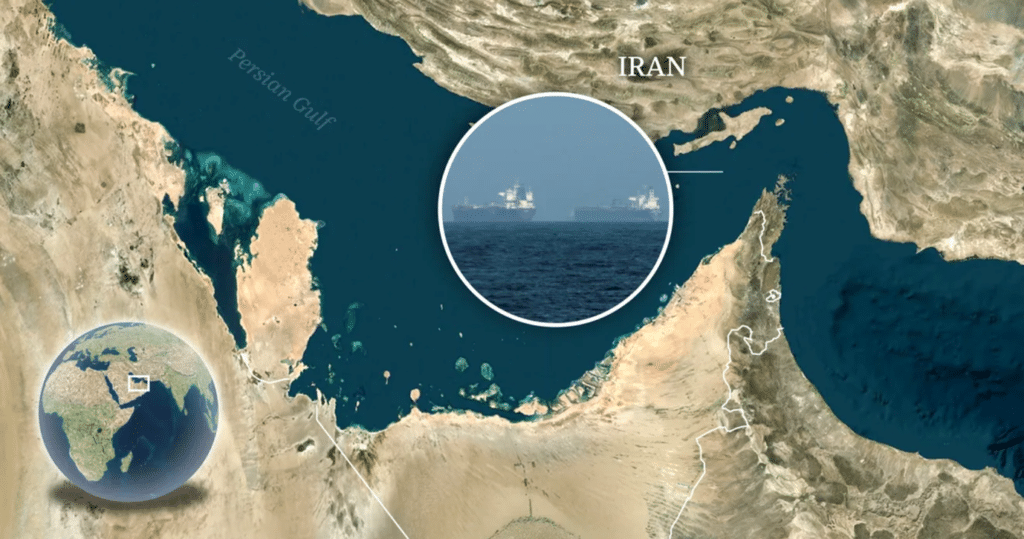
Even if the geology is willing and the infrastructure is ready, the Persian Gulf remains a geographical cage. Roughly 20 percent of the world's liquid petroleum passes through the Strait of Hormuz. This narrow waterway is the ultimate physical "off switch."
Any attempt to rapidly increase production is useless if the shipping lanes are contested or insured at prohibitive rates. During periods of high tension, the cost of insuring a VLCC (Very Large Crude Carrier) can skyrocket, making it economically unfeasible to move the extra oil. The logistical chain of tankers is a finely tuned loop. If one part of the loop is delayed by security concerns, the entire system backs up, and production at the wellhead must be slowed down because there is no place to put the oil.
The Long Road to Extra Barrels
True "growth" in production requires capital expenditure (CAPEX) on a scale that dwarfs the budgets of mid-sized nations. It involves seismic surveys, exploratory drilling, and the installation of massive offshore platforms.
The industry has been under-investing in new production for nearly a decade. Shifting social and political pressures toward "green" energy have made long-term oil projects look like risky bets for investors. Consequently, the "buffer" the world used to rely on has thinned. We are operating on a razor's edge. When a supply shock occurs, there is no quick fix because the "flick of the switch" requires a ten-year lead time that was never started.
Increasing production is a slow, methodical crawl against the laws of thermodynamics and the realities of aging steel. The next time a politician promises lower prices through a phone call to Riyadh, remember that they are fighting against the weight of the earth itself. The oil is there, but the machinery of its release is heavy, rusted, and incredibly slow to turn.
Don't wait for a surge that physics won't allow. Focus instead on the structural demand that keeps the world addicted to a supply chain that is far more fragile than it appears.