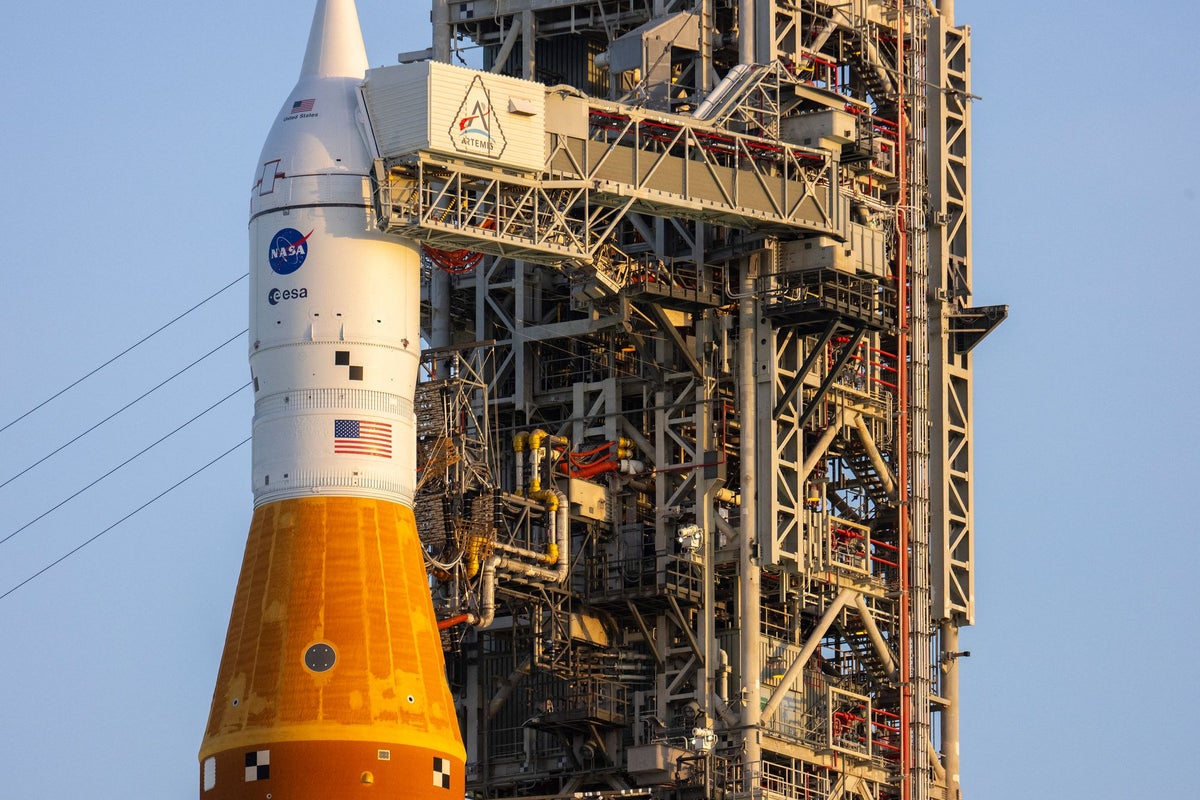
The United States is currently locked in a high-stakes sprint to return humans to the lunar surface under the Artemis program, but the primary driver isn't scientific curiosity. It is a desperate scramble for orbital real estate and the raw materials required for a permanent off-world economy. For the first time since 1972, the moon is no longer a symbolic destination for flag-planting. It has become a strategic frontier where the winner dictates the rules of deep-space commerce for the next century.
While the original Apollo missions were fueled by the Cold War desire for ideological supremacy, Artemis is a logistics operation. NASA aims to land the first woman and the first person of color on the moon, but behind these cultural milestones lies a rigid infrastructure plan: the Lunar Gateway station and the Artemis Base Camp. This isn't about visiting; it is about staying. The mission architecture relies on a fragile web of private contractors and international partners, all chasing a narrow window of opportunity before rival interests, specifically the China-Russia lunar alliance, establish their own zones of exclusion. Recently making news recently: The Logistics of Survival Structural Analysis of Ukraine Integrated Early Warning Systems.
The Ice War at the South Pole
The focus of every major space agency has narrowed to a specific, jagged region: the lunar South Pole. This isn't a random choice. Satellite data has confirmed the presence of water ice tucked away in "permanently shadowed regions" (PSRs) where the sun never shines.
Water is the oil of the solar system. It is heavy, and lifting it out of Earth's deep gravity well costs thousands of dollars per kilogram. If you can harvest ice on the moon, you can crack it into hydrogen for rocket fuel and oxygen for breathing. This turns the moon into a gas station for missions to Mars and beyond. More insights regarding the matter are detailed by MIT Technology Review.
However, these shadowed craters are small and rare. There is a finite amount of "prime" territory where the rim of a crater receives constant sunlight for solar power while the floor contains accessible ice. We are witnessing the first terrestrial-style land grab in space. The Outer Space Treaty of 1967 technically forbids nations from claiming sovereignty over celestial bodies, but it says nothing about "safety zones" around equipment or the extraction of resources. By landing first, a nation effectively claims the surrounding territory under the guise of operational safety.
The Mathematics of Survival
The cost of these missions remains staggering. NASA’s Inspector General estimated that the first four Artemis missions would cost roughly $4.1 billion each. That is a hard number to justify to a taxpayer base struggling with inflation, unless the return on investment is framed in terms of national security.
To manage these costs, NASA has pivoted from being an operator to being a customer. They no longer own the rockets in the traditional sense; they buy "rides" from companies like SpaceX and Blue Origin. This creates a volatile dependency. If Elon Musk’s Starship—which serves as the Human Landing System (HLS) for Artemis III—suffers a major development setback, the entire American lunar timeline collapses.
China and the International Lunar Research Station
While Washington navigates the bureaucracy of Congressional funding and private-sector delays, Beijing is moving with a terrifying, singular focus. The China National Space Administration (CNSA) is not interested in one-off spectaculars. Their International Lunar Research Station (ILRS), a joint venture with Roscosmos, is a direct challenge to the Artemis Accords.
The ILRS is designed for long-term presence starting in the early 2030s. Unlike the U.S. approach, which relies on a rotating door of commercial vendors, the Chinese model is state-driven and integrated into their long-term "Belt and Road" equivalent for space. They are aggressively recruiting partners, recently signing agreements with countries like Egypt, South Africa, and Venezuela.
The danger for the U.S. isn't just a loss of prestige. It is a loss of standard-setting power. Whoever establishes the first functional lunar communications and GPS network will set the technical standards for everyone who follows. If China's "Queqiao" relay satellites become the industry standard, every commercial lunar miner will have to play by Beijing’s rules.
The Commercial Myth vs Cold Hard Assets
Venture capitalists love to talk about "lunar mining," but the immediate business case is remarkably thin. There is no commodity on the moon—including Gold, Platinum, or Helium-3—that is currently profitable to ship back to Earth. The transport costs alone dwarf the market value of the materials.
The real money is in In-Situ Resource Utilization (ISRU). This means building things on the moon, for the moon.
- Sintering Regolith: Using microwaves or lasers to turn moon dust into bricks for landing pads and habitats.
- Ice Processing: Creating fuel depots for satellites in Geostationary Orbit (GEO).
- Metal Extraction: Pulling iron and titanium from the lunar soil to build massive structures that would be too flimsy to launch from Earth.
Companies like Intuitive Machines and Astrobotic are the pioneers, but they are operating on razor-thin margins. The recent "Odyssey" mission by Intuitive Machines, which tipped over upon landing, highlighted the extreme technical risks. One bad sensor reading can vaporize a hundred million dollars of investor capital in seconds.
The industry is currently in a "trough of disillusionment." The hype of the late 2010s has met the reality of orbital mechanics and vacuum-sealed engineering. We are seeing a winnowing of the field. Only the companies with deep government backing or massive internal capital will survive the next five years.
The Legal Vacuum and the Risk of Conflict
International law is woefully unprepared for what is about to happen. The Artemis Accords, signed by over 35 nations, attempt to establish a "common sense" framework for behavior. But notably, Russia and China have refused to sign. They view the Accords as a "space version of NATO"—a move to encircle their interests and monopolize resources.
Without a unified legal framework, the moon becomes a Wild West. If a private American company starts mining a ridge that a Chinese rover is heading toward, who has the right of way? There is no space traffic control. There is no international court with the jurisdiction or the teeth to enforce property rights 238,000 miles away.
The potential for "accidental" interference is high. Dust kicked up by a rocket landing can travel at ballistic speeds across the lunar surface because there is no atmosphere to slow it down. A landing three miles away could sandblast a rival’s sensitive optical equipment. In the tense atmosphere of 21st-century geopolitics, such an event wouldn't be viewed as an accident; it would be viewed as an act of sabotage.
Demographic Shifts in the Space Workforce
The people building these systems are also changing. During Apollo, the workforce was almost entirely white and male. Today, the aerospace sector is undergoing a massive demographic shift, though perhaps not as fast as the marketing brochures suggest.
According to data from the U.S. Bureau of Labor Statistics and industry surveys, the aerospace engineering workforce remains roughly 70% white and 85% male. However, the intake of new graduates tells a different story. In major programs at MIT, Caltech, and Georgia Tech, the percentage of women and minority students in aerospace tracks has nearly doubled over the last decade.
This isn't just about optics. A more diverse workforce brings different approaches to risk management and problem-solving. But it also creates a cultural friction within legacy firms like Boeing and Lockheed Martin, where "the way we've always done it" is being challenged by a younger, more agile generation that views space as a workspace rather than a cathedral.
The Failure of the Space Launch System (SLS)
We have to address the elephant in the room. The Space Launch System, NASA’s primary heavy-lift rocket for Artemis, is a technological dinosaur. It is built using "heritage hardware"—shuttle-era engines and boosters that were never intended to be reused.
Each launch of the SLS costs roughly $2.2 billion. It is expendable, meaning we throw the entire multi-billion dollar machine into the ocean after every flight. Contrast this with SpaceX’s Falcon Heavy or the upcoming Starship, which are designed for rapid reuse.
The SLS exists because it is a jobs program. Its components are manufactured in all 50 states, making it politically "uncancellable" in Congress. This is the central paradox of American spaceflight: the vehicle required to get us to the moon is the very thing draining the budget required to stay there. If NASA cannot transition away from the cost-plus contract model that birthed the SLS, they will eventually be out-competed by leaner, faster state actors who don't have to worry about mid-term elections.
The Lunar Power Grid
If we are to have a permanent presence, we need power that lasts through the lunar night—a 14-day stretch of darkness where temperatures plummet to -200°F. Solar power won't cut it for a base.
The solution is small modular nuclear reactors (SMRs). NASA and the Department of Energy are already soliciting designs for a 10-kilowatt class fission power system that can be deployed on the moon by 2030. This is a massive technological hurdle. Developing a reactor that is light enough to launch, safe enough to operate near humans, and autonomous enough to run without a maintenance crew is a tall order.
The nation that masters lunar nuclear power wins the moon. Without it, you are a camper with a flashlight; with it, you are an industrial power.
The Fragility of the Supply Chain
We often think of space as a vacuum, but the moon mission is tethered to the most terrestrial problems imaginable. The supply chain for specialized carbon fibers, radiation-hardened semiconductors, and high-purity propellants is incredibly fragile.
Recent global instability has shown that aerospace is not immune to trade wars. Many of the rare earth elements required for advanced avionics are processed in China. The irony is thick: to beat China to the moon, the U.S. may rely on a supply chain that begins in Chinese mines.
This dependency extends to talent. The "brain drain" from NASA to the private sector has left the agency with a deficit of experienced project managers. Simultaneously, strict ITAR (International Traffic in Arms Regulations) rules prevent American companies from hiring some of the world's brightest engineers if they happen to hold the wrong passport. We are fighting a 21st-century space race with 20th-century labor and trade restrictions.
Beyond the Horizon
The moon is not a destination. It is a laboratory, a shipyard, and a graveyard for old ideas about how nations should interact. The Artemis program is currently the only viable path for the West to maintain a presence in the lunar neighborhood, but it is a path paved with compromises.
If Artemis III succeeds in 2026 or 2027, it will be a triumph of human engineering. But if it fails, or if the budget is slashed by a future administration, the vacuum will be filled instantly. The moon doesn't care about our political cycles or our corporate quarterly reports. It sits there, a trillion tons of rock and ice, waiting for whoever has the stamina to claim the high ground.
The real test won't be the launch. It will be the second year of a lunar base, when the novelty has worn off, the costs are mounting, and the first "safety zone" dispute breaks out. That is when we will find out if we are building a new world or just exporting our old wars to a new one.
Stop looking at the rockets. Watch the ice. Watch the power grids. Watch the laws being written in the quiet offices of the UN. That is where the moon will be won or lost.