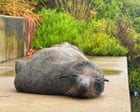
The sudden appearance of a long-nosed fur seal in the murky stretches of the Cooks River has sparked more than just a viral social media moment. While casual observers saw a charming wildlife encounter in an unexpected urban setting, seasoned environmental analysts see a flashing red light. The presence of a marine predator this far up a degraded, concrete-lined waterway in inner Sydney is rarely a sign of a thriving ecosystem. Instead, it serves as a stark reminder of the mounting pressures on Australia’s temperate marine life and the limitations of our urban "rewilding" efforts.
Initial reports focused on the novelty of the animal basking near Tempe and Marrickville. However, the reality is far grimmer. The seal, often described by onlookers as "lethargic" or "declining," is a symptom of a larger biological disconnect. When a pinniped bypasses the rich hunting grounds of the Sydney Basin and the open ocean to navigate the stagnant, historically polluted reaches of the Cooks River, it is usually because the animal is exhausted, sick, or desperate for an easy meal that the open sea can no longer provide.
Why the Cooks River is a Trap for Marine Life
The Cooks River has long carried the reputation of being one of Australia’s most modified and abused urban waterways. For over a century, it served as a drain for industrial runoff, sewage overflows, and storm debris. While massive remediation projects have improved water quality over the last twenty years, the river remains a challenging environment for a high-metabolism mammal like a fur seal.
The Problem of Urban Prey
Fur seals generally hunt in the open ocean or along rocky coastlines where they target oily, nutrient-dense fish. In the Cooks River, the menu changes. The seal is forced to rely on silver biddy, mullet, or small estuary fish that lack the caloric density needed to maintain a thick layer of blubber.
If a seal is already in a state of physical decline, the energy expended swimming up-river against the tide often outweighs the nutritional gain from the hunt. This creates a metabolic deficit. The seal isn't resting because it is content; it is resting because it has run out of fuel.
Toxic Legacy and Heavy Metals
Even if the water looks clearer than it did in the 1980s, the sediment tells a different story. Decades of lead, copper, and zinc remain trapped in the riverbed. When a seal hunts bottom-dwelling species or stays in these waters for extended periods, it risks exposure to bioaccumulative toxins.
For an animal already suffering from a weakened immune system or parasitic load—common in "vagrant" seals—the chemical profile of an urban river acts as an anchor, preventing recovery. The optics of a seal on a boat ramp might be heartwarming for a passerby, but for the animal, it is a desperate bid for warmth and safety in a hostile corridor.
The Rise of the Vagrant Seal
Wildlife authorities often refer to these individuals as "vagrants." This isn't just a fancy word for a traveler. In biological terms, a vagrant is an animal that has wandered far outside its normal range or habitat, often due to environmental stressors.
Changing Ocean Currents
The East Australian Current (EAC) is shifting. As the Tasman Sea warms at a rate significantly higher than the global average, the distribution of baitfish—the primary food source for fur seals—is moving.
When traditional feeding grounds fail, younger or less competitive seals are pushed to the fringes. They follow schools of fish into Sydney Harbour, then into the Botany Bay catchment, and eventually into the narrow veins of the Cooks River. This isn't an expansion of their territory. It is a forced migration driven by hunger.
Competition and Colony Pressure
Australia’s long-nosed fur seal populations have actually seen a rebound in southern colonies over the last few decades. This sounds like a conservation success story, but it comes with a catch. As colonies become crowded, weaker individuals are driven away by dominant males.
These "expelled" seals are the ones most likely to end up in the inner west of Sydney. They are often juveniles or aging adults who lack the strength to compete for the best spots on the rocks of the New South Wales south coast. By the time they reach the Cooks River, they are already on the brink.
The Failure of Public Perception
The biggest hurdle in managing urban wildlife isn't the animals themselves. It is the human reaction to them. When the Cooks River seal was spotted, the immediate response was a mix of fascination and misplaced empathy.
The Danger of Proximity
Social media has created a culture where the value of a wildlife encounter is measured by the proximity of the photo. People get too close. They use drones. They try to "rescue" the animal by offering it food.
Every time a human approaches a resting seal, the animal’s cortisol levels spike. It enters a "fight or flight" state, burning precious calories it doesn't have. What looks like a seal "looking at the camera" is actually a seal assessing a potential predator. If a seal is forced to slip back into the water repeatedly because of foot traffic, its chances of survival drop significantly.
The "Let Nature Take Its Course" Dilemma
Government agencies like the National Parks and Wildlife Service (NPWS) often take a hands-off approach. They monitor the animal but rarely intervene unless it is entangled in fishing gear or severely injured.
This frustrates the public, who want to see the animal whisked away to a rehabilitation center. However, catching and transporting a 100kg wild predator is incredibly stressful. The relocation itself can be the finishing blow for an animal with a failing heart or pneumonia. We have to face the uncomfortable reality that not every urban wildlife visitor is meant to survive the journey.
The Infrastructure Obstacle Course
The Cooks River is a navigational nightmare for a marine mammal. It is a gauntlet of pylons, shopping trolleys, and stormwater pipes.
- Noise Pollution: The constant hum of the Princes Highway and the flight path from nearby Sydney Airport creates an acoustic environment that is chaotic for an animal that relies heavily on sound.
- Physical Barriers: Low-lying bridges and tidal weirs can trap a seal during low tide, leaving it exposed in shallow, sun-heated water that is far above its preferred temperature.
- Domestic Threats: Off-leash dogs are a constant threat along the river’s parklands. A seal on a mudflat is an easy target for a curious or aggressive dog, and the resulting bite wounds are almost always fatal due to infection.
Reimagining Urban Conservation
If we are serious about seeing marine life return to our rivers, we cannot simply cheer when a seal shows up. We need to address the structural deficiencies of the waterway itself.
Restoring the Cooks River requires more than just picking up plastic bottles. It requires a fundamental shift in how we manage the "blue-green" grid of the city. This means more saltmarsh restoration to provide natural buffers and better fish nurseries. It means stricter enforcement of runoff regulations for the industrial zones in Chullora and Silverwater.
Most importantly, it requires a "sanctuary" mindset. If an animal like the long-nosed fur seal enters the river, there should be immediate, enforceable exclusion zones—no drones, no dogs, no selfies.
The Cooks River seal isn't a mascot for a cleaner river. It is a refugee from an ocean in flux, seeking a moment of peace on a concrete bank. We owe it more than a viral post; we owe it the space to either recover or die with dignity, away from the prying eyes of the city.
The next time you see a lone seal in the inner west, don't reach for your phone. Step back. Recognize that you are witnessing a biological emergency in slow motion. The seal isn't visiting us. It is lost, and the concrete jungle of Sydney is a poor place to find the way home.
Check the local council's wildlife alert page to see if an exclusion zone has already been established before you even think about heading to the riverbank.