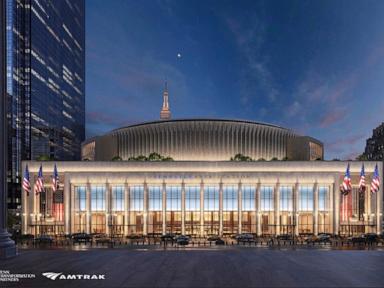
The federal government has unveiled an $8 billion plan to resurrect the grandeur of New York’s Pennsylvania Station, promising to replace the current subterranean labyrinth with soaring 50-foot ceilings, classical stone columns, and an influx of natural light. The bold initiative, brokered by the Trump administration through Amtrak and a private developer consortium, seeks to undo one of the greatest architectural tragedies of the 20th century. However, beneath the gleaming renderings of bronze accents and Beaux-Arts facades lies a complex web of political maneuvering, an immense payout to a billionaire sports mogul, and a controversial exercise in presidential branding. The project represents a monumental gamble that assumes a six-year construction blitz can successfully overhaul the busiest transit hub in the Western Hemisphere without paralyzing the entire Northeast Corridor.
Decades of regional infighting among the Metropolitan Transportation Authority (MTA), New Jersey Transit, and Amtrak historically stalled any meaningful progress at Penn Station. Last year, the federal government shattered this bureaucratic gridlock. By leveraging federal control over Amtrak, which owns the underlying tracks and terminal, the administration effectively sidelined local New York transit agencies.
State officials publicly embraced the intervention as a massive cost-saving measure for local taxpayers. The underlying trade-off, however, became instantly apparent when the design contracts were finalized. The administration conditioned its financial backing on a strict adherence to traditional architecture, reviving a federal mandate to make public works "beautiful again" through classical, neoclassical, and Beaux-Arts styling.
The Price of Real Estate Peace
To execute the expansive vision conceived by the Practice for Architecture and Urbanism (PAU), planners had to confront the physical entity sitting directly on top of the station: Madison Square Garden. Previous conceptual designs frequently hit a wall because they required relocating the historic arena, an option fiercely resisted by its billionaire owner, James Dolan.
The newly brokered compromise leaves the famous arena intact but requires the total demolition of the Theater at Madison Square Garden, a smaller venue built directly over the rail tracks.
- The Spatial Gain: Removing the theater allows developers to dramatically expand public circulation areas from 65,000 square feet to 170,000 square feet.
- The Financial Cost: The corporate entity owning the Garden will receive a substantial, undisclosed financial settlement from the project budget to compensate for the demolition and lost venue revenue.
- The Structural Compromise: The main arena cylinder will remain completely in place, wrapped in a new, 90-foot-tall classical square stone enclosure to mask its modernist aesthetic.
This massive payout resolves a multi-generation standoff, yet critics note that the final financial terms remain hidden from public scrutiny, shrouded in non-disclosure agreements.
Architecture as a Branding Vehicle
The most politically charged element of the $8 billion overhaul is not the architecture itself, but the literal signature etched into its foundation. Official design plans confirm that inside the new 31st Street entryway, an interior wall will prominently feature the presidential seal alongside the carved name of Donald J. Trump.
+-----------------------------------------------------------+
|                                                           |
|                       [ SEAL OF THE ]                     |
|                       [  PRESIDENT  ]                     |
|                                                           |
|                       DONALD J. TRUMP                     |
|                                                           |
+-----------------------------------------------------------+
Project officials downplayed the addition during press briefings, labeling the inclusion of a presidential seal on federally funded infrastructure as standard practice. True as that may be for dedication plaques, embedding a sitting politician's name directly into the permanent stone architecture of a civic gateway breaks sharply with modern precedent. White House officials floated the idea of renaming the facility "Trump Station" during early financing rounds. While the exterior facade will retain the historic "Pennsylvania Station" moniker, the compromise ensures a permanent legacy is etched directly into the granite.
The Logistics of Chaos
The sheer engineering reality of this project is daunting. More than 600,000 daily commuters pass through Penn Station, a passenger volume that eclipses JFK, LaGuardia, and Newark airports combined.
The master development team, a consortium dubbed Penn Transformation Partners, insists that construction will proceed in phases starting in 2027. They promise that both the railroads and Madison Square Garden will remain fully operational throughout the six-year timeline.
Experienced transit engineers know that working around active platforms buried deep beneath a major metropolis is an operational nightmare. The plan calls for the removal of scores of load-bearing structural columns at track level to improve passenger sightlines, requiring temporary structural bracing while heavy trains rumble overhead. Project advisors admit there will be significant disruption. For the hundreds of thousands of commuters who rely on the hub daily, the line between managed disruption and total systemic paralysis remains thin.
Sunlight vs. Structural Reality
The core promise of the new design is a return to the open-air majesty lost when the original McKim, Mead & White terminal was demolished in 1963. Currently, only an estimated 3,400 square feet of the subterranean complex receives any form of natural light. The new layout aims to boost that footprint to more than 55,000 square feet by carving out massive glass entryways on Eighth Avenue.
Restoring light to the depths of Manhattan is an admirable goal, but natural light cannot fix the underlying bottleneck of the facility: track capacity. While the expansion opens up the concourses, the station still operates on a rigid network of low-clearance tunnels feeding into the state of New Jersey and Long Island. The transformation plan hints at future limited "through-running" capabilities, which would allow regional trains to pass straight through the station rather than turning around. True structural modernization requires deep, unglamorous subterranean drilling, not just high ceilings and bronze clocks.
The $8 billion allocation represents the most significant financial commitment to Manhattan's transit core in modern history. It bypasses decades of state-level paralysis through sheer federal enforcement, proving that money and political will can force bitter rivals to the negotiating table. The public will ultimately judge whether this project truly delivers a world-class transit hub or merely builds an incredibly expensive, classical monument to the political figures who signed the checks. Shovels hit the dirt in 2027, and the clock is already ticking.
:max_bytes(150000):strip_icc():focal(685x379:687x381)/pamela-anderson-tommy-lee-121322-24ed1d7370864dbbb054858cbd2a3443.jpg)