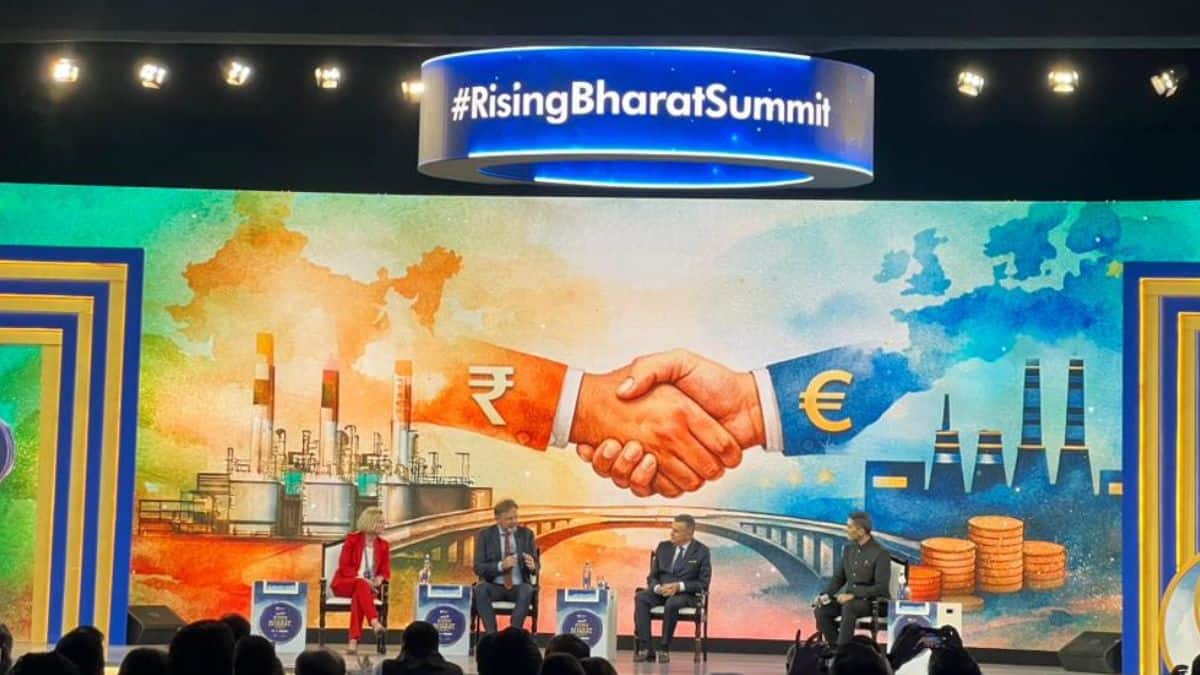
The pursuit of a Free Trade Agreement (FTA) between India and the European Union has become a masterclass in diplomatic endurance. For nearly two decades, negotiators have traded optimistic soundbites while the actual mechanics of trade remain clogged by protectionist instincts and mismatched regulatory ambitions. Sweden’s recent diplomatic push, framing the deal as a sanctuary of predictability in a volatile world, sounds excellent in a press release. However, the reality on the ground is far grittier. The deal is stuck not because of a lack of "trust," but because of a fundamental clash between Europe’s green-focused regulatory expansion and India’s industrial survival tactics.
If this deal is to move beyond the talking phase, both sides must stop pretending that shared values alone can bridge the gap between a post-industrial bloc and a developing giant. Europe wants access to India’s massive middle class and a pivot away from China. India wants technology transfers and an end to the "non-tariff barriers" that keep its products off European shelves. Right now, neither side is getting what they want.
The Swedish Gambit and the Illusion of Predictability
Sweden has long acted as the pragmatic bridge-builder within the EU. With a domestic economy built on exports and high-tech engineering, Stockholm views India as the ultimate hedge against an increasingly erratic Beijing. When Swedish envoys speak of "predictability," they are signaling to European boardrooms that India is ready to be the stable factory of the world.
But predictability is a relative term. For a Swedish firm like Ericsson or ABB, predictability means intellectual property protection and a tax code that doesn't change with every change of government. For an Indian manufacturer, predictability means knowing that the EU won't suddenly invent a new environmental tax that renders their exports uncompetitive overnight.
The Swedish narrative focuses on "trust," but trade is built on interest. Sweden’s push is driven by the fact that their companies are already deeply embedded in India. They aren't looking for a new market; they are looking to protect the one they already have. They see the FTA as a legal shield against the protectionist shifts that occasionally ripple through New Delhi’s policy circles.
The Carbon Border Tax Wall
The biggest elephant in the room is the Carbon Border Adjustment Mechanism (CBAM). This is the EU’s plan to tax imports based on the carbon emitted during their production. While the EU frames this as an essential tool for saving the planet, India views it as a sophisticated form of protectionism.
Indian steel and aluminum industries are energy-intensive. Transitioning to green hydrogen or carbon-capture technology costs billions—money that Indian firms are currently using to expand capacity and create jobs. If the EU imposes these taxes, the "free trade" part of the FTA becomes a mockery.
- The Indian Argument: Why should a developing nation pay the price for a climate crisis it didn't create?
- The European Argument: We cannot let our own industries die by competing with "dirty" steel from abroad.
This is a stalemate. No amount of diplomatic charm from Stockholm or Brussels can hide the fact that CBAM is a direct threat to India’s "Make in India" initiative. Until there is a carve-out or a long transition period for Indian exporters, the FTA is a document written in disappearing ink.
Data Sovereignty vs. Digital Flow
Beyond steel and cars, the fight is over data. Europe has the General Data Protection Regulation (GDPR), the world’s strictest privacy framework. India is currently building its own data protection architecture, heavily influenced by the need for national security and "data localization."
European tech firms are terrified of localization requirements. They want data to flow freely between Bengaluru and Berlin. India, however, views data as a national resource—the "new oil." New Delhi is hesitant to sign any deal that prevents it from taxing digital services or requiring that the data of Indian citizens stays on Indian servers.
This isn't just a technical disagreement. It’s a battle over who controls the digital economy of the next fifty years. The EU wants to export its regulatory model to the world. India wants to build its own.
The Agriculture Trap
Agriculture is where trade deals go to die. For the EU, protecting its farmers is a matter of political survival. For India, it is a matter of literal survival for hundreds of millions of people.
The EU wants India to slash duties on wines, spirits, and dairy. India knows that letting subsidized European milk or cheese into the country could wipe out millions of small-scale dairy farmers. Conversely, Indian farmers struggle to get their fruits and vegetables into Europe because of strict "sanitary and phytosanitary" (SPS) standards. India argues these standards are often used as excuses to block competition.
Sweden’s role here is interesting because they are generally less protective of their agricultural sector than the French or the Polish. However, Sweden cannot move the needle alone. They must convince the more protectionist members of the EU that the strategic benefits of an India deal outweigh the complaints of disgruntled farmers in the Loire Valley.
Why China is the Invisible Hand
Every conversation about the India-EU FTA is actually a conversation about China. The EU is desperate to "de-risk." They realized during the pandemic that being 90% dependent on China for critical components is a strategic nightmare.
India is the only country with the scale to replace China as a global manufacturing hub. But India is also a difficult partner. It is not a passive recipient of Western investment; it is an aspiring superpower with its own agenda.
The EU’s mistake has been treating India like a smaller version of China from the 1990s. India will not trade its regulatory autonomy for a few more factory jobs. It wants a seat at the table where the rules are written, not just a place at the workbench.
The Intellectual Property Deadlock
The pharmaceutical sector remains a massive point of friction. India is the "pharmacy of the world," producing affordable generic life-saving drugs. European pharma giants, many of them Swedish-Swiss like AstraZeneca, want "data exclusivity" and longer patent protections.
If India gives in on IP, the cost of medicine across the developing world will skyrocket. If the EU gives in, their biggest companies lose their competitive edge. There is no middle ground here; there is only a choice of who bears the cost.
Moving Past the Rhetoric
The Swedish envoy’s talk of "trust" is a necessary diplomatic lubricant, but it doesn't solve the structural problems. For the FTA to succeed, the EU needs to stop treating trade as a tool for moral lecturing. You cannot demand that India adopt European labor and environmental standards overnight while simultaneously trying to sell them fighter jets and high-speed trains.
India, for its part, needs to decide if it wants to be a truly global player or if it wants to remain hidden behind a wall of tariffs. You cannot complain about "predictability" when your own tax authorities have a history of retrospective taxation that haunts foreign investors for decades.
The path forward requires a "thin" FTA first. Focus on the easy wins—industrial machinery, high-end electronics, and professional services. Leave the carbon taxes and the dairy subsidies for a later date. If the negotiators try to solve every problem at once, they will continue to achieve nothing.
The global economy is fracturing. The era of wide-open global trade is over, replaced by "friend-shoring" and strategic alliances. If the India-EU FTA fails again, it won't be because of a lack of technical expertise. It will be because both sides were too stubborn to realize that a partial victory is better than a total, predictable failure.
Stop looking for the perfect deal. Start building the one that actually works for the people on the factory floor in Pune and the engineering offices in Gothenburg.