The high-seas interception of the Global Sumud Flotilla by Israeli naval forces has ignited an international diplomatic firestorm, following graphic allegations of torture, systematic beatings, and sexual violence from returning Western volunteers. More than 430 activists from 40 nations were detained when a massive fleet of approximately 50 vessels was boarded in international waters off Cyprus. While Israel maintains the operation was a lawful interception of an illegal attempt to breach the Gaza naval blockade, returning European and Australian nationals describe a descent into a highly militarized apparatus of abuse. The emerging testimonies present a stark challenge to Western governments, forcing a confrontation over the treatment of their own citizens by a major geopolitical ally.
The friction is no longer just about the blockade itself, but about what happened inside the makeshift detention facilities used during the multi-day operation. For a more detailed analysis into this area, we suggest: this related article.
From Open Sea to Shipping Containers
The scale of the operation marks a major escalation in how maritime protests are handled in the Mediterranean. Unlike previous single-vessel challenges, the Global Sumud Flotilla attempted to saturate Israeli defenses using dozens of smaller yachts and boats.
According to detailed accounts provided by returning detainees to authorities in Rome, Paris, and Melbourne, the initial boarding by naval commandos quickly transitioned into a highly structured detention process. Multiple activists reported being transferred from their civilian vessels onto two large Israeli landing craft, which had been retrofitted with barbed wire and shipping containers to serve as floating holding facilities. To get more information on the matter, in-depth reporting can also be found at Associated Press.
It was on these converted prison ships that the most severe violence allegedly occurred.
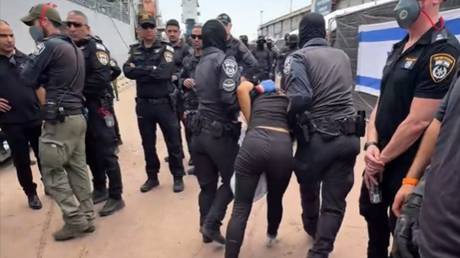
Returning volunteers described being stripped of their clothing, denied access to water, and kept in darkness inside the metal containers for days. Activists from Germany, Italy, and France reported the widespread use of Tasers, resulting in severe injuries to ears and eyes, alongside blunt force trauma that left multiple participants hospitalised with fractured ribs and vertebrae.
The Battle of Testimonies
The political fallout intensified rapidly as European law enforcement agencies stepped in. Prosecutors in Rome launched a formal criminal investigation into charges of kidnapping, torture, and aggravated sexual assault after Italian citizens provided statements upon landing at Fiumicino Airport. Luca Poggi, an Italian economist aboard the flotilla, stated that detainees were systematically kicked, blindfolded, and denied access to consular staff or legal representation while at sea and later at the port of Ashdod.
Concurrently, French organizers confirmed that five returning nationals required immediate hospitalization in Turkey due to severe physical trauma. Organizers documented at least 15 distinct allegations of sexual violence, including forced strip searches, targeted degradation, and multiple accounts of severe sexual assault on one of the landing craft. French activist Meriem Hadjal reported being subjected to prolonged physical abuse and groping, describing a highly aggressive environment where detainees were kept in a constant state of disorientation.
The Israeli government issued a comprehensive denial of the claims. The Israel Prison Service stated that all allegations of abuse, torture, or physical mistreatment are entirely false and lack any factual basis. According to official Israeli statements, all detainees were processed in strict accordance with international legal standards, monitored by professional staff, and provided with medical care operating under health ministry guidelines.
The Israel Defense Forces also stated that standard operating procedures strictly mandate the respectful treatment of all participants during maritime interceptions, adding that no deviations from these protocols had been recorded during the operation.
The Videotaped Taunting and Political Fracture
The geometrical neatness of official denials was complicated by actions within the Israeli political establishment. National Security Minister Itamar Ben-Gvir sparked international outrage by personally publishing a video filmed inside an Israeli detention facility, showing himself mocking bound, kneeling flotilla activists.
The video drew a rare, sharp public rebuke from Prime Minister Benjamin Netanyahu, who stated that the minister's actions were entirely out of line with national norms and values.
The internal friction highlights a deeper systemic division. While professional military and legal branches view these maritime operations through the lens of international law and blockade enforcement, far-right political factions increasingly treat detained Western activists as hostile political actors to be publicly humiliated for domestic political gain. This domestic posturing has provided European governments with the exact leverage needed to demand deeper accountability, with Italy already leading discussions among European Union members regarding potential targeted sanctions against the National Security Minister.
Geopolitical Strains and the Legacy of the Mavi Marmara
For veteran analysts, the current crisis carries echoes of the 2010 Mavi Marmara raid, in which ten Turkish activists were killed during a violent confrontation with Israeli commandos. However, the strategic dynamics have shifted significantly. The Mavi Marmara incident was a violent, chaotic flashpoint on a single large vessel. The Global Sumud Flotilla represents a decentralized, highly organized tactical approach designed to create a protracted logistical and public relations challenge.
By involving hundreds of citizens from influential Western nations—including Germany, Australia, and the United Kingdom—the organizers successfully shifted the geopolitical calculus. Governments that typically offer ironclad diplomatic coverage for Israeli security operations are now faced with extensive, legally documented complaints of abuse from their own electorates. The German Foreign Ministry confirmed that its consular officials noted extensive injuries among arriving nationals, explicitly stating that Berlin expects a full, transparent explanation from Israeli authorities.
The coming weeks will depend heavily on the progress of the Italian criminal judiciary and whether forensic evidence from hospitalized activists can be synthesized into a cohesive international legal challenge. What remains clear is that the old playbook for handling maritime activism has been discarded on both sides. Protesters have learned to weaponize international diversity and decentralized fleets, while the enforcement apparatus on the water has grown markedly more severe, aggressive, and politically charged.