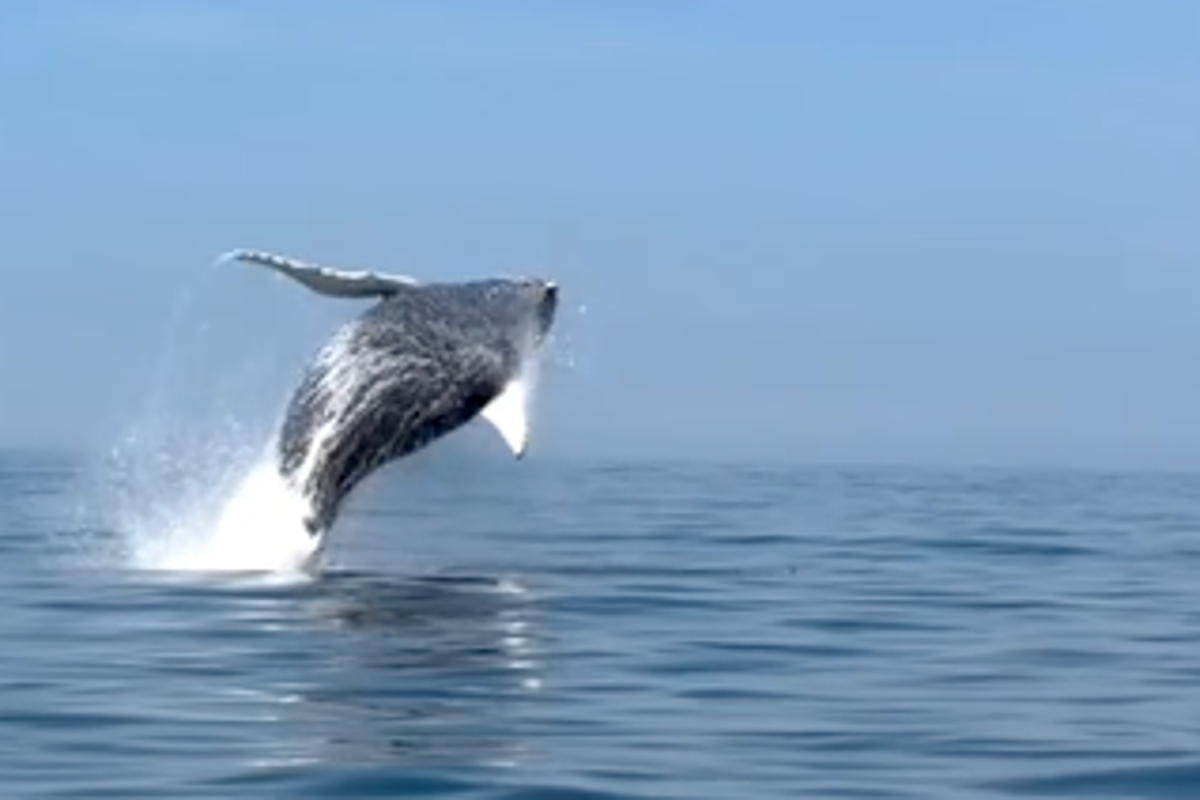
Humpback whales breaching off the New York City coastline have become a viral sensation. Every summer, smartphone footage of a forty-ton cetacean launching its massive body out of the Atlantic captures global attention. Social media feeds fill with aerial drone shots of flukes and spouts against the distant backdrop of the Manhattan skyline. The narrative promoted by local tourism boards and breathless internet aggregators is simple. Clean water laws brought the whales back.
The reality is far more complex, politically contested, and precarious than a feel-good environmental commercial.
Decades ago, seeing a humpback whale in the marine waters surrounding New York Harbor was an extreme anomaly. Today, it is an increasingly common occurrence. This dramatic shift is not the direct result of a sudden corporate or municipal awakening. Instead, it is driven by a convergence of historical regulatory action, shifting ocean temperatures, and an explosive abundance of a single, humble fish species: menhaden.
Understanding this phenomenon requires stripping away the viral hype and looking at what is actually happening beneath the surface of the New York Bight.
The Menhaden Monopoly and the Bight Ecosystem
To understand why humpbacks are breaching within sight of the Verrazzano-Narrows Bridge, you have to follow the food.
Humpback whales do not migrate to the New York metropolitan area to sunbathe. They come here to eat. Specifically, they gorge themselves on Atlantic menhaden, commonly known as bunker. These oily, schooling baitfish are the undisputed engine of the mid-Atlantic marine food web.
For many years, industrial fishing operations decimated local bunker populations. Massive factory ships hauled in millions of pounds of menhaden for fertilizer, pet food, and fish meal. When the industrial harvest of menhaden peaked, the predators that relied on them vanished. Without a reliable food source, humpbacks stayed far offshore or bypassed the New York Bight entirely.
The turning point arrived through a bitter, protracted regulatory battle. Conservationists and recreational fishermen fought tooth and nail against industrial reduction fisheries to cap menhaden catches in state and federal waters. The Atlantic States Marine Fisheries Commission eventually implemented stricter catch limits.
The bunker population rebounded with astonishing speed.
When the food supply returned in historic quantities, the whales followed. Marine biologists tracking individual humpbacks through photo-identification catalogs have documented the same whales returning to New York waters year after year. They are not lost. They have established a seasonal feeding ground in one of the busiest, most industrialized shipping lanes on Earth.
Navigating the Urban Industrial Ocean
An urban whale feeding ground comes with severe, unprecedented hazards. New York Harbor is a hyper-industrialized marine highway. It handles thousands of commercial container ships, high-speed ferries, oil barges, and recreational vessels every single day.
When a humpback breaches in the Lower New York Bay, it is sharing the water column with vessels that cannot stop quickly and often cannot see a dark marine mammal until it is too late.
Vessel strikes are the primary cause of unnatural mortality for humpbacks along the Atlantic coast. The problem is exacerbated by the sheer speed of modern harbor traffic. A high-speed commuter ferry cutting across the bay at thirty knots packs enough kinetic energy to deliver a fatal blow to a juvenile whale.
Federal agencies, whale watch operators, and marine rescue organizations find themselves caught in a high-stakes balancing act. They want the public to appreciate the wildlife, but every viral video of a close encounter encourages irresponsible boaters to chase the animals. Amateurs in jet skis and center-console fishing boats frequently violate federal law by approaching within the legally mandated five-hundred-foot limit.
Whales do not understand maritime law. When surrounded by aggressive human watercraft, they exhibit signs of acute stress, erratic surfacing behavior, and increased collision risk. The romantic image of urban whale watching obscures a daily survival struggle between marine megafauna and industrial human commerce.
Climate Shocks and the Shifting Baseline
Ocean temperatures off the coast of New York are rising faster than the global average. This rapid warming trend is altering the behavior of marine life in ways scientists are only beginning to quantify.
Warmer waters hold less dissolved oxygen and shift the migratory patterns of plankton and small pelagic fish. While menhaden are currently abundant, a sudden marine heatwave could trigger a massive die-off or cause the schooling fish to move further north or into deeper offshore waters. If the bunker disappear, the whales will disappear with them.
This creates a psychological trap for the public. People see humpbacks breaching near Rockaway Beach and assume the ecosystem has been permanently "fixed." Veterans of marine conservation know better. Nature does not operate on a permanent upward trajectory. Ecosystems exist in a state of dynamic, often fragile equilibrium.
The return of the humpbacks is a miraculous second chance, but it is also a temporary condition contingent on strict environmental management and continued protection of forage fish. If fishing quotas are rolled back under political pressure from industrial lobbies, the food supply will collapse.
The Economics of Urban Wildlife Tourism
The presence of cetaceans in New York waters has birthed an unexpected economic sector. Whale watching companies operating out of Queens, Brooklyn, and New Jersey now offer excursions where passengers can spot a humpback breach and view the Manhattan skyline in a single frame.
This juxtaposition of wilderness and metropolis is a marketing dream. Yet, it introduces profound ethical and ecological questions.
Commercial whale watch captains are generally well-trained and adhere to strict guidelines. They act as citizen scientists, reporting sightings, documenting injuries, and assisting stranding networks. Their presence can foster a deep conservation ethic among urban residents who might otherwise view the ocean merely as a dumping ground or a shipping canal.
However, the commercialization of wildlife always carries a dark side. As competition between tour operators increases, the temptation to push the envelope for better customer photos grows. A single viral video of a whale breaching right next to a tour boat drives ticket sales, but it normalizes dangerous proximity in the minds of independent boaters who lack professional training.
The financial incentive to find whales clashes directly with the biological necessity of giving them space to feed and rest.
Beyond the Viral Video
When you see a stunning photograph of a New York humpback whale suspended in mid-air, remember what lies beneath the surface.
It is a story written in the blood of past environmental destruction, the hard-fought victories of modern marine policy, and the relentless biological drive of an animal trying to find a meal in a concrete-ringed sea. The whales are here because we stopped actively killing them en masse and because we accidentally provided them with an all-you-can-eat buffet of bunker.
They are not pets, and the New York Bight is not a marine sanctuary in the traditional sense. It is a working industrial zone where some of the largest mammals on Earth are attempting to coexist with humanity.
The next time a clip of a breaching whale crosses your screen, appreciate the sheer majesty of the animal, but recognize the precarious thread holding this urban spectacle together. One bad summer for menhaden, one regulatory rollback, or one high-speed collision too many could empty the harbor just as quickly as it filled up.