The global energy market is currently witnessing a volatility spike that defies standard supply-and-demand logic. Brent crude has cleared the $116 per barrel mark this morning, cementing a monthly surge of more than 50 percent—the most aggressive upward move in modern history. While retail analysts point toward "geopolitical tension" as a catch-all explanation, the reality is far more clinical and dangerous. This isn't just a reaction to a conflict; it is the market pricing in a fundamental shift in how the United States intends to weaponize energy infrastructure.
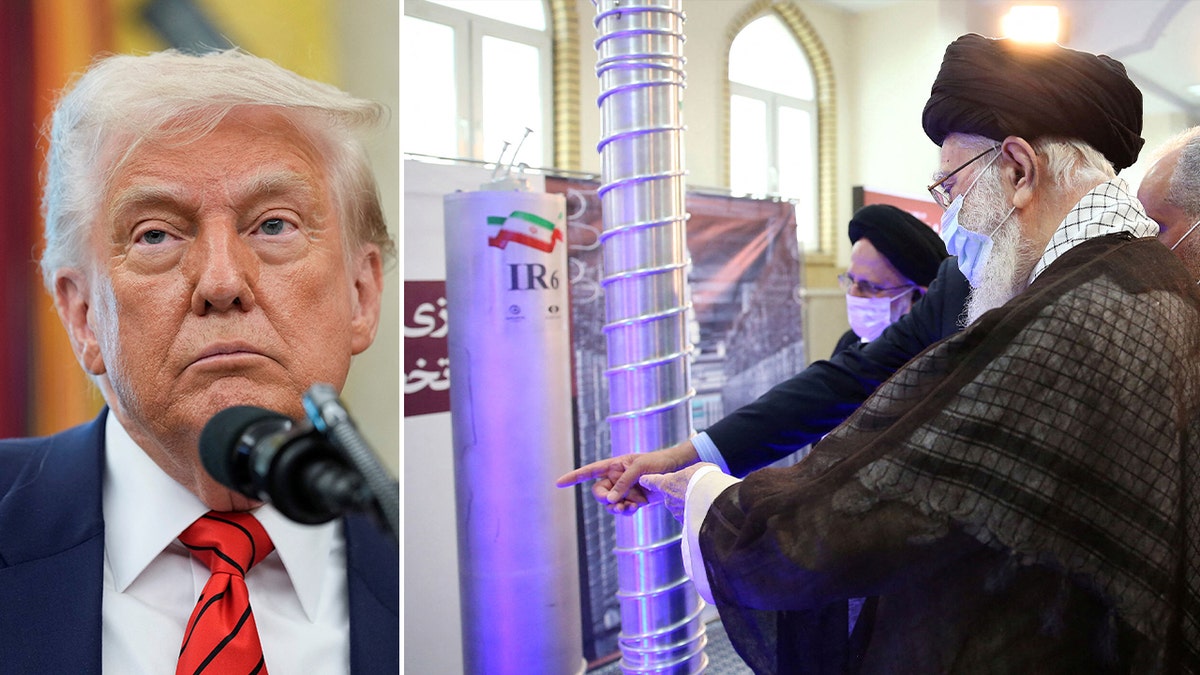
President Trump has moved beyond traditional sanctions, signaling a desire for direct "energy control" over Iranian assets. In high-level briefings and public remarks, the administration has framed this as a necessity to stabilize a fractured Middle East. However, the immediate result is the effective closure of the Strait of Hormuz, a chokepoint responsible for 20% of the world’s oil and liquefied natural gas (LNG). When you remove that volume from the board, "stability" becomes a ghost.
The Hormuz Blockade and the Death of Spare Capacity
For decades, the global economy relied on the "oil for security" bargain—a tacit agreement that the U.S. would protect Gulf shipping lanes in exchange for a steady flow of crude. That deal is dead. By pursuing a strategy of "taking the oil" or imposing total maritime dominance over Iranian exports, the U.S. has forced Tehran’s hand. The result is a net shortage of roughly 15 million barrels per day that simply cannot be replaced by existing pipelines.
Market participants are finally waking up to the fact that "spare capacity" is an illusion. While Saudi Arabia and the UAE technically hold millions of barrels in reserve, that oil is physically trapped behind the Hormuz blockade. You cannot pump what you cannot ship. This has turned Brent crude into a bidding war for the remaining "on-water" barrels already clear of the Persian Gulf.
Why Domestic Production Won't Save the Pump
There is a persistent myth that surging U.S. shale production acts as a natural ceiling for global prices. The data suggests otherwise. For the fourth consecutive week, U.S. output has actually slipped, averaging 13.6 million barrels per day.
The disconnect is simple. Domestic producers are not incentivized to flood a market characterized by extreme political risk. Instead, they are prioritizing shareholder returns and debt reduction over aggressive drilling. Even with the administration considering a waiver of the Jones Act to allow foreign tankers to move fuel between U.S. ports, the impact is negligible—a literal drop in the bucket that might shave three cents off a gallon of gas while the base price of crude climbs by dollars per hour.
The Secondary Tariff Trap
The White House is currently doubling down on 25% secondary tariffs aimed at any nation trading with the Iranian regime. This is specifically designed to choke off the "dark fleet" of tankers supplying China. While this satisfies a hawkish foreign policy agenda, it ignores the structural reality of Asian energy needs.
If China cannot source Iranian crude, it must compete for the same North Sea and Atlantic barrels that Europe relies on. This creates a global squeeze that pushes Brent toward the $120 threshold. We are seeing a reshaping of crude trade flows where political alignment now dictates price more than the quality of the sulfur content in the barrel.
The Hidden Costs Beyond the Barrel
The focus remains on gasoline prices, but the real economic wreckage is occurring in the supply chain for complex goods. The Hormuz closure hasn't just stopped oil; it has halted the flow of sulfur, helium, and urea.
- Helium: Essential for semiconductor manufacturing. Without it, fiber optic and chip production stalls.
- Sulfur: Critical for etching computer chips and producing phosphate fertilizers.
- Urea: The backbone of global agriculture.
A shortage of these commodities triggers a secondary inflationary wave that will hit grocery stores and electronics retailers long after the initial oil shock. This is the "tail risk" that the current administration's strategy appears to have undercalculated.
The Strategy of Managed Chaos
The Trump administration’s decision to "unsanction" specific Iranian tankers already at sea is an attempt to have it both ways. They want to exert maximum pressure on the Iranian government while simultaneously releasing enough "sanctioned" oil to prevent a total domestic economic meltdown. It is a high-wire act with no safety net.
Critics argue that this approach provides a $14 billion revenue lifeline to the very regime the U.S. is striking. Supporters claim it is the only way to keep the global economy from seizing up. The truth is likely more cynical. The administration is gambling that it can maintain a high-price environment that benefits domestic "Energy Dominance" goals without crossing the threshold where voters revolt at the pump.
The Illusion of the SPR
Talk of a Strategic Petroleum Reserve (SPR) release is currently dominating the news cycle, but the numbers don't add up. The current proposed release is equivalent to roughly one day of global consumption. Using the SPR to counter the closure of the Strait of Hormuz is like trying to fix a burst water main with a cocktail straw. It provides a temporary psychological cushion for the markets, but it does nothing to address the structural deficit of 20 million barrels per day currently bottled up in the Gulf.
The record monthly surge in Brent is not a fluke or a temporary panic. It is the sound of the world’s energy architecture breaking. As the U.S. moves to seize control of the Iranian energy narrative, it is effectively ending the era of cheap, predictable crude. Investors and consumers alike need to stop waiting for a return to "normal."
The new floor for Brent is being built on a foundation of permanent geopolitical risk. Any strategy that assumes a quick resolution to the Hormuz blockade or a sudden surge in U.S. drilling is based on a market that no longer exists. The only remaining question is how much higher the price must go before the global demand for oil finally breaks under the weight of its own cost.