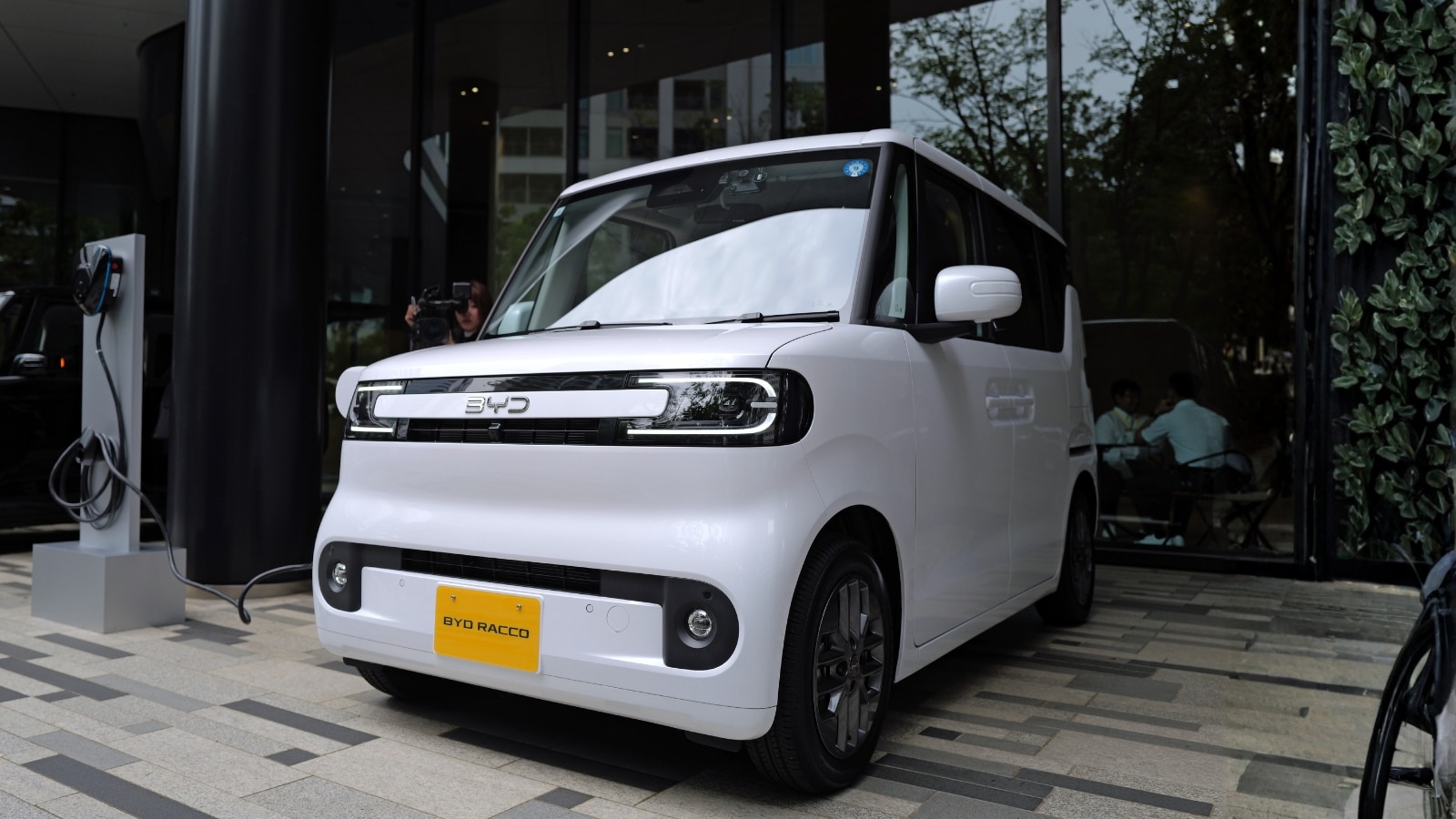
Every automotive analyst writing about the BYD Racco is missing the real story. The lazy consensus across the trade press claims that a Chinese automaker shipping a $13,000 electric microvan into the heart of Tokyo is a historic David versus Goliath moment. They point to the initial order books—over a thousand signatures within two weeks—and scream about an existential crisis for domestic juggernauts like Suzuki, Daihatsu, and Nissan.
They are looking at the wrong metric entirely.
I have watched foreign entrants blow hundreds of millions of dollars trying to crack insular domestic markets with cheap hardware, only to burn out on distribution friction and cultural gatekeeping. The Racco is not a battering ram breaking down the gates of Japan's protected kei car segment. It is a stress test for a much larger, more terrifying strategy: finding out whether Japanese consumers will trade national brand loyalty for localized packaging.
And the early data tells a counter-intuitive truth that nobody in the mainstream media wants to print.
The Quality Paradox of the Top-Spec Buyer
Look past the headline-grabbing base price of roughly 2.14 million yen ($13,470). The lazy narrative treats this vehicle as a budget compliance appliance designed to undercut domestic electric alternatives like the Nissan Sakura on sheer cheapness.
The market just rejected that premise violently.
Customer survey data from the initial rollout reveals a stunning consumer behavior quirk: an overwhelming 80% of buyers ignored the base model and bypassed the mid-tier entirely to snap up the top-spec 300 Premium trim. They paid nearly 2.5 million yen ($15,720) for a Chinese-built microvan packed with synthetic leather, a 10.1-inch display, and an LFP Blade battery stretching nearly 200 miles of range.
Imagine a scenario where a foreign automaker builds a cheap compliance box, only for the local market to demand luxury features and maximum range anyway.
This destroys the foundational myth that Japanese buyers turn to kei cars purely out of economic desperation. If budget were the sole driver, the base tier would dominate. Instead, buyers are treating the Racco as a tech-forward lifestyle accessory. They want the 35.84 kWh battery pack that smashes through the 186-mile threshold, paired with Vehicle-to-Home (V2H) bidirectional power support to run household appliances during a grid blackout.
The competition is not losing sleep over a cheap runabout. They are losing sleep because a foreign brand successfully reframed a utilitarian tin box into a high-tech survival gadget.
The Distribution Bottleneck Nobody Mentions
Let us talk about the infrastructure reality check that mainstream commentators conveniently omit. BYD's global machine pumps out hundreds of thousands of units monthly, but its retail footprint in Japan remains a boutique operation. In the same month the Racco generated headlines for its thousand-unit spike, BYD’s broader dealer network delivered a modest 383 passenger vehicles across the entire country.
Scale requires infrastructure, and Japan's dealership ecosystem is an impenetrable old-boys club built on personal relationships, door-to-door maintenance service, and neighborhood trust. A digital order form and an over-the-air software update cannot replace a local dealer who has serviced three generations of a family's hatchbacks.
Targeting 10,000 orders by the end of the year is a drop in an ocean where domestic makers move millions of units annually. The Racco is currently living off early-adopter tech enthusiasts and multi-car households using it as a secondary urban toy. Converting that initial curiosity into sustained mainstream dominance means displacing deep-seated cultural habits that span decades. That cannot be solved with a lower sticker price alone.
The Real Threat Hiding in Plain Sight
The traditional automakers are not vulnerable because the Racco is cheaper. They are vulnerable because they spent decades over-engineering internal combustion kei cars while dragging their feet on electric packaging efficiency.
By utilizing Cell-to-Body structural battery integration on a dedicated EV architecture, BYD squeezed a cavernous interior, dual power-sliding doors, and a tight 15.7-foot turning radius into the rigid 133.7-inch statutory length limit mandated by Japanese law. They didn't just build a foreign car to local rules; they built a package that out-packages the domestic incumbents at their own game.
Stop waiting for the domestic giants to collapse overnight. They won't. But recognize that the moat protecting Japan’s automotive micro-universe has just been bridged by a sea otter.