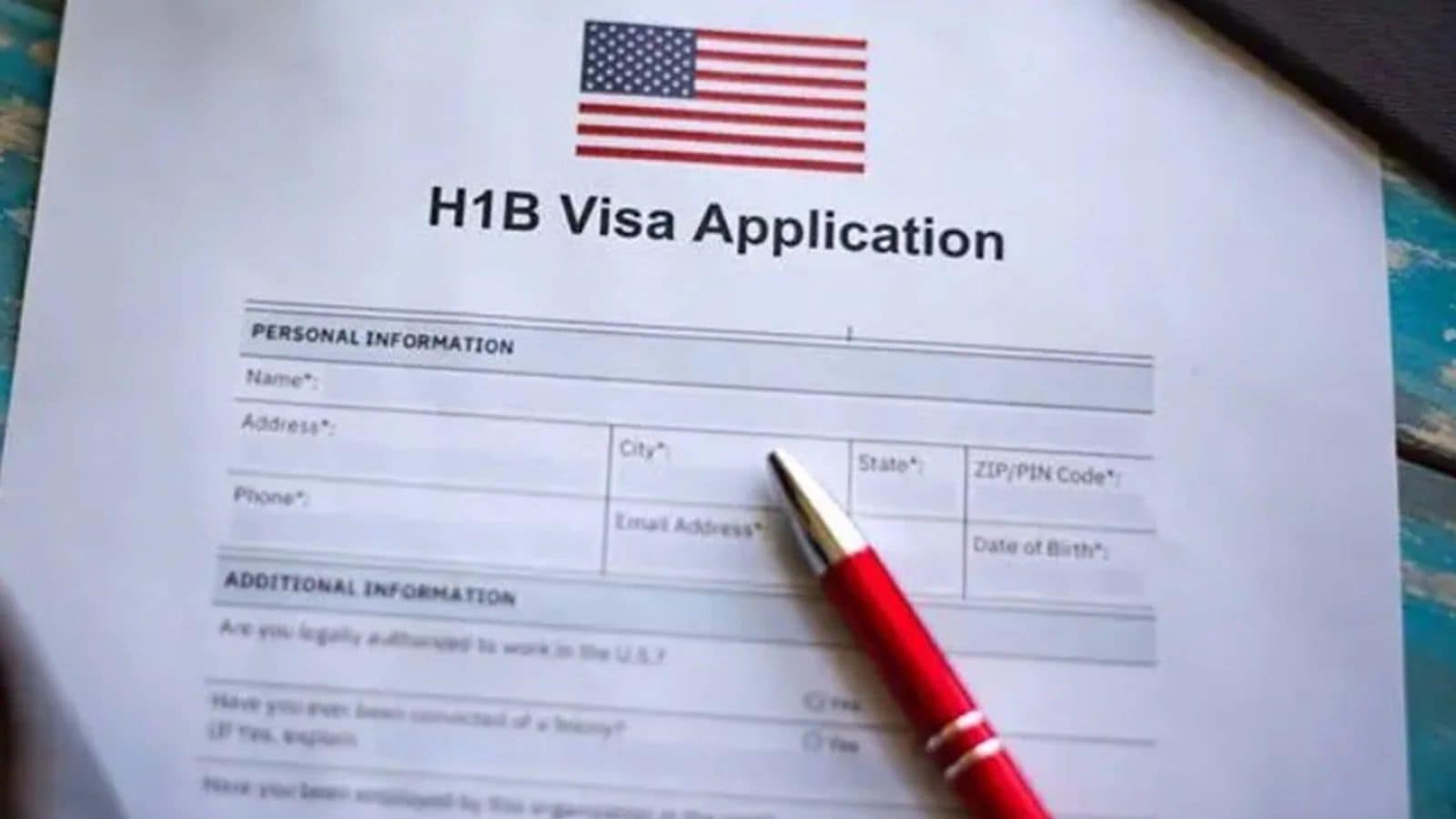
The American high-tech labor market is currently facing a legislative guillotine disguised as reform. The "End H-1B Visa Abuse Act" proposes a radical three-year freeze on new H-1B issuances, a move that would effectively decapitate the primary talent pipeline for Silicon Valley and beyond. While proponents argue that this is a necessary correction to protect domestic wages, the reality is a complex web of economic brinkmanship that threatens to dismantle the competitive edge of the United States. This isn't just about paperwork; it's a fundamental shift in how the nation values global talent versus protectionist isolation.
The Three Year Void
The core of the new proposal rests on a mandatory three-year moratorium on H-1B approvals. This is not a "pause" or a "recalibration." It is a hard stop. For thirty-six months, the steady flow of specialized labor—engineers, data scientists, and medical researchers—would cease. The immediate fallout would be a vacuum in the middle-management and entry-level technical tiers of every Fortune 500 company.
Labor markets do not simply sit idle during a freeze. They migrate. If a firm cannot hire a specialized cloud architect in Seattle, that role does not magically go to a local candidate who lacks the specific certifications. Instead, the entire project moves to Vancouver, Bangalore, or Dublin. We are witnessing the intentional offshoring of the American tax base under the banner of "America First."
The Salary Cap Deception
A secondary, more insidious component of the legislation involves the restructuring of salary requirements. The act seeks to eliminate the current "prevailing wage" levels, replacing them with a rigid, high-floor salary cap that ignores regional cost-of-living differences.
By mandating a single, elevated minimum salary for any H-1B holder, the bill effectively bans mid-sized companies and startups from the program. A startup in Austin cannot compete with the balance sheet of a trillion-dollar search engine giant. This creates a monopoly on talent. Only the wealthiest firms will be able to afford the "entry fee" for foreign expertise, while the rest of the ecosystem is starved of specialized labor.
The War on the H-4 Visa
Beyond the economic metrics, the proposal takes a sharp, punitive turn toward the families of visa holders. Since 2015, H-4 visa holders—the spouses of H-1B workers—have been eligible for work authorization under certain conditions. This allowed dual-income households to establish roots, buy homes, and contribute to local economies.
The new act seeks to strip this right entirely. By banning H-4 work permits, the government is essentially telling high-skilled immigrants that their families are unwelcome. Imagine a specialized surgeon or a lead software developer being told their spouse, perhaps an architect or teacher themselves, must remain unemployed for a decade while waiting for a green card.
The result is predictable. The "best and brightest" will look at the math and choose Canada or the UK instead. We are trading long-term economic stability for short-term political theater.
The Myth of the Displaced Worker
The loudest argument for this freeze is the protection of the American worker. It is a compelling narrative, but it lacks the weight of empirical data. Most independent economic studies show that H-1B workers actually complement domestic labor rather than replace it.
Consider a hypothetical scenario in a regional hospital. A specialized cardiologist brought in on an H-1B visa allows the hospital to expand its cardiac wing. This expansion requires the hiring of dozens of American nurses, administrative staff, and technicians. Without that one specialized lead, the entire project is shelved, and the domestic jobs are never created. This is the "multiplier effect" that protectionist rhetoric conveniently ignores.
The abuse within the H-1B system is real, particularly among "body shops" that outsource labor at low costs. However, the proposed act uses a sledgehammer to fix a watch. Instead of auditing the specific firms that exploit the system, it punishes the entire innovation economy.
The Infrastructure of Innovation
The United States has spent seventy years building an infrastructure that attracts global talent. Our universities are the best in the world, and for decades, we have invited the smartest students to stay and build their companies here. This bill flips that script. It educates the competition and then forces them to go home and compete against us.
The administrative burden alone of a three-year freeze would be catastrophic. The United States Citizenship and Immigration Services (USCIS) relies heavily on filing fees to fund its operations. A total freeze on the most popular visa category would lead to a massive budget shortfall, causing delays in every other immigration category, from marriage-based green cards to asylum processing. The system would collapse under its own weight.
Corporate Response and Lobbying Silence
While tech giants have historically fought these measures, there is a strange, muffled quality to the current opposition. Some analysts suggest that the largest firms are quietly preparing to pivot. They have already established massive satellite offices in "near-shore" locations like Canada.
If this bill passes, these companies will simply accelerate their transition. They won't stop hiring; they will just stop hiring in the United States. The real losers are the local municipalities—the dry cleaners, the real estate agents, and the grocery stores in tech hubs that rely on the spending power of these high-earning households.
Breaking the Salary Floor
The proposed salary floor is designed to make H-1Bs more expensive than American workers. On the surface, this sounds like it would force companies to "hire American." In practice, it ignores the skills gap.
In fields like cybersecurity or AI development, there are currently more job openings than there are qualified domestic candidates. Raising the price of a foreign worker doesn't create a qualified American worker out of thin air. It simply makes the project more expensive to execute, which leads to project cancellation or relocation.
The Global Talent War
We are no longer the only game in town. Nations like Australia and Germany have recently revamped their immigration laws to make it easier for high-skilled tech workers to enter. They are watching the American legislative landscape with predatory interest.
Every engineer who is denied a visa or whose spouse is denied a work permit is a gift to a competing nation's GDP. We are voluntarily surrendering our dominance in the technology sector to satisfy a populist impulse that doesn't understand the mechanics of a globalized economy.
The Hidden Cost of Uncertainty
Investment requires stability. When a company decides to build a new research and development center, they look at the ten-year horizon. They need to know they can staff that center with the best people available.
The mere introduction of the "End H-1B Visa Abuse Act" has already sent a chill through the venture capital community. Why invest in an American startup that might lose its lead developers to a legislative whim in twelve months? The uncertainty is a tax on innovation that we cannot afford to pay.
The legislation also fails to account for the "aging out" of the children of H-1B holders. These children, often brought to the U.S. at a young age, face deportation when they turn 21 if their parents haven't secured green cards—a process that now takes decades due to backlogs. This bill would solidify that cruelty, ensuring a generation of American-raised talent is exported to our rivals.
The False Choice
The debate is often framed as a choice between "cheap foreign labor" and "fair American wages." This is a false dichotomy. The real choice is between a dynamic, growing economy that leads the world in innovation and a stagnant, inward-looking economy that protects the jobs of the past while losing the industries of the future.
If we want to end H-1B abuse, we should target the firms that underpay workers and the consultants who exploit the lottery system. We should not punish the families who have moved across the world to build their lives here, nor should we freeze the engine of our own progress.
The three-year freeze isn't a policy; it's an exit strategy for the American dream. We are currently watching the blueprint for our own obsolescence being drafted in real-time. If this act becomes law, the "brain drain" won't be something that happens to other countries; it will be the defining characteristic of the American 2020s.
Audit the abusers. Strengthen the oversight. But do not close the gates. Once the talent leaves, it does not come back. The infrastructure of expertise, once dismantled, takes decades to rebuild. We are playing a high-stakes game with a deck that we are intentionally thinning.
Stop pretending this is about wages. It is about control. And in the pursuit of that control, we are burning the very house we are trying to protect. The cost of this freeze will not be measured in the salaries of the few, but in the irrelevance of the many.