The era of Canada’s "free ride" on North American defense is officially hitting a wall. For decades, Ottawa treated military spending as a polite suggestion rather than a requirement, coasting on the geographical luck of being sandwiched between three oceans and a superpower. That luck just ran out.
Washington isn’t asking nicely anymore. The recent confirmation hearings for Elbridge Colby, now a senior Pentagon official, made one thing clear: the U.S. is done subsidizing the security of wealthy allies who won't help themselves. Colby, a chief architect of modern American strategy, has been vocal about the "Lippmann gap"—the dangerous disconnect between what we promise to defend and what we actually have the hardware to protect. He’s told everyone from MAGA senators to international diplomats that Canada needs to "step up" immediately. It's not just about hitting a 2% NATO target anymore; it's about whether Canada wants to remain a partner or become a vassal.
The end of the 2032 excuse
Justin Trudeau used to talk about 2032 like it was a looming deadline. To the Trump administration and defense hawks in D.C., that date was a joke. Senator Jim Risch recently noted that suggesting a 2032 timeline for hitting basic spending targets would get a "guffaw" from the Oval Office. The world is moving too fast for a decade-long ramp-up.
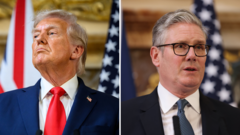
Prime Minister Mark Carney, stepping into the fray, has been forced to shift the goalposts. The current plan involves a massive $81.8 billion reinvestment, with Carney recently announcing that Canada will actually hit that 2% mark this fiscal year. It’s a stunning reversal for a country that was spending a measly 1.33% of its GDP just a couple of years ago.
But here’s the kicker: even 2% might not be enough. At the NATO summit in The Hague, a new benchmark was floated: 5% of GDP by 2035. For Canada, that's a $150 billion annual price tag. It’s a number that makes Canadian treasurers sweat and taxpayers panic.
Why the U.S. pressure is actually working
You might wonder why Canada is suddenly finding billions of dollars under the couch cushions. It isn't just because they've suddenly developed a passion for fighter jets. It's about trade and survival.
Donald Trump has repeatedly linked defense spending to trade relations. With the CUSMA (the "new NAFTA") up for review in 2026, Canada is in a tight spot. If they don't show they’re serious about the Arctic and continental defense, they risk getting hammered with a 10% global tariff or worse. The White House has even hinted that the U.S. might view Canada as a "vassal state" if it continues to benefit from the American security umbrella without paying its share.
Colby’s "Strategy of Denial" logic applies here perfectly. He argues that the U.S. must prioritize the Indo-Pacific to counter China. Every dollar the U.S. spends patrolling the Canadian Arctic or defending North American airspace is a dollar taken away from deterring a conflict in the Pacific. From Washington’s perspective, Canada isn't just being lazy; it's actively draining resources from the primary global threat.
What Canada is actually buying
It’s easy to talk about percentages, but what does "stepping up" look like on the ground? The Carney government is pivoting from "butter to guns" with a specific focus on sovereignty.
- Arctic Sovereignty: This is the big one. With the ice melting and Russia and China eyeing the Northwest Passage, Canada can't afford to be a ghost in its own backyard. They're looking at under-ice surveillance and new maritime patrol aircraft.
- Submarine Replacement: The current Victoria-class subs are basically museum pieces at this point. Canada needs a fleet that can actually stay submerged and track adversaries in the deep.
- NORAD Modernization: This means over-the-horizon radar and integrated missile defense. You can't defend the continent with technology from the 1980s.
- Defense Industrial Base: Carney is pushing a "Strategic Autonomy" angle. He wants Canada to build its own ammunition and tech so it isn't "hostage to the decisions of others."
Honestly, it’s a massive lift. Canada’s procurement system is notoriously slow—more like buying a laptop through a decade of committee meetings than a strategic military acquisition. To meet these new demands, the entire bureaucratic process has to be blown up and rebuilt.
The political cost at home
Carney is walking a razor-thin line. Half of Canadians support hitting the 2% target, but that support drops off a cliff when you mention the 5% figure or cutting social programs to pay for it. The Conservative opposition, led by Pierre Poilievre, wants to "fix the budget," but you can't balance the books while adding $15 billion to $50 billion in annual military spending without cutting somewhere else.
The reality is that Canada is no longer safe behind its geography. The "fireproof house" that earlier generations of Canadian politicians bragged about has caught fire. Whether it's the threat of Russian incursions in the North or the very real threat of American trade retaliation, the cost of doing nothing has finally become higher than the cost of the hardware.
If you’re watching this play out, keep an eye on the 2026 CUSMA review. That’s the real deadline. If Canada hasn't shown significant progress on its "Our North, Strong and Free" policy by then, the "guffaws" from Washington will turn into something much more expensive for the Canadian economy.
The next step for Ottawa isn't another policy review or a "phased transition." It's cutting checks for ships, planes, and radar systems today. Anything less is just more of the same talk that Washington has stopped listening to.