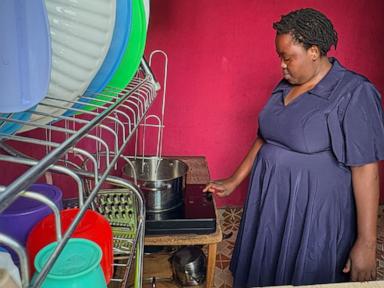
Millions of families across Africa still cook over open fires and traditional charcoal stoves every single day. Smoke fills kitchens, forests shrink to feed local energy demands, and preventable health issues burden communities. Traditional funding models haven't solved this crisis. Enter carbon credit financing, which has quietly become the primary engine driving the transition to modern household energy.
Instead of waiting for government budgets or traditional foreign aid, developers are using carbon markets to subsidize the upfront costs of clean cookstoves. It sounds simple on paper, but the reality on the ground involves complex financial engineering, strict verification rules, and high-stakes execution. If you want to understand how Africa is attempting to crack the clean cooking puzzle, you have to look past the headlines and examine the cash flows.
The Economics of the Stove Subsidy
An efficient biomass or electric stove isn't cheap for a low-income household. Without financial intervention, an advanced stove retailing for $40 is completely out of reach for a family earning daily wages. Carbon finance changes the math completely.
Investors provide upfront capital to manufacturers like Nairobi-based BURN, allowing them to slash retail prices down to as little as $5 for the end user. These investors recoup their money and make a return through future carbon credits generated when households permanently reduce their reliance on wood and charcoal.
This isn't charity. It is a commercial transaction built on avoided emissions. When a household switches from a smoky three-stone fire to a modern insulated stove, measurable drops in carbon dioxide and black carbon occur. Third-party auditors verify these reductions, credits get issued, and companies sell them to international buyers seeking offsets.
Moving Past the Skepticism
Carbon markets haven't enjoyed a spotless reputation. Past scandals and overhyped offset projects made buyers wary of the entire voluntary carbon market. Critics point out that carbon money usually arrives after the heavy lifting is done. Companies still need millions in initial liquidity to manufacture, ship, and distribute stoves before a single credit is ever generated.
To survive the scrutiny, the industry is shifting hard toward rigorous digital tracking. Modern projects utilize digital monitoring, reporting, and verification systems. Some developers even deploy blockchain-backed protocols and Bluetooth-enabled meters to track actual usage patterns in real time. Buyers no longer accept rough estimates. They demand hard data showing that a stove is sitting in a kitchen and getting used every single day.
Regulatory shifts also change how projects operate. Frameworks like Article 6 of the Paris Agreement open doors for government-to-government trades, but they bring stricter host-country approvals. When local authorizations stall, companies feel the pain. For instance, high-profile setbacks like the closure of Koko Networks in Kenya highlight how vulnerable project developers are to regulatory bottlenecks.
What Actually Works on the Ground
If you are looking at how this scales successfully, local context dictates everything. Electric induction cookers work well in urban pockets of Kenya and Tanzania where the grid is relatively stable. Meanwhile, advanced biomass stoves remain essential for rural regions in the Democratic Republic of Congo and Madagascar, where wood fuel is deeply entrenched.
Financing structures are evolving to match these realities. Facilities backed by international institutions now offer risk-sharing mechanisms to help local banks lend against future carbon revenues. Pay-as-you-go models combined with carbon subsidies allow customers to clear remaining costs in small, manageable digital installments.
The transition won't happen overnight. Millions of people still lack clean cooking access, and carbon credits alone cannot fix broken domestic supply chains or weak local infrastructure. Yet, without this specific financial mechanism, the gap would be impossible to close. Private capital is doing the heavy lifting, turning clean cooking from a stalled development goal into a bankable market reality.
How Carbon Project Finance is Scaling Clean Cooking Across Africa
This video provides an inside look at how carbon project financing directly funds stove distribution and scales clean cooking initiatives across multiple African nations.
http://googleusercontent.com/youtube_content/1


