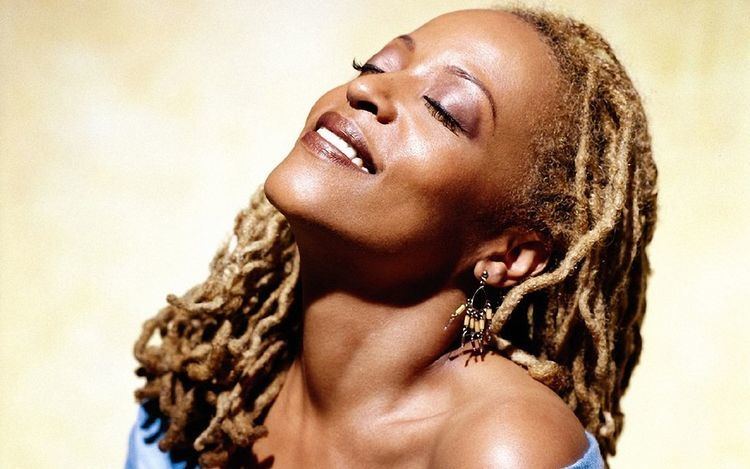
Cassandra Wilson died at the age of seventy in her native Jackson, Mississippi, silencing one of the most singular and uncompromising voices in modern American music. Two-time Grammy winner, National Endowment for the Arts Jazz Master, and once crowned America’s best singer by Time magazine, Wilson did not merely interpret the standard jazz canon. She tore it down to the studs.
Long before genre-fluidity became a calculated marketing strategy for streaming algorithms, Wilson was treating the Great American Songbook, Delta blues, country hymns, and pop radio hits as a single, contiguous landscape of human emotion. Her contralto did not whisper; it anchored. It carried the heavy, humid air of the American South into smoky Manhattan rooms and global concert halls, fundamentally rewriting what a jazz vocalist was allowed to be.
Born into a musical household in Jackson in 1955—her father was a bassist and a music lover who steeped her ears in everything from jazz to folk—Wilson picked up the piano early before mastering the acoustic guitar. That guitar became her weapon of choice. When she relocated to New York City in the early 1980s, walking into the epicenter of the contemporary jazz revival, she brought an instrument that most traditional front-women left at home. She joined forces with Steve Coleman and the M-Base collective, diving headfirst into complex, jagged rhythms and intellectual improvisation.
Yet, complexity was never her final destination. Wilson understood that intellectualism in jazz often risked alienating the very pulse of the audience.
Her breakthrough arrived when she stripped away the cerebral armor and looked backward and sideways. 1993’s Blue Light 'til Dawn stands as a monumental shift in modern recording history. On that album, produced by Craig Street, Wilson took songs associated with Robert Johnson, Van Morrison, and the traditional blues catalog, slowing them down, dragging them through acoustic swamps, and reinventing them with sparse instrumentation. There were no soaring, acrobatic vocal runs designed to show off technical range for its own sake. Every note felt heavy with consequence.
The Blueprint of Reconstruction
Music critics frequently pigeonholed her work as a revival of traditionalism, but that assessment missed the subversion at the core of her art. When Wilson covered the Monkees' "Porpoise Song" or Hank Williams's "I'm So Lonesome I Could Cry," she was not performing ironic pastiche. She was treating pop and country as folk art just as valid as Gershwin or Porter.
Her phrasing was famously idiosyncratic. She would stretch a syllable until it fractured, hanging suspended over a muted guitar string or a brushed cymbal before resolving into a cadence that caught listeners entirely off guard.
Consider how she approached Miles Davis’s catalog on her 1999 album Traveling Miles. Instead of treating Davis as a untouchable monument, she treated his compositions as living blueprints, adding her own lyrics and turning instrumental jazz explorations into vocal confessions. It required a specific kind of arrogance—the artistic kind born of absolute mastery—to rewrite Miles Davis and pull it off with total authority.
The Cost of Autonomy
The music industry rarely rewards artists who refuse to stay in their designated commercial lanes. Record executives wanted a standard jazz diva who would stand by a piano in an evening gown and belt out Gershwin standards for hotel lounges and predictable blue-note CD sales. Wilson rejected that script.
She demanded control over her arrangements, her material, and her sonic identity. Transitioning from major labels like Blue Note to independent ventures later in her career, she fought to keep her creative ecosystem free from corporate meddling. That independence came with friction. Mainstream commercial visibility inevitably ebbed and flowed, but her artistic integrity remained entirely uncompromised. She preferred obscurity over dilution.
Her influence now echoes through generations of artists who refuse to respect genre walls. When contemporary performers blend neo-soul, indie folk, and avant-garde jazz into a unified aesthetic, they are walking down a path that Cassandra Wilson cleared with a single acoustic guitar and an unshakeable vision of southern modernism.
The silence she leaves behind in Jackson is heavy. The standard she set remains entirely out of reach.


