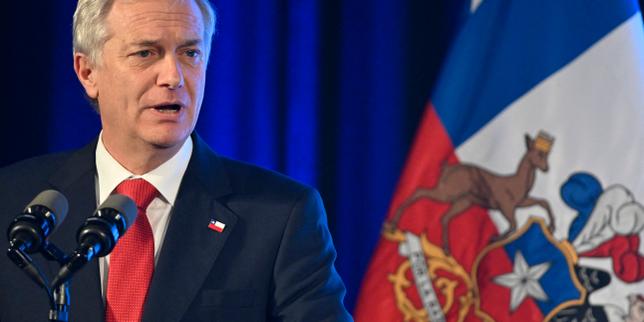
The letters arrived in Santiago without warning, carrying figures that represented a decade of financial quiet panic. Chile's government, under the leadership of right-wing President José Antonio Kast, has officially demanded the immediate recovery of more than half a million defaulted student loans. For years, the CAE system (Crédito con Garantía del Estado) functioned as a political ghost story, haunting graduates who traded higher education for a lifetime of compound interest owed to private banks backed by state guarantees. Now, the state wants its money back, and the confrontation threatens to shatter the fragile social contract underpinning South America's most market-driven economy.
When the credit scheme was introduced two decades ago, it was sold as an engine of social mobility. Young people from working-class families who previously had zero access to universities could suddenly sign a contract, sit in lecture halls, and chase white-collar careers. The hidden mechanism relied on a dangerous triad: commercial banks provided the capital, universities collected inflated tuition fees, and the government guaranteed the risk. When graduates entered a labor market choked by low starting salaries and casualized employment, the math collapsed. Default rates soared past fifty percent, leaving a generation trapped between unpayable obligations and degrees that failed to deliver economic liberation.
The Anatomy of a State-Backed Trap
To understand why half a million citizens are suddenly facing legal recovery demands, you have to look at the balance sheets of the financial institutions that managed the credit portfolios. The system was never designed to be a sustainable educational investment. It was a guaranteed yield vehicle for commercial banks disguised as public policy.
Banks lent money at attractive interest rates because the treasury absorbed the default risk. Universities, flush with cash from state-backed student enrollments, expanded campuses and raised tuition without matching productivity gains. The student stood at the bottom of this financial pyramid, holding a debt instrument that could not be discharged through bankruptcy.
Consider a hypothetical borrower graduating from a Santiago institution with a degree in social work. Earning the median market wage, her monthly payments consumed nearly forty percent of her take-home pay. After five years of scraping by, interest capitalization pushed her principal higher than the day she graduated. This is not an outlier. It is the architectural design of a program that treated human capital as high-yield junk bonds.
+------------------+     Tuition Fees     +-------------------+
| Commercial Banks | -------------------> |    Universities   |
+------------------+                      +-------------------+
         |                                          ^
         | State-Backed                             | Enrollment
         | Risk Guarantee                           | Expansion
         v                                          |
+-------------------------------------------------------------+
|                     The Student Borrower                    |
|                (Trapped in Compound Interest)               |
+-------------------------------------------------------------+
Political winds shifted dramatically with the election of Kast. Where previous center-left administrations promised sweeping debt forgiveness while quietly kicking the can down the road, the current administration views the portfolio through an orthodox fiscal lens. The argument from the palace is simple: a contract is a contract, and public coffers cannot absorb billions in private defaults without blowing a hole in the national budget.
This hardline stance ignores the systemic coercion that forced teenagers into these agreements. At eighteen, millions of Chileans signed documents they barely understood because the alternative was permanent exclusion from the middle class. To label these defaults as willful financial irresponsibility is an exercise in political gaslighting.
The Economic Fallout of Mass Default
The decision to aggressively pursue half a million debtors carries severe macro-level consequences that extend far beyond individual bank accounts. When an entire generation of working-age adults is consumed by debt collection proceedings, consumer spending stalls. Housing markets freeze because nobody can secure a mortgage with a tarnished credit score tied to state-guaranteed student loans.
Financial institutions argue that writing off the debt would create a dangerous moral hazard. If the government erases CAE liabilities, what stops future borrowers from ignoring mortgages or small business loans? This slippery-slope argument misses the fundamental distinction between voluntary commercial risk and a predatory state-sanctioned education policy. Education is a foundational public infrastructure requirement, not a speculative retail purchase.
The enforcement mechanism itself is grinding through the judicial system at a staggering pace. Wage garnishments, asset freezes, and public shaming lists have become routine. Graduates who thought they left university behind a decade ago find their current bank accounts embargoed over educational debts that have already doubled through punitive interest calculations.
- The Banking Sector: Protected by state guarantees, major private lenders suffered zero net losses while extracting decades of servicing fees.
- The State Treasury: Now forced to buy back toxic portfolios from banks, turning public credit agencies into aggressive debt collection agencies.
- The Workforce: Trapped in informal labor economies to avoid having their formal wages seized by judicial order.
Historical Precedents and False Solutions
Chile is not alone in grappling with the fallout of market-driven higher education. The United States has spent years wrestling with federal loan forgiveness battles, while European nations that abandoned tuition fees entirely watch the experiment with detached astonishment. The difference in Chile is the sheer visibility of the private banking sector's involvement. In other jurisdictions, the state acts as both lender and collector. In Chile, the state acted as a guarantor for private profit, privatizing the gains of higher education while socializing the catastrophic losses.
Past administrations attempted half-measures. They introduced marginal interest rate reductions, created complex bureaucratic pathways for renegotiation, and promised comprehensive overhauls that evaporated the moment a new budget cycle began. Each delay only increased the compound interest burden, turning manageable thousands into insurmountable millions.
The current hardline recovery push is an attempt to force a legislative showdown. By weaponizing the judiciary against half a million voters, the administration is daring the fragmented opposition to find a unified solution that does not involve catastrophic fiscal costs.
The Reality of Financial Rehabilitation
No clean exit exists from this quagmire. Complete debt cancellation would require massive tax increases or severe cuts to public health and pension funds, creating a new injustice for citizens who never attended university or who paid their way through manual labor and sacrifice. Conversely, maintaining the collection pressure ensures a permanent underclass of economic exiles who cannot participate fully in the formal economy.
The administration’s playbook relies on the exhaustion of the debtor class. Legal battles cost money that defaulters do not possess. Protest movements lose momentum when individuals are fighting daily eviction notices and wage seizures. The state is betting that attrition will win out over solidarity.
Yet the social resentment is hardening into something far more permanent than temporary street protests. A whole demographic has learned that the state views them not as citizens to be developed, but as non-performing assets to be liquidated.
The letters keep arriving in the mailboxes of Santiago, Concepción, and Valparaíso. Each envelope contains a reminder that in the ledger of modern market economies, the cost of an education is sometimes paid twice: once with your youth, and finally with your livelihood.


