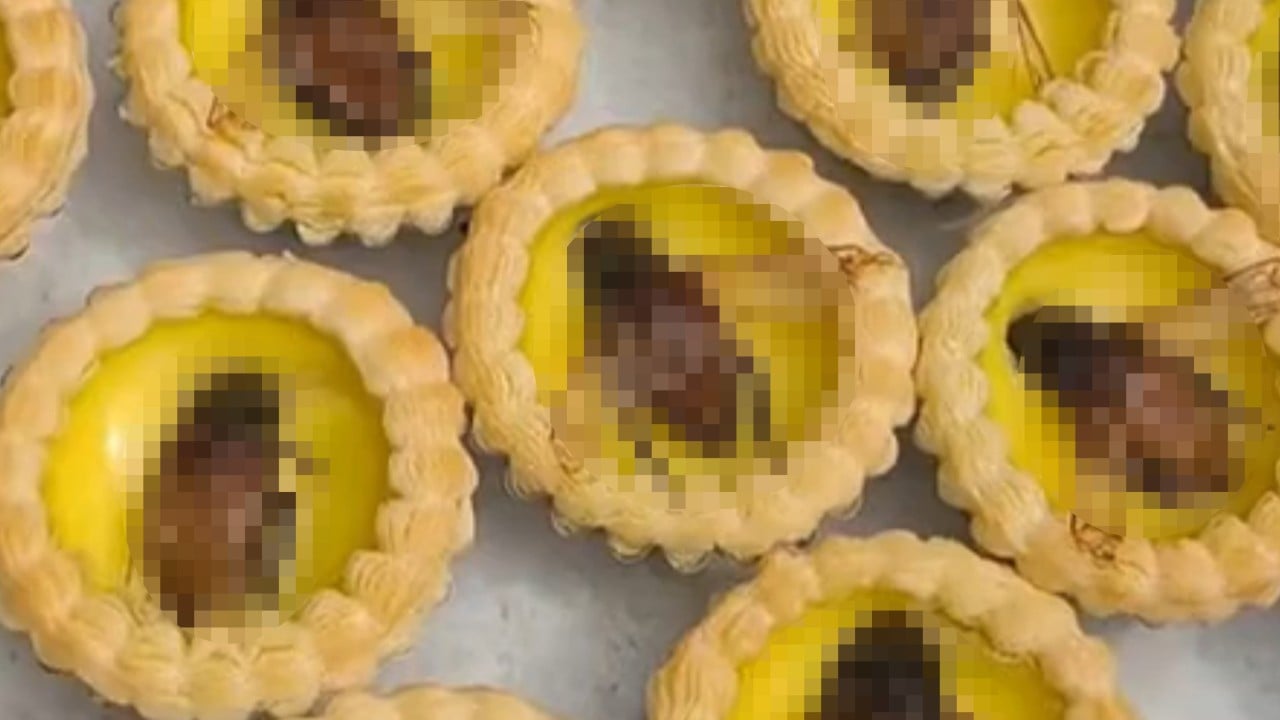
Would you eat an egg tart topped with a massive, shiny cockroach? Most people wouldn't even look at the plate without flinching, yet a restaurant in China turned that exact dish into a viral sensation that had the internet talking for weeks.
Social media loves shock value. When photos and clips of flaky, golden-brown pastries crowned with oversized insects started circulating online, the reactions split right down the middle. Half the internet felt physically sick looking at the screen, while the other half wanted to know where to buy one, how much it cost, and what the crunch actually tasted like.
Here's the catch that almost every viral headline glossed over. Those weren't the disease-carrying pests scurrying around kitchen baseboards or subway tracks. They were giant water bugs—locally known as guihua chan or taipan—which have been a legitimate, prized delicacy in parts of southern China and Southeast Asia for centuries. Calling them "giant cockroaches" made for a fantastic clickbait headline, sure, but it completely missed the culinary reality behind the stunt.
The Viral Egg Tart That Broke Social Media
Let's look at what actually happened when this dish hit the internet. A local eatery in China decided to merge two completely different food worlds: the classic, comforting Cantonese-style egg tart and traditional entomophagy, the practice of eating insects.
Egg tarts are sacred ground in Chinese pastry culture. You get a crisp, buttery puff pastry or shortcrust shell filled with a smooth, sweet, lightly caramelized egg custard. People eat them warm with morning tea. They're familiar, safe, and universally loved.
Then this eatery slapped a whole, fried, dark-brown insect right onto the center of the yellow custard.
The visual contrast was brutal. The glossy carapace of the bug sat directly on top of the delicate pastry, legs tucked or splayed out depending on the photo angle. Within hours, screenshots spread across Douyin, Weibo, and eventually Western platforms like X and Reddit. Comment sections turned into battlegrounds. Some users accused the restaurant of chasing clout at the expense of basic food hygiene, while adventurous foodies immediately started tagging friends and planning road trips to try it.
Shock food isn't new in modern restaurant marketing. Over the past few years, we've seen ramen topped with whole deep-fried frogs, boba tea loaded with green onions and cilantro, and ice cream drizzled with soy sauce or chili oil. Restaurants operate in an attention economy now. If a standard egg tart sells for a couple of dollars and gets zero free publicity, a weird egg tart sells for three times as much and brings thousands of eyeballs to your storefront for free.
Giant Cockroaches vs Giant Water Bugs
If you only read the sensationalist headlines, you'd think the chef grabbed a broom, swept up some alley pests, and tossed them onto a baking sheet. That's not how commercial food preparation works, and it's definitely not what was sitting on those pastries.
The insect used in these viral dishes is almost always the giant water bug (Lethocerus indicus), a large aquatic insect native to South and Southeast Asia, including southern Chinese provinces like Guangdong and Guangxi. To an untrained eye—especially someone scrolling fast on a phone screen—a fried giant water bug looks remarkably like a massive American cockroach. Both have flat, oval bodies, brownish-black shells, and prominent legs.
The biology and flavor profiles couldn't be further apart.
- Habitat matters: Household cockroaches thrive in sewers, garbage, and damp basements, picking up bacteria and pathogens wherever they walk. Giant water bugs live in clean freshwater ponds, rice paddies, and slow-moving streams.
- Flavor profile: Ask anyone who has actually eaten a giant water bug, and they won't describe it as "buggy" or bitter. The males produce a distinct, fruity aroma often compared to green apples, ripe pears, or banana essence. In Thai cuisine, chefs actually extract this essence to make nam prik maeng da, a famous chili paste.
- Texture: When deep-fried properly, the outer shell turns crispy like a thin shrimp shell, while the inside holds a small amount of savory, slightly chewy meat that tastes surprisingly similar to crab or prawn.
Calling a giant water bug a cockroach is like calling a lobster a giant sea spider. Technically, they share distant arthropod ancestry, and they both look pretty terrifying if you aren't used to seeing them on a dinner plate. Practically, one is a wild-caught or farmed culinary ingredient with a distinct flavor profile, and the other is a sanitation hazard.
Why Stunt Food Dominates Restaurant Marketing Right Now
You don't put a giant insect on a pastry by accident. You do it because traditional advertising is expensive, and viral outrage is completely free.
Running a small or mid-sized restaurant in a competitive urban market is brutal. Rent eats up margins, food costs fluctuate constantly, and foot traffic depends heavily on social media algorithms. If an independent bakery posts a photo of a regular, delicious egg tart, maybe fifty regular customers hit the like button. Nobody shares it. Nobody argues about it in the comments.
Put something bizarre on that exact same tart, and the algorithm goes wild.
People share weird food photos for two reasons: disgust and curiosity. Both emotions drive massive engagement. When someone sends a photo of a bug-topped pastry to a group chat with a caption like "Would you eat this for $100?", they're doing the restaurant's marketing for them. Suddenly, local food bloggers show up with cameras to film reaction videos. Those videos rack up hundreds of thousands of views, which pulls in curious locals who want to take a selfie with the dish before it disappears from the menu.
Most customers buying these novelty items don't even care if it becomes their new favorite snack. They're buying an experience and a piece of social currency. Taking a bite of an insect-topped custard tart on camera gets far more engagement than posting another photo of a latte or a croissant.
Still, this strategy carries real risks for a food business. When you lean too hard into shock value, you risk alienating your core customer base—the people who just want normal breakfast pastries without feeling queasy looking at the display case. Plus, if the food doesn't actually taste decent once the novelty wears off, nobody comes back a second time. The smartest eateries treat these viral creations as limited-time drops rather than permanent menu fixtures.
The Real History of Eating Insects in China
Western media loves framing any story about edible insects in Asia as a bizarre fringe trend or a desperate survival measure. That framing ignores thousands of years of documented culinary history.
Entomophagy is deeply rooted in regional Chinese food traditions, particularly in southern and southwestern provinces like Yunnan, Guangdong, and Guangxi. In these regions, insects aren't novelty items cooked up for internet clout—they're seasonal ingredients sold at local wet markets alongside vegetables, freshwater fish, and poultry.
Walk through a traditional market in Yunnan during the right season, and you'll find bamboo worms, bee larvae, grasshoppers, silkworm pupae, and water bugs piled high in woven baskets. Cooks usually flash-fry them with lemongrass, Sichuan peppercorns, chili peppers, and salt until they're crisp and aromatic.
Why did this tradition stick around? Basic economics and nutrition.
Insects require a fraction of the land, water, and feed needed to raise cattle, pigs, or chickens. For rural farming communities historically, harvesting insects from rice paddies or forests provided an abundant, low-cost source of high-quality protein, healthy fats, iron, and zinc. According to research compiled by the Food and Agriculture Organization (FAO), many commonly eaten insects match or beat beef and fish in protein density per gram while leaving a microscopic environmental footprint.
Even in major cities today, skewers of fried silkworm pupae or cicadas remain popular late-night street snacks paired with cold beer. The shock value of the viral egg tart didn't come from the insect itself—it came from putting a traditional savory street snack on top of a sweet, Western-influenced bakery pastry.
Food Safety and What Happens When Novelty Meets Regulation
Whenever a strange food trend blows up online, food safety authorities pay close attention. You can't just forage random bugs from a local park and serve them to paying customers.
In China, commercial restaurants are bound by strict food safety regulations overseen by the State Administration for Market Regulation. Any ingredient served to the public must come from approved, traceable supply chains. Edible insects used in legitimate restaurants are typically sourced from licensed farms that raise water bugs, crickets, or bamboo worms specifically for human consumption, ensuring they haven't been exposed to agricultural pesticides or polluted water.
There are also real health considerations consumers need to keep in mind before biting into any insect dish.
- Allergy risks: Insects are arthropods, meaning they share structural proteins like tropomyosin with shellfish. If you have a severe allergy to shrimp, crab, or lobster, eating a giant water bug or cockroach-style insect can trigger the exact same dangerous allergic reaction.
- Chitin digestion: The hard outer shell of an insect is made of chitin, a fibrous substance similar to cellulose. While humans possess enzymes that can break down small amounts of chitin, eating large quantities of whole, hard-shelled insects can cause stomach upset or digestive discomfort if you aren't used to it.
- Preparation standards: Like shellfish, aquatic insects must be thoroughly cleaned and cooked at high temperatures to eliminate any naturally occurring bacteria or parasites.
When a viral dish crosses over from a novelty stunt into mainstream headlines, local inspectors frequently visit the establishment to verify sourcing paperwork and kitchen hygiene. Most legitimate eateries creating these dishes know they're putting a spotlight on themselves, so they keep their sourcing documentation spotless to avoid getting shut down right when business is booming.
How to Spot Clickbait Food Stories Before You Share Them
The giant cockroach egg tart story is a textbook case of how international news cycles distort local food culture. A local restaurant makes a quirky fusion dish using a traditional edible water bug, a social media post translates the local nickname loosely into "cockroach," and suddenly millions of people believe a bakery is serving actual household pests.
Next time a bizarre food headline crosses your feed, run it through a quick mental filter before hitting share:
- Check the translation: Many regional names for edible insects translate poorly into English. Words like "water beetle," "cicada," or "field bug" frequently get flattened into "cockroach" or "beetle" by sensationalist aggregators looking for clicks.
- Look at the sourcing context: Ask whether the ingredient is a known regional foodstuff being presented in a new way, or genuinely unsafe food handling. Pairing a traditional savory ingredient with a sweet pastry is fusion marketing, not a health code violation.
- Follow the business motive: Independent restaurants rely on social media spikes to survive. When you see a dish that looks deliberately engineered to make people gasp, recognize it for what it is—a calculated, zero-budget marketing campaign designed to turn your reaction into free advertising.
If you ever find yourself traveling through southern China or Southeast Asia and spot fried giant water bugs at a night market or on an adventurous bakery menu, skip the internet panic and judge it on its actual culinary merits. Just make sure you don't have a shellfish allergy first, peel back the tough outer wings, and see for yourself why people have been eating them long before social media existed.


