The red carpets in Beijing barely had time to be vacuumed before the next guest arrived. This week, we've watched a masterclass in geopolitical balancing that would make a tightrope walker nervous. Donald Trump just wrapped up a high-stakes state visit, claiming "fantastic trade deals" while the world held its breath over the Iran war and the looming Thucydides Trap. Now, Vladimir Putin is waiting in the wings for his turn next week.
If you're looking for a clear sign of where the global center of gravity is shifting, this is it. Beijing isn't just a stop on a tour anymore; it's the arena where the world's most powerful men come to plead their cases. While the headlines scream about "no-limits" partnerships or "century-defining" trade talks, the reality on the ground is much more calculated. It's about survival, leverage, and who can offer the best deal in an increasingly fractured world. If you liked this post, you might want to check out: this related article.
The Trump Xi Summit and the Thucydides Trap
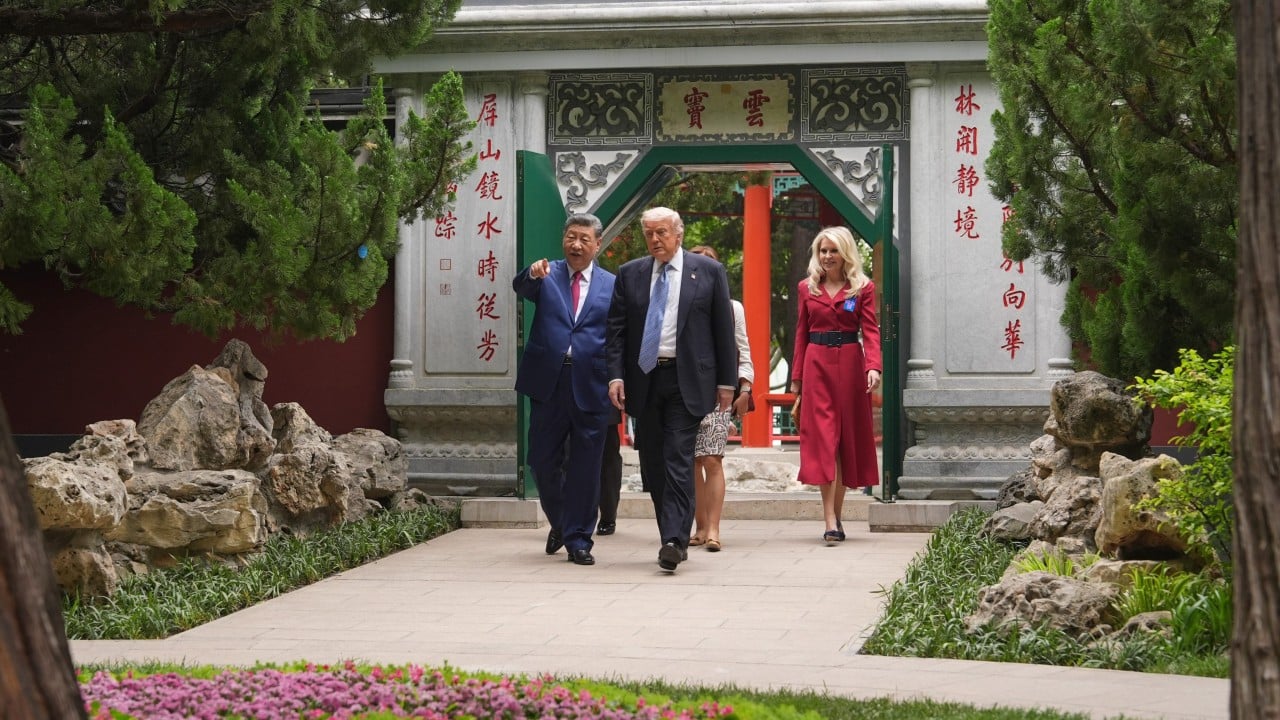
Trump’s return to Beijing—his first since 2017—wasn't just a nostalgia trip. The stakes are wildly different now. We’re dealing with a global economy battered by oil prices that have gone through the roof thanks to the Strait of Hormuz blockade. When Xi and Trump sat down for over two hours in the Great Hall of the People, they weren't just talking about soy beans. They were staring down a historical pattern where an established power clashes with a rising one.
Xi famously wore a red tie to match Trump’s signature look. It's a small detail, but in the world of Chinese diplomacy, symbols are everything. It signals a desire for "major-power relations" rather than outright conflict. Trump, ever the salesman, walked away touting deals that he says will fix the lopsided trade balance. But don't be fooled by the handshakes. China’s real goal is to buy time to cement its lead in critical minerals and tech while the U.S. remains bogged down in Middle Eastern conflicts. For another angle on this story, check out the latest coverage from MarketWatch.
What the Readouts Didn't Say
It's fascinating to look at what's missing from the official summaries. Trump posted on social media that they discussed Ukraine for a long time. China’s official report? Not a single mention of it. This tells you exactly where the friction lies. China wants to be seen as the global peacemaker without actually getting its hands dirty or offending its "privileged partner" in Moscow.
Putin’s Turn in the Beijing Spotlight
As soon as Trump’s motorcade cleared the airport, the Kremlin confirmed Putin is heading to China next week. But don't expect the same level of "scale and pomp" that Trump received. This visit is being described as routine, a "privileged strategic partnership" meeting to compare notes on what Trump actually said behind closed doors.
Putin needs this visit more than Xi does. With the war in Ukraine entering a critical phase and Russia increasingly reliant on Chinese tech to keep its military-industrial complex humming, Putin has to ensure the "no-limits" rhetoric hasn't hit a ceiling. China is Russia's biggest lifeline, but Beijing is playing a double game. They'll take Russia's cheap energy and support its defiance of "U.S. hegemony," but they won't risk their access to Western markets by going all-in on Putin’s war.
Baidu’s AI Pivot Is Paying Off
While the politicians trade barbs, the business of China is still very much about technology. Baidu just dropped its latest earnings, and the numbers tell a story of a company that has successfully bet its life on Artificial Intelligence. Even with a shaky macro environment, Baidu Core revenue is up, driven largely by their AI Cloud business.
The transition hasn't been without its bruises. Legacy search business is dragging, but the growth in Gen-AI is hard to ignore. Their "Apollo Go" robotaxi service is already clocking millions of rides, and they’ve slashed the cost of their ERNIE models to just 1% of what they were a year ago. This isn't just corporate bragging; it's a fundamental shift in how Chinese tech firms are trying to outrun U.S. export controls.
The Real Winners in the AI Race
- Baidu AI Cloud: Growing at 12% year-over-year, becoming the new engine for the company.
- ERNIE Model Efficiency: Inference costs have plummeted, making AI accessible for small businesses that were previously priced out.
- Apollo Go: Expanding to 26 cities, proving that autonomous driving is moving past the "cool demo" phase into a real utility.
Why This Matters for Your Portfolio
You can't look at these events in isolation. The Trump-Xi trade talks, the Putin-Xi security pact, and Baidu’s tech surge are all connected. China is positioning itself as the indispensable hub between a warring Russia and a transactional America.
If you're an investor or a business leader, you need to watch the AI safety dialogues that Trump and Xi are reportedly setting up. This could be the one area where the two giants actually cooperate to prevent "dangerous capabilities" from leaking out. At the same time, don't ignore the "maximum pressure" campaign on chips that continues to simmer in the background.
The next few months are going to be volatile. Between the oil price shocks from the Iran war and the shifting alliances in the East, the old rules of global trade are being rewritten in real-time. Keep an eye on the APEC summit in Shenzhen and the G20 in Miami. Those will be the next venues where this drama plays out. For now, the smartest move is to hedge against energy volatility and keep a close watch on the Chinese tech giants that are successfully pivoting away from the old internet economy toward an AI-first future.