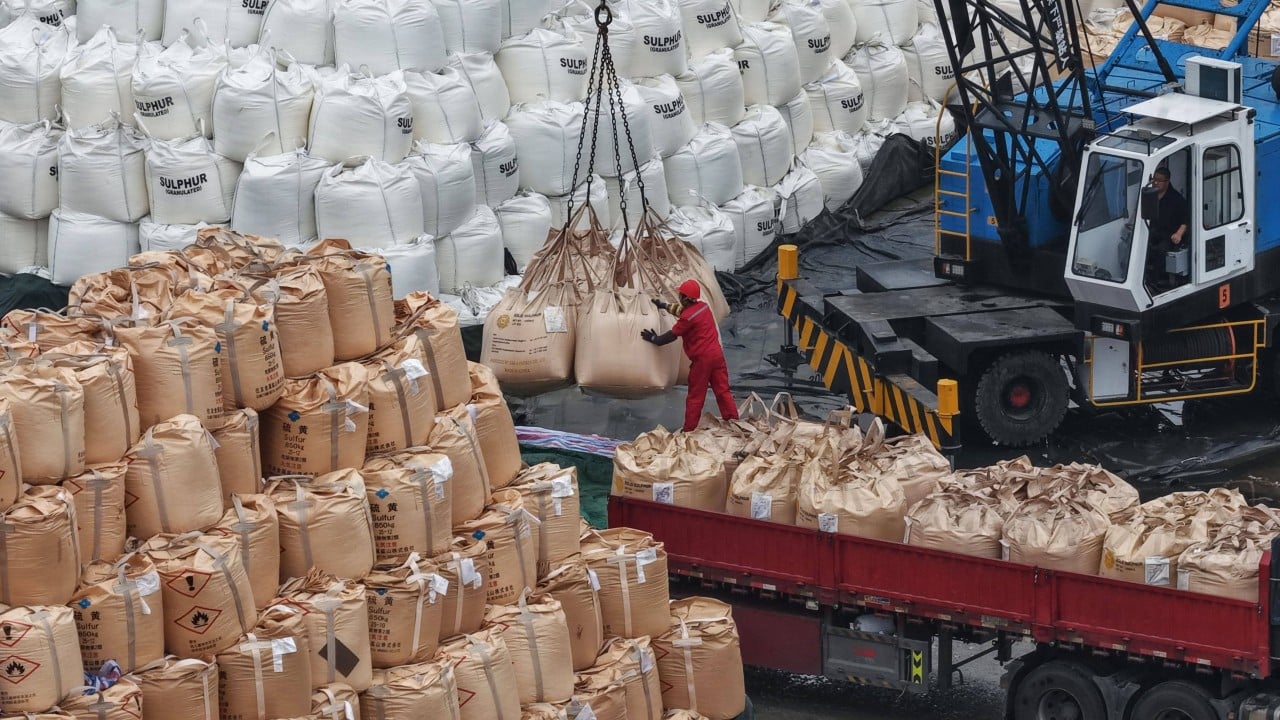
China has effectively decoupled its export machine from Middle Eastern maritime stability. While the Strait of Hormuz remains a volatile chokepoint that threatens to paralyze global energy markets, Beijing just reported a record-shattering export value for April. This surge contradicts the prevailing narrative that regional instability inevitably throttles the world’s second-largest economy. Instead, the data reveals a sophisticated redirection of trade routes and a relentless push into emerging markets that are increasingly immune to Western-centric geopolitical shocks.
The numbers are not a fluke. They are the result of a multi-year pivot designed to ensure that if one artery of global commerce is severed, the heart of Chinese industry continues to beat. By diversifying its logistics and deepening ties with the "Global South," China has created a buffer against the very chaos that is currently driving up insurance premiums and shipping costs for its competitors. Recently making news in this space: The Hong Kong Bike Sharing Brutal Truth.
The Strategic Shift Beyond the Gulf
For decades, the Strait of Hormuz was viewed as the ultimate kill-switch for Chinese growth. Nearly half of the country’s crude oil imports pass through that narrow strip of water. Conventional wisdom suggested that any significant disruption there would lead to an immediate contraction in manufacturing output. However, April's record export figures prove that Beijing has spent the last decade building a fortress of economic resilience.
The strategy is two-fold. First, China has aggressively expanded its land-based trade infrastructure. The Belt and Road Initiative is no longer a collection of aspirational projects; it is a functioning network of rail and road corridors that bypass traditional maritime bottlenecks. Second, the composition of Chinese exports has shifted toward high-value technology and green energy components—products that carry higher margins and can absorb the increased costs of rerouted shipping. Further details into this topic are covered by Harvard Business Review.
Logistics as a Weapon of Defense
When shipping lanes in the Middle East become too risky, Western firms often pull back. China does the opposite. State-backed shipping giants like COSCO have maintained presence in high-risk zones, backed by sovereign guarantees that private insurers cannot match. This allows Chinese manufacturers to keep their delivery promises while other nations’ exporters are stuck in port, haggling over "war risk" surcharges.
The rail link between Chongqing and Duisburg is a prime example. While it cannot replace the sheer volume of a container ship, it provides a high-speed, overland alternative for high-priority goods. During the height of the recent Hormuz tensions, rail freight volumes saw a significant uptick, serving as a pressure-release valve for the Chinese economy.
Diversification is the New Dominance
The record April performance was driven largely by demand in Southeast Asia, Latin America, and Africa. These markets are becoming more critical to China than the traditional consumer hubs of Europe and North America. This is a deliberate realignment. By focusing on regions where it holds significant infrastructure debt and political capital, China ensures a steady demand for its goods regardless of what happens in the Persian Gulf.
Trade with ASEAN nations now frequently outpaces trade with the United States.
This shift is fundamental. It means that the geopolitical games played in the Middle East have a diminishing impact on the Chinese bottom line. While Washington and its allies focus on securing the seas, Beijing is securing the markets. The April data shows a massive spike in intermediate goods—components used by other developing nations to build their own industrial bases. This creates a dependency loop that is much harder to break than a simple consumer-retailer relationship.
The Energy Paradox
Critics often point to China’s massive oil requirements as its Achilles' heel. It is true that an absolute closure of Hormuz would be catastrophic, but the risk is managed through massive strategic reserves and a pivot to Russian energy. Since the onset of the conflict in Ukraine, China has significantly increased its intake of Russian oil via the ESPO pipeline and rail shipments. This land-based energy supply acts as a hedge against maritime interdiction.
Furthermore, China’s internal shift toward electrification reduces its long-term vulnerability to oil price spikes. Every electric vehicle rolling off a Shanghai assembly line is one less reason for Beijing to fear a crisis in the Middle East. The record April exports included a substantial volume of batteries and renewable energy hardware, essentially exporting the very tools China uses to insulate itself from the Hormuz dilemma.
Price Wars and Market Penetration
To maintain record export levels during a period of global economic cooling, Chinese firms have engaged in aggressive pricing strategies. This isn't just about efficiency; it's about market share. By keeping prices low even as shipping costs rise, China is forcing competitors in India, Vietnam, and Mexico to make difficult choices.
Most manufacturers cannot compete with the vertically integrated supply chains found in the Pearl River Delta. A Chinese factory often has its suppliers located within a twenty-mile radius. This proximity drastically reduces the "internal" logistics costs, allowing them to absorb the "external" costs of longer, safer shipping routes around the Cape of Good Hope if the situation in Hormuz or the Red Sea deteriorates further.
The Resilience of the Private Sector
While state-owned enterprises grab the headlines, the April surge was fueled by small and medium-sized enterprises (SMEs) that have become incredibly agile. These companies are masters of "gray market" logistics—utilizing smaller ports and third-party transshipment hubs to move goods into markets that are officially seeing a slowdown.
They are also early adopters of digital trade platforms that bypass traditional banking hurdles. The rise of cross-border e-commerce has allowed Chinese vendors to sell directly to consumers in the Middle East and beyond, even as regional tensions simmer. This direct-to-consumer model is more resilient than traditional bulk shipping because it relies on a fragmented, hard-to-disrupt network of air freight and small-parcel delivery.
Global Implications of the Export Surge
The fact that China can hit record export values while the world teeters on the edge of a regional war is a signal to global markets. It suggests that the era of Western-led globalization is being superseded by a more fragmented, yet equally robust, Chinese-led trade bloc.
For the United States and its allies, this presents a significant challenge. Sanctions and naval blockades—the traditional tools of economic statecraft—are less effective against a nation that has spent twenty years building "backdoors" to the global economy. The April data is a cold shower for those who believed that geopolitical pressure in the Middle East would force China to the negotiating table on trade.
The Overproduction Debate
Western economists frequently argue that China’s export records are a sign of "overcapacity"—that the country is producing more than it can consume and dumping the excess on global markets. Beijing views this differently. To the Chinese leadership, this "excess" capacity is actually "strategic" capacity. It is the ability to overwhelm competitors and maintain economic momentum even under extreme external pressure.
The April figures indicate that this strategy is working. By flooding the market with competitively priced, high-quality goods, China makes it nearly impossible for other nations to decouple their economies. You might not like the politics, but you cannot ignore the price point.
Navigating the New Normal
Investors and analysts who are waiting for a return to the "pre-crisis" stability of the Middle East are missing the point. China has already moved on. The record export value in April is the first definitive proof that Beijing’s "Dual Circulation" strategy—prioritizing internal resilience while maintaining a dominant export footprint—is viable.
The focus is now on high-tech manufacturing and the dominance of the green supply chain. As long as China controls the production of solar panels, wind turbines, and EV batteries, it holds the keys to the global energy transition. This gives it a level of leverage that far exceeds the tactical importance of any single waterway.
The Strait of Hormuz will always be a point of tension, but its role as the ultimate chokehold on Chinese prosperity is fading. April's data confirms that the world's factory has found a way to keep the lights on and the assembly lines moving, regardless of the chaos beyond its shores.
Check the port of Ningbo-Zhoushan or the rail yards in Xi'an if you want to see the future of trade. You won't find panic there; you'll find an optimized machine that has learned to treat global instability as just another line item in a logistics spreadsheet.