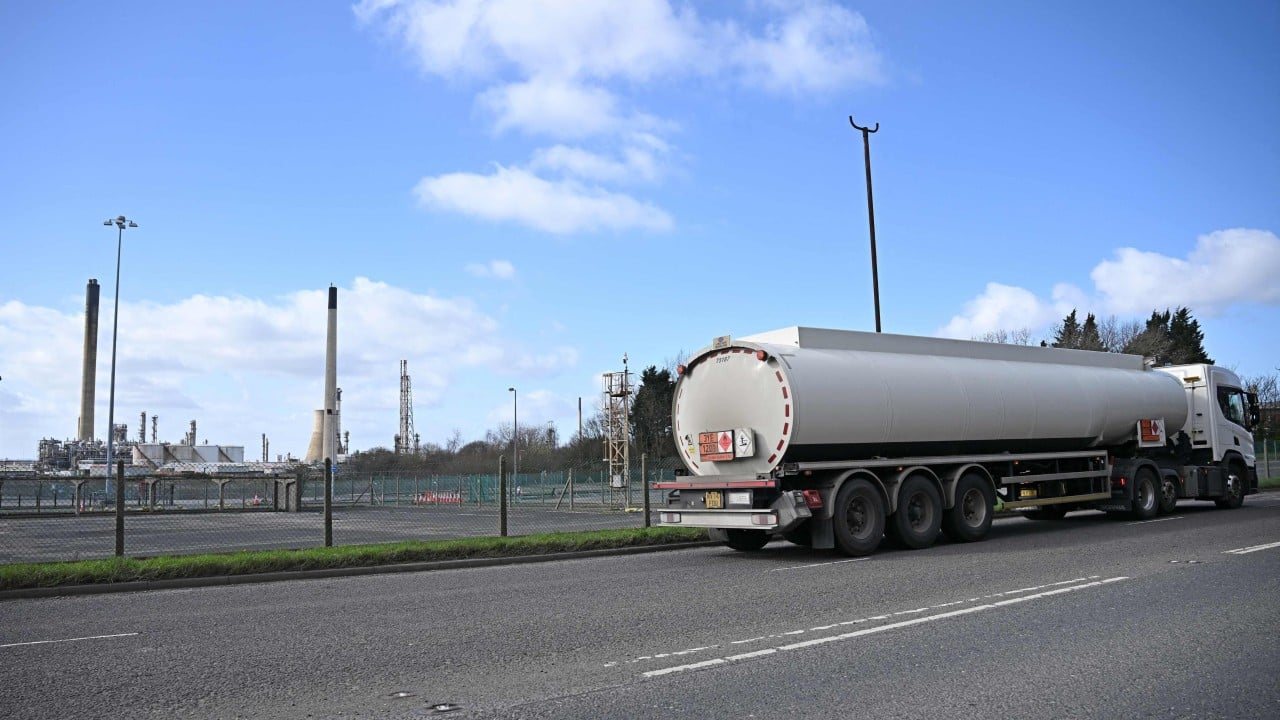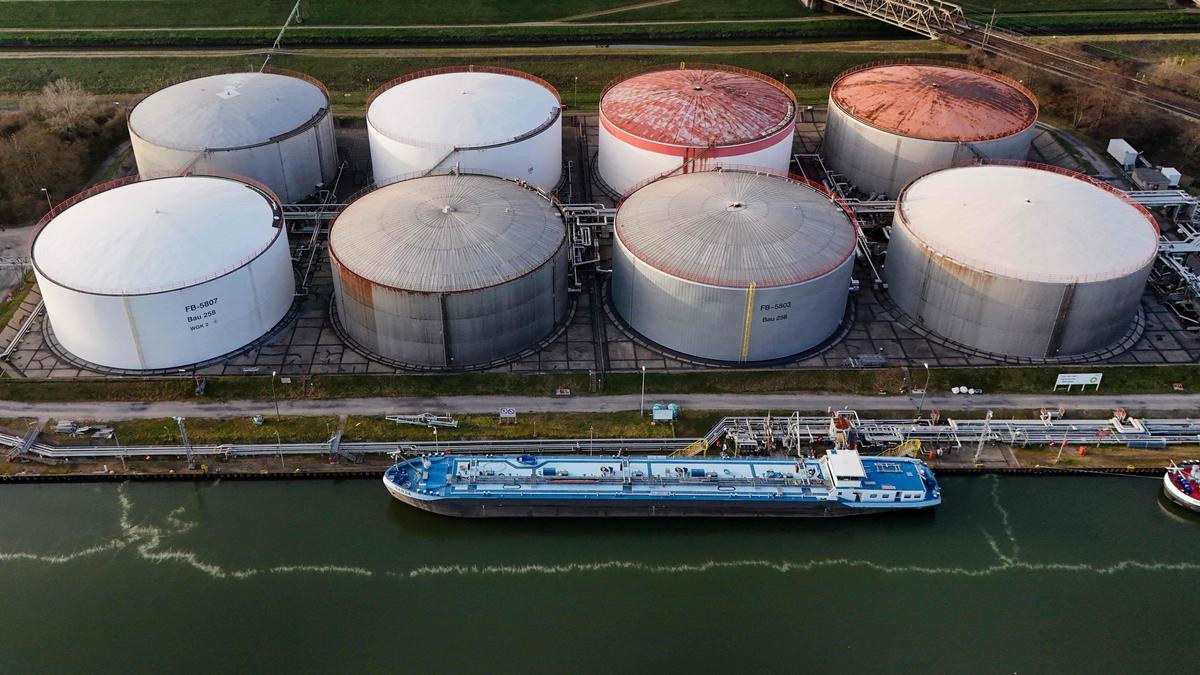
The shipping lanes of the Middle East are no longer a reliable artery for global trade. As kinetic conflict involving Iran spills into the primary maritime chokepoints of the Persian Gulf and the Gulf of Oman, the "just-in-time" delivery model that sustains modern commerce is collapsing. China, the world’s largest exporter, finds its massive logistics firms caught in a pincer movement between skyrocketing insurance premiums and the literal threat of missile fire. While Western headlines focus on the geopolitical posturing, the real story is the frantic, high-stakes engineering of a new global supply chain that bypasses the traditional sea routes entirely.
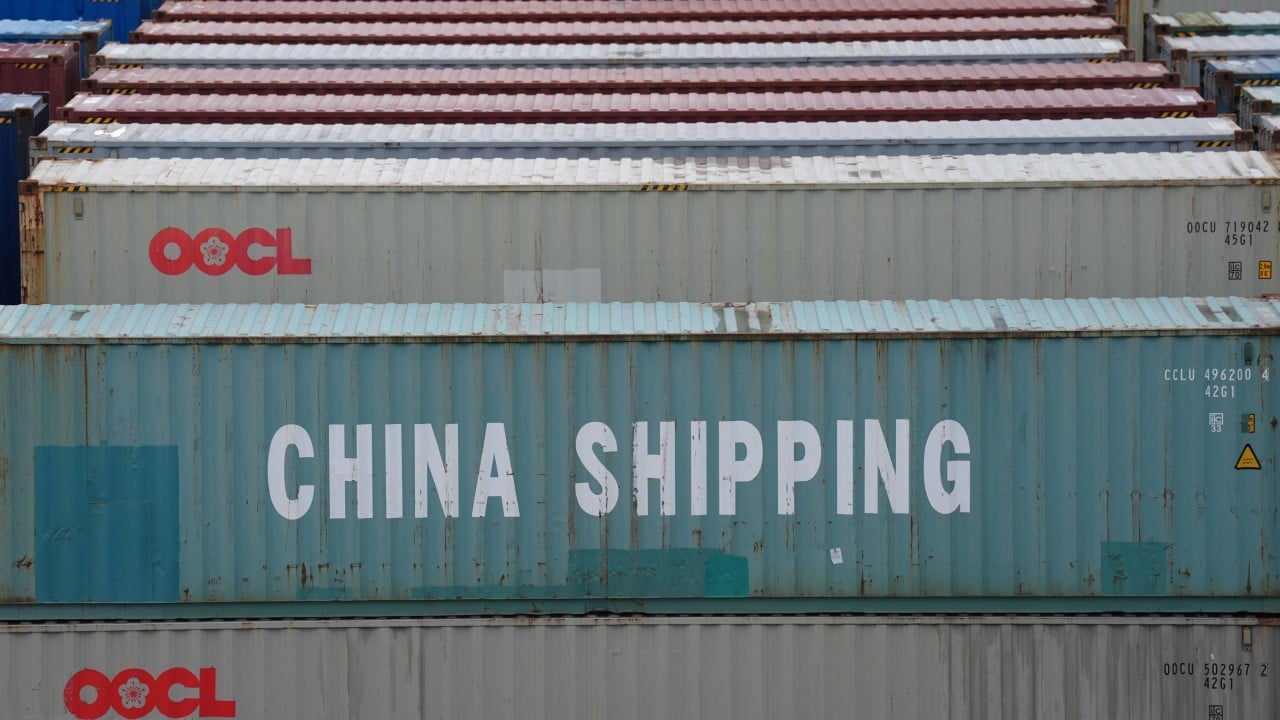
Chinese logistics giants like COSCO and OOCL are not merely waiting for the smoke to clear. They are aggressively rerouting capital and cargo into the Middle Corridor, a trans-Caspian land route that was once a secondary thought. This isn't a temporary detour. It is a fundamental architectural shift in how goods move from Eastern factories to European shelves. The math is simple and brutal. A standard container ship passing through a conflict zone now faces "war risk" surcharges that can exceed the actual cost of the fuel for the voyage. When you add the risk of total hull loss, the sea becomes an untenable gamble.
The Death of the Deep Water Shortcut
For decades, the maritime route through the Suez Canal was the undisputed king of efficiency. It offered the shortest path between the manufacturing hubs of Shenzhen and the consumers of Hamburg. That era ended when the risk profile of the Strait of Hormuz and the Bab el-Mandeb changed from "manageable" to "extreme."
Logistics firms are currently dealing with a reality where Force Majeure clauses are being invoked daily. When Iran-backed maritime disruptions occur, a ship doesn't just slow down. It stops. It waits. It burns thousands of dollars in idling costs while its cargo—electronics, automotive parts, seasonal textiles—depreciates.
The immediate response from Beijing has been to lean into the China-Europe Railway Express. Rail freight, once considered a niche luxury for high-value goods, is now the primary insurance policy against maritime chaos. However, the rail networks are hitting physical limits. You cannot simply put the contents of a 20,000-TEU (Twenty-foot Equivalent Unit) vessel onto a train. It would require dozens of locomotives stretching miles long.
The Caspian Pivot and the Middle Corridor
The most significant development is the sudden, desperate relevance of the Trans-Caspian International Transport Route (TITR). This path avoids both the volatile Persian Gulf and the sanctioned plains of Russia. It winds through Kazakhstan, across the Caspian Sea by rail ferry, into Azerbaijan, Georgia, and finally into Turkey or across the Black Sea.
It is a logistical nightmare of bureaucracy and gauge changes. Yet, Chinese firms are pouring money into the port infrastructure of Aktau and Baku. They are buying the reliability that the Persian Gulf can no longer provide.
- Customs Harmonization: China is pushing for digital "e-TIR" systems to move trucks across borders without manual inspections that can take days.
- Port Expansion: Dredging operations in the Caspian are accelerating to accommodate larger, more frequent ferry crossings.
- Infrastructure Bounties: Private Chinese logistics firms are offering premiums to Central Asian trucking fleets to secure capacity before European competitors can snatch it up.
This isn't just about moving boxes. It's about geopolitical hedging. By diversifying away from the sea, China reduces its vulnerability to the U.S. Navy’s dominance of the blue-water lanes and the unpredictable nature of regional regional powers like Iran.
The Insurance Crisis Triggering the Great Reroute
The hidden hand forcing this change isn't the Chinese government, but the maritime underwriters in London. Insurance is the silent engine of global trade. When a zone is declared a high-risk area, the Hull and Machinery (H&M) insurance and Protection and Indemnity (P&I) cover see their premiums go parabolic.
Imagine a vessel valued at $150 million carrying $300 million in cargo. In a stable environment, the insurance is a negligible line item. During an active conflict involving a state actor like Iran, the "war risk" premium can jump to 1% or 2% of the vessel's value per single transit. That is $1.5 million just to sail through a specific stretch of water.
For Chinese logistics firms operating on thin margins, these costs are unsustainable. They cannot pass these costs to the consumer without tanking demand. Therefore, the "expensive" land routes suddenly look like a bargain. The reliability of a train arriving in 15 days is worth more than a ship that might arrive in 40 days—or might not arrive at all.
Technical Bottlenecks in the New Land Empire
Despite the enthusiasm for land routes, the transition is riddled with technical friction. The most glaring issue is multi-modal synchronization. Moving a container from a ship to a train, then to a ferry, then back to a train requires a level of precision that the Middle Corridor hasn't yet mastered.
China’s logistics giants are deploying IoT tracking and AI-driven scheduling to manage this. They are trying to turn a series of disconnected national railways into a singular, fluid entity. They are installing automated gantry cranes in dusty border towns that three years ago saw only a handful of trucks a day.
The Gauge Problem
A major hurdle is the difference in rail gauges. China and most of Europe use the standard gauge ($1435$ mm), but the former Soviet states use the Russian gauge ($1520$ mm). This necessitates a "break-of-gauge" where every single container must be lifted from one train and placed on another.
Chinese engineering firms are currently trialing variable-gauge wheelsets that could theoretically allow trains to adjust their width while in motion. If this technology scales, the Middle Corridor goes from a desperate alternative to a dominant competitor to sea freight.
The Silent Rise of Multi-Sourcing
Logistics firms are also advising their clients to adopt "China Plus One" strategies, but with a twist. It isn't just about moving factories to Vietnam or Mexico; it’s about logistics redundancy.
They are building massive "dry ports" on the Chinese border. These are staging grounds where goods are stored in bonded warehouses, ready to be flipped between rail, road, or sea depending on the morning's geopolitical news. If a tanker is seized in the Strait of Hormuz at 6:00 AM, the logistics software reroutes the afternoon’s outbound shipments to the rail terminal by 8:00 AM.
This level of agility requires a massive investment in data. Chinese firms like Cainiao (Alibaba's logistics arm) are integrating real-time satellite imagery and port congestion data to predict bottlenecks before they happen. They are no longer just moving boxes; they are managing a global flow of information.
The Economic Fallout for the Middle East
As China pivots away from the Persian Gulf, the regional hubs like Dubai and Jebel Ali face a long-term existential threat. These ports were built on the assumption that they were the indispensable crossroads of the world.
If Chinese firms successfully build a permanent, high-capacity land bridge to Europe, the strategic importance of the Gulf as a trade hub diminishes. The "pivot to land" is a direct response to the volatility of the region. Every time a drone is launched or a vessel is harassed, the incentive to build that bridge gets stronger.
The investment is flowing toward the steppes of Central Asia and the mountains of the Caucasus. This is a massive transfer of economic potential. Countries like Kazakhstan and Azerbaijan are becoming the new "ports" of the 21st century, despite being landlocked or situated on inland seas.
The Resilience Trap
There is a risk in this strategy. By concentrating trade into narrow land corridors, China is creating new vulnerabilities. A single bridge or tunnel in a mountainous region becomes a high-value target or a single point of failure.
However, for the Chinese logistics sector, this is a calculated risk. They are choosing a risk they can manage through infrastructure investment and diplomatic pressure over a maritime risk they cannot control. The sea is open and chaotic. The land is sovereign and, in many cases, more predictable.
The conflict in the Persian Gulf has acted as a catalyst for a process that was already beginning. It has forced the hands of the world’s most powerful logistics planners. They are no longer asking if they should diversify away from the sea, but how fast they can do it.
The result is a world where the old maps of trade are being burned. The new maps are being drawn in the boardrooms of Beijing and the rail yards of the Eurasian interior. The Persian Gulf may remain a theater of military power, but its role as the world’s indispensable trade lane is being systematically dismantled by the very firms that once relied on it most.
Audit your current supply chain for Middle East exposure. If your goods pass through the Strait of Hormuz, you are currently operating on borrowed time and subsidized risk.