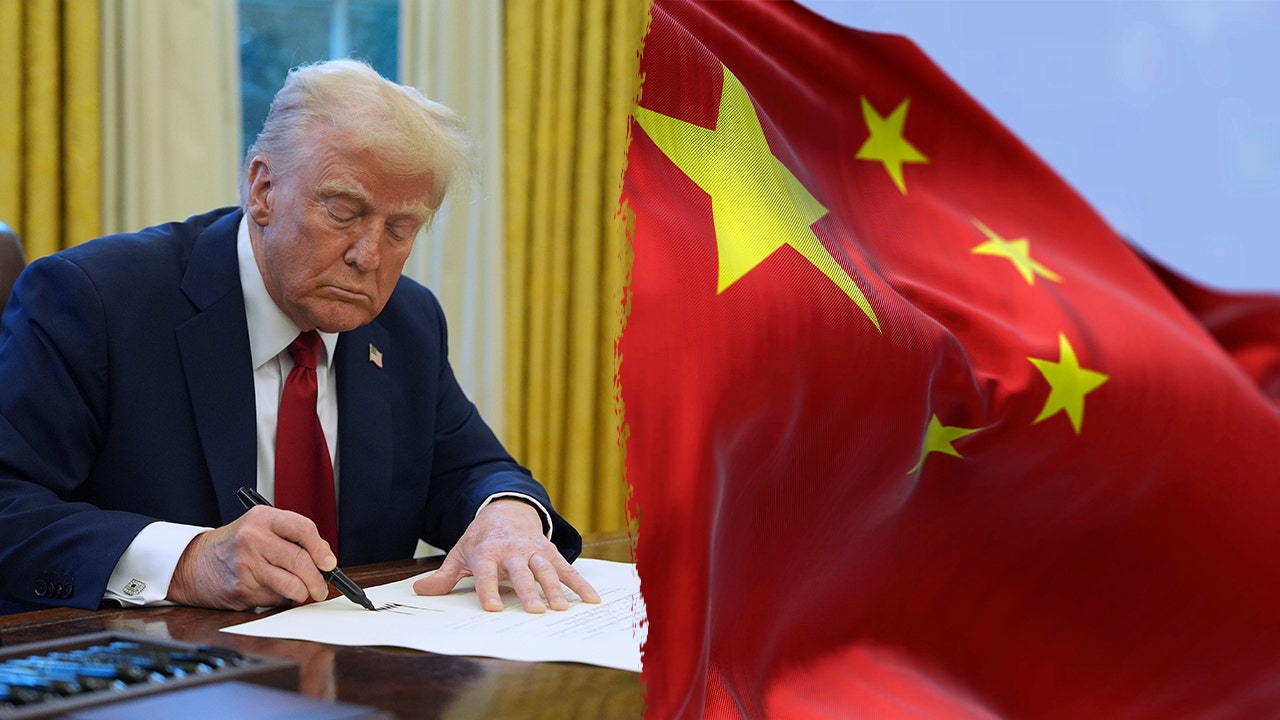
The global press is currently vibrating with the same tired narrative: Beijing has finally "struck back" with its Rules on Counteracting Unjustified Extra-territorial Application of Foreign Legislation. They call it a masterstroke. They call it the dawn of a new legal era.
They are wrong.
Most analysts are treating China’s first-ever "blocking order" as a functional equivalent to the EU’s blocking statute. It isn't. While the headlines paint a picture of a cornered dragon finally baring its teeth, the reality is far more cynical. This isn't a shield for Chinese companies; it is a legal trap designed to force multinational corporations into a "choose your poison" scenario where there is no winning move.
If you think this is about sovereignty, you’re missing the point. It’s about theater.
The Myth of Reciprocity
The "lazy consensus" argues that China is simply mirroring US policy. The logic goes: if the US uses the Long Arm of the Law to sanction Chinese tech giants, China must create its own Long Arm.
This ignores the fundamental plumbing of global finance. The US dollar remains the world’s primary reserve currency. When Washington issues a sanction, it isn't just a political statement; it’s a kill switch for a company’s ability to participate in the global financial system. China’s blocking order attempts to punish companies for complying with those sanctions, but it offers zero systemic alternative.
A Chinese company told by Beijing to ignore US sanctions still cannot clear dollars through SWIFT. Beijing’s order doesn't provide a workaround; it just adds a second executioner to the room.
I’ve watched C-suite executives at three different Fortune 500 firms scramble over these new rules. They aren't worried about "sovereignty." They are worried about the math. If they comply with the US, they face fines in China. If they comply with China, they lose access to the US financial system. For any company with a global footprint, that isn't a choice. It’s a managed exit.
Why the EU Comparison Fails
Mainstream media loves to point at the EU’s 1996 Blocking Statute as the blueprint here. That comparison is intellectually bankrupt.
The EU’s statute was largely a political protest that rarely saw teeth-gritting enforcement because, frankly, the EU and the US share deep-seated institutional trust. China’s version is different because it exists in an environment of total state control.
Under Article 7 of the Chinese rules, a company must report to the State Council’s working mechanism within 30 days if they are restricted by foreign legislation. Failure to report? Fines. Compliance with the foreign law? Subject to a "prohibition order."
The EU statute was a shield. The Chinese rules are a compliance dragnet. They aren't trying to stop US sanctions; they are trying to gather data on exactly how those sanctions are being applied in real-time by forcing companies to self-report.
The Injunction Fallacy
The "People Also Ask" sections of the internet are currently obsessed with one question: "Can a company sue for damages if a blocking order is violated?"
Technically, yes. Article 9 allows Chinese entities to seek compensation in Chinese courts if a third party complies with the prohibited foreign laws.
Here is the truth nobody admits: This is a litigation nightmare that will produce zero net gains for anyone but the lawyers. Imagine the discovery process. Imagine trying to enforce a Chinese court judgment against a US-based firm that has no assets left in China because they already fled the regulatory instability.
By the time a "blocking order" is invoked, the business relationship is already dead. You don't sue your partner to keep the marriage alive; you sue them to pick over the carcass.
The Sovereignty Trap
We need to talk about the "working mechanism." This is the nebulous group of Chinese state agencies that decides when to issue these orders.
In a rule-of-law environment, triggers are predictable. In a state-directed economy, triggers are political. The blocking order is a "floating" regulation. It will be ignored when China needs foreign capital and weaponized when a domestic industry needs a leg up or a political point needs to be made.
This creates a "compliance tax" on every Western firm operating in the mainland. You are now required to maintain two entirely separate legal departments that are fundamentally at odds with each other.
The High Cost of Neutrality
For years, the "gold standard" for multinationals in China was to remain politically neutral. Those days are over.
The blocking order forces a binary. You are either a Chinese entity or a Western entity. There is no middle ground. If you try to play both sides, you will be squeezed by both.
Take a look at the semiconductor industry. If a tool manufacturer complies with US export controls, they are now technically violating Chinese law. If they ignore those controls, they lose their US licenses and their entire R&D pipeline.
The "bold" move isn't to find a way to comply with both. The bold move is to realize that the Chinese market is becoming a walled garden where the price of entry is the potential forfeiture of your global operations.
Data Sovereignty is the Real Battlefield
The blocking order is a distraction from the real "strike back": China’s Data Security Law and Personal Information Protection Law.
While the press focuses on the geopolitical drama of sanctions and "blocking," the quiet reality is that Beijing is locking down the flow of information. You cannot comply with a foreign court’s discovery request if that data is classified as "important" by the Chinese state.
The blocking order is the loud, shiny object. The data laws are the actual bars on the cage. By focusing on the blocking order, the media is missing the fact that Beijing has already won the battle for information control.
A Failed Strategy for the Long Term
If China continues down this path, they will achieve exactly what the US hawks want: decoupling.
By making it legally impossible for a compliant Western firm to operate in China, Beijing is doing Washington’s job for them. They are creating a legal environment so toxic that even the most profit-hungry CEO will have to admit the risk outweighs the reward.
We are seeing the birth of "Legal Autarky." China is building a system that can only be navigated by firms that have zero exposure to the West. This doesn't protect the Chinese economy; it insulates it—and insulation is just another word for isolation.
The Strategy for Survival
Stop looking for loopholes. There are no loopholes in a system where the "working mechanism" can change the rules on a Tuesday morning based on the previous night’s news cycle.
If you are a multinational, your strategy should be:
- Asset Ringfencing: Separate your Chinese operations entirely from your global core. If the China branch gets hit with a fine or a lawsuit under the blocking order, it must be an island.
- Report Everything, Admit Nothing: Use the 30-day window to flood the mechanism with data, but never admit that your actions are "compliance" with foreign law. Frame every business decision as a "commercial necessity" or "risk management."
- Localize the C-Suite: Put Chinese nationals in the positions that carry legal liability. It sounds cold, but a Western executive facing a Chinese blocking order is a hostage. A local executive has at least a chance of navigating the political landscape.
The blocking order isn't a sign of Chinese strength. It’s a sign of frustration. It’s an admission that the global financial system is still a Western-designed game, and China is tired of playing by the rules. But by trying to flip the table, they might find they’re the only ones left in the room.
The era of the "global" corporation is dead. We are now in the era of the "fragmented" corporation, where your legal department in Shanghai and your legal department in New York are essentially at war with each other.
Stop pretending this is a "blocking order." It’s a divorce decree.
Choose your side, or the choice will be made for you.