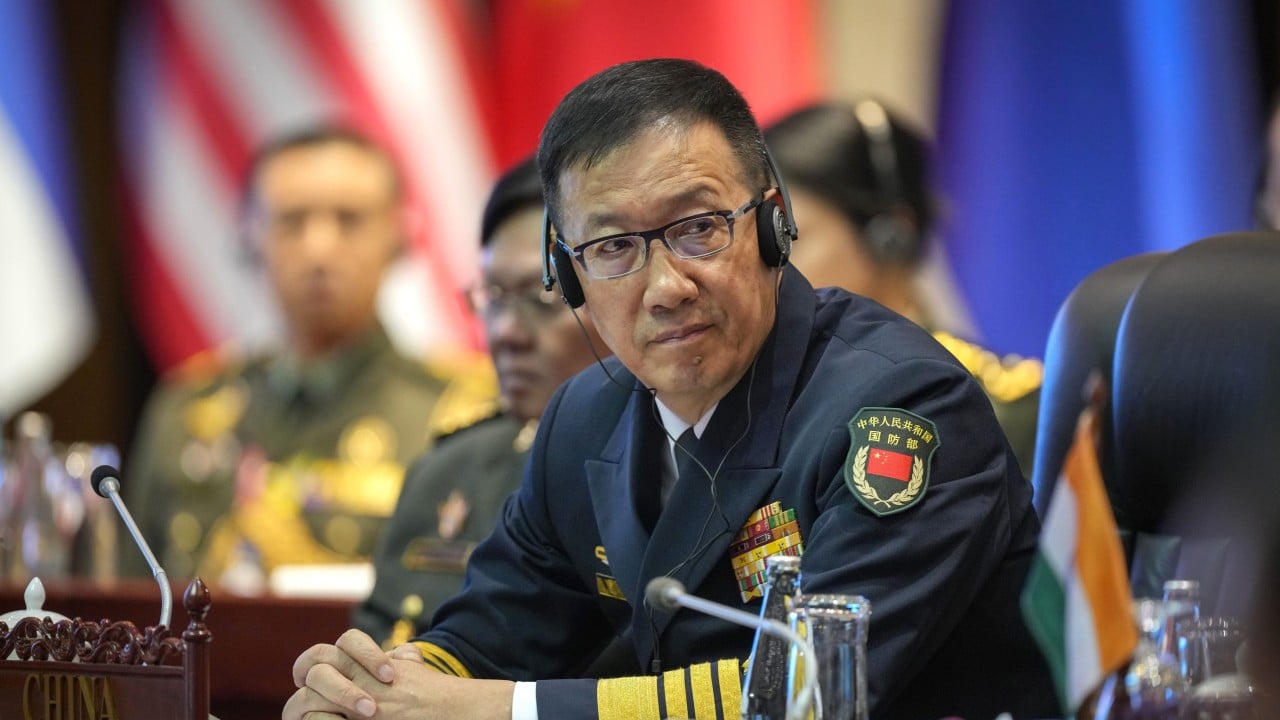
China’s Defence Minister Dong Jun isn't showing up to the upcoming Association of Southeast Asian Nations (Asean) defence talks, and the timing tells you everything about Beijing's actual priorities right now. While regional diplomats gather to hash out maritime security and Indo-Pacific stability, Dong will be sitting in Beijing as the Chinese Communist Party’s fifth plenum convenes.
Most casual observers look at an absence like this and immediately jump to wild speculation about political purges or diplomatic snubs. That's usually the wrong read. If you've tracked Chinese military diplomacy over the past decade, you know that domestic Party meetings always outrank external summits—no matter how sensitive the regional friction might be.
Domestic Party Loyalty Always Beats Foreign Diplomacy
In the Chinese political system, the People's Liberation Army (PLA) isn't a national army in the Western sense. It's the armed wing of the Chinese Communist Party. That distinction matters enormously when scheduling conflicts arise.
When the Central Committee gathers for a plenary session, attendance isn't optional for senior military brass. As a member of the Central Committee and the top public face of the Ministry of National Defense, Dong Jun’s physical presence in Beijing is mandatory. Skipping a plenum to shake hands with regional counterparts would send a terrible signal internally. It would suggest that managing foreign relationships matters more than locking arms with the Party's core leadership during major policy deliberations.
The fifth plenum traditionally focuses on long-term economic and social planning, often shaping five-year development blueprints or reviewing major structural reforms. You might wonder why a defense chief needs to sit through meetings heavily weighted toward economic strategy. The answer lies in Beijing’s doctrine of military-civil fusion. Modernizing the PLA requires massive state-directed investment in dual-use technologies—artificial intelligence, aerospace, quantum computing, and advanced shipbuilding. Dong isn't just there to clap; he's there because military modernization and national economic planning are treated as two halves of the exact same coin.
What Dong Jun's Absence Means For The Asean Defence Ministers' Meeting
The Asean Defence Ministers' Meeting-Plus (ADMM-Plus) is one of the few venues where defense chiefs from China, the United States, and Southeast Asian nations actually sit in the same room. When Beijing sends a lower-ranking official instead of Dong Jun, the dynamics in that room shift immediately.
Let's be realistic about how multilateral diplomacy works in Southeast Asia. Asean operates on consensus and personal rapport. Ministers rely on informal pull-asides in hallways—away from the cameras and formal scripts—to defuse misunderstandings before they escalate into naval standoffs. Sending a deputy or a theater commander means China still has a seat at the table, sure. Yet that representative won't have the political clout to make off-the-cuff assurances or engage in candid peer-to-peer problem-solving with counterparts from the Philippines, Vietnam, or the United States.
This creates a frustrating bottleneck for regional security:
- Reduced crisis communication: Lower-level envoys stick strictly to pre-approved talking points, leaving zero room for nuanced de-escalation talks over disputed waters.
- Missed bilateral pull-asides: The Pentagon and regional ministries frequently use Asean gatherings to schedule quiet one-on-one meetings with Beijing's defense chief to keep military-to-military channels open.
- Asymmetric optics: When Washington and regional capitals send their top defense leaders while Beijing sends a stand-in, smaller Southeast Asian states quietly take note of who is prioritizing the forum.
None of this means China is abandoning Asean. Beijing invests massive diplomatic capital into Southeast Asia because keeping Asean neutral is vital to countering American influence in the Indo-Pacific. Still, when forced to choose between pleasing neighbors and answering to Zhongnanhai, Beijing chooses Zhongnanhai every single time.
The Shadow Of Past PLA Turmoil
You can't talk about Dong Jun’s schedule without acknowledging the elephant in the room. The Chinese defense establishment has endured a bruising stretch of anti-corruption purges over the last few years.
Dong’s predecessor, Li Shangfu, vanished from public view in 2023 before being formally removed and expelled from the Party over corruption allegations tied to military procurement. Before him, former Defense Minister Wei Fenghe met a similar fate. Even Dong Jun himself was appointed in late 2023—notably without being immediately elevated to the Central Military Commission (CMC) or given the title of State Councilor, breaking a long-standing precedent for Chinese defense ministers.
Because Dong holds less institutional power inside the Party hierarchy than some of his predecessors did, his margin for error is razor-thin. He's essentially a technocrat—a career naval officer who commanded the PLA Navy before taking the ministerial post. He doesn't have an independent political base to fall back on. Showing up on time, taking notes, and demonstrating absolute alignment during the fifth plenum isn't just protocol for him; it's basic political survival.
Think about what happens if you're in his shoes. You've watched two predecessors get dismantled by internal discipline inspections. The fifth plenum is convening, bringing together the Party's top 370-odd full and alternate Central Committee members. Are you going to ask for a hall pass to fly to Southeast Asia? Not a chance.
South China Sea Tensions Won't Pause For Beijing's Calendar
While Dong is sitting in meeting halls in Beijing, friction in the South China Sea continues unabated. The timing of his absence is particularly awkward given ongoing maritime run-ins between Chinese coast guard vessels and Philippine resupply missions near contested shoals like Second Thomas Shoal and Sabina Shoal.
Southeast Asian defense officials had hoped to use the Asean talks to push forward negotiations on a long-delayed Code of Conduct (COC) in the South China Sea. Those talks have dragged on for over two decades with very little tangible progress to show for it. Without China’s defense minister present, expect the Chinese delegation to play pure defense—repeating standard lines about external interference while avoiding any substantive concessions on maritime rules of the road.
For countries like the Philippines, Malaysia, and Vietnam, Dong's no-show reinforces a familiar pattern. Beijing prefers bilateral negotiations where its massive economic and military weight gives it overwhelming leverage, rather than multilateral forums where smaller nations can band together to push back. By downgrading its representation at the Asean defense gathering, China subtly lowers the temperature and expectations for what the summit can actually accomplish on maritime disputes.
How Regional Observers Should Read Beijing's Signals
If you're tracking Indo-Pacific security, don't fall into the trap of reading every scheduling conflict as a dramatic diplomatic crisis. Watch the structural incentives instead.
When analysts see China's defense minister skip an international summit, they often ask whether Beijing is signaling anger at a specific country or intentionally snubbing the host. In this case, the overlap with the fifth plenum provides a straightforward, structural explanation. The Chinese Communist Party's internal political calendar dictates everything else. Foreign ministries and defense establishments have to work around it, never the other way around.
Pay close attention to three specific indicators over the coming weeks to gauge what comes next:
- Who Beijing sends in Dong’s place: If China dispatches a senior figure from the Central Military Commission’s Joint Staff Department or a high-ranking theater commander, it signals Beijing still wants serious operational dialogue despite Dong's absence. If they send a purely ceremonial diplomat, they're just going through the motions.
- The fifth plenum communique: Read the official readout released at the end of the Beijing meetings for references to "national defense," "security," and "modernization." The language used there will tell you far more about China's military posture for the next five years than any speech delivered at an Asean podium.
- Post-plenum bilateral outreach: Watch how quickly Dong Jun schedules phone calls or bilateral visits with Southeast Asian defense ministers once the plenum wraps up. Beijing frequently uses follow-up bilateral meetings to smooth over ruffled feathers after missing multilateral events.
Don't expect China to apologize for the scheduling clash or adjust its internal Party calendar to accommodate regional summits. If you want to understand where Beijing's head is at right now, ignore the empty chair at the Asean table and watch what gets decided behind closed doors in Beijing.



