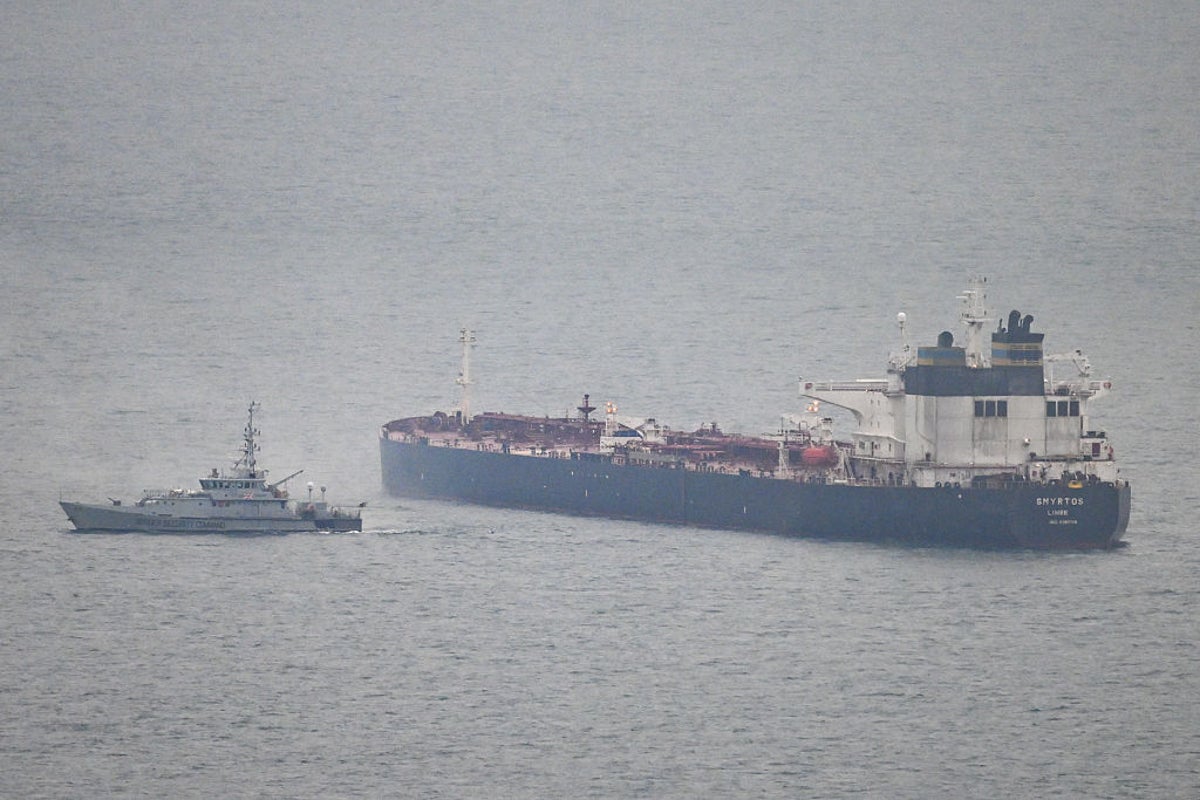
The steel hull of a Very Large Crude Carrier vibrates with a low, bone-deep hum that never stops. On the bridge of a vessel stretching three football fields in length, the view is a monotonous expanse of gray-blue water. But as the ship approaches the narrow tongue of water between Iran and Oman, the air inside the wheelhouse grows heavy. The captain watches the radar screen blink with the digital ghosts of nearby naval frigates, fast-attack crafts, and commercial giants flying flags from Panama to Liberia.
This is the Strait of Hormuz.
To the casual observer looking at a map, it is just a microscopic pinch point on the globe. To the global economy, it is the jugular vein.
When political rhetoric flares in Washington or Tehran, the public often treats the potential closure of this waterway like a light switch. The narrative is always the same: a crisis hits, the strait closes, a president issues a tweet or a statement declaring the crisis resolved, and the switch flips back on. The oil flows. The markets calm.
But global shipping does not obey the laws of political theater. You cannot flip a switch on twenty million barrels of oil per day.
The Illusion of the Quick Fix
Consider the math of momentum. A fully loaded supertanker traveling at fifteen knots takes over two miles to come to a complete stop after the engines are cut. Now multiply that physical reality by dozens of transiting ships, add the invisible threat of naval mines, and throw in skyrocketing insurance premiums.
When a major political figure claims that a blocked Strait of Hormuz can be reopened in a matter of days, the collective sigh in the boardrooms of Tokyo, London, and Singapore is not one of relief. It is one of exhaustion.
The shipping industry operates on certainty, or at least the calculated mitigation of uncertainty. When a conflict disrupts a maritime chokepoint, the damage is not undone the moment the shooting stops. The fallout lingers for weeks, vibrating through global supply chains like an aftershock.
To understand why, we have to look beneath the surface of the water, away from the grandstanding speeches and into the quiet, terrified reality of the people who actually navigate these waters.
The Anatomy of a Delay
Imagine a single naval mine. It is a crude, rusted sphere of explosives, perhaps drifting blindly or moored just beneath the waves. It costs a few thousand dollars to manufacture. Yet, its mere presence—or even the whispered rumor of its presence—can paralyze a trillion-dollar industry.
If an adversary drops a handful of these devices into the shipping lanes, the Strait of Hormuz effectively ceases to exist for commercial traffic.
Now consider what happens next: the clearing process begins. This is not a matter of driving a few sweepers through the water like snowplows on a highway. Mine countermeasures are agonizingly slow. Specialized naval vessels must map the seabed, using sonar to identify every anomalous shape. Is that object a deadly weapon, or is it an discarded shipping container? A sunken dhow? A cluster of rocks?
Every single anomaly must be investigated. Sometimes, remote-controlled underwater vehicles are deployed. Other times, human divers submerge into the murky depths, their hearts pounding against their ribs, knowing that a single mistake means vaporization.
While this meticulous ballet unfolds, the world waits.
The Cost of Sitting Still
For every day the strait remains contested, the line of waiting ships grows longer. This is the maritime equivalent of a multi-car pileup on a fog-shrouded interstate, except each car is carrying millions of dollars in perishable or volatile cargo.
A stranded captain faces a grueling calculus. Do you anchor outside the gulf, burning fuel just to keep the generators running, while your crew grows increasingly anxious about drone strikes or limpet mines? Or do you convince your company to take the long way around?
The alternative route means sailing around the entire continent of Africa. It adds thousands of miles to the journey. It tacks on weeks of travel time. It consumes hundreds of tons of additional fuel.
But the real problem lies elsewhere, far from the physical ships themselves. It lives in the dry, sterile offices of marine insurance underwriters in London.
Before a ship enters a high-risk zone, it must secure "war risk" insurance. The moment a single explosive detonates in the strait, those insurance premiums do not just rise; they explode. They can skyrocket by a factor of ten overnight, suddenly adding hundreds of thousands of dollars to the cost of a single voyage. If the risk is deemed too high, underwriters will simply refuse to cover the vessels.
Without insurance, no reputable shipowner will sail. The fleet grounds itself.
The Human Toll on the Bridge
We often discuss these crises in terms of barrels, percentages, and GDP impact. We forget about the twenty-two-year-old third mate pulling the night watch, staring into the darkness through night-vision goggles, looking for the telltale wake of an approaching speedboat.
The psychological toll on merchant mariners during these standoffs is profound. These are civilians. They are not naval sailors trained for combat. They are ordinary people from the Philippines, India, Eastern Europe, and beyond, sending paychecks back home to support their families. When they are caught in the crosshairs of geopolitical posturing, the stress is palpable.
Sleep becomes a luxury. Every unexpected sound from the engine room causes a collective intake of breath. The knowledge that they are sitting on top of millions of gallons of highly flammable liquid transforms the vast ocean into a claustrophobic prison.
When political leaders minimize the timeline required to restore order to a place like Hormuz, they minimize the human friction required to make it happen. They ignore the reality that confidence cannot be restored by executive decree.
The Echo in the Grocery Aisle
It is easy for someone living thousands of miles away to feel insulated from the tension in the Middle East. It feels distant. It feels like someone else's war.
But the global economy is a tightly woven web. A container ship delayed in the Gulf ripples outward until it hits the consumer. The price of crude oil dictates the price of plastics, the cost of trucking goods across continents, and the price of fertilizer used to grow crops.
A three-week delay in reopening the Strait of Hormuz does not mean three weeks of slightly more expensive gasoline. It means a systemic shock to the just-in-time delivery models that keep modern society functioning. Factories in Europe run out of components. Power plants in Asia adjust their outputs. Supermarket shelves across the globe begin to show strange, patchy vacancies.
The global shipping apparatus is a miracle of efficiency, but it possesses no reserve capacity. It relies on the assumption that the doors of the world will always remain open.
The Long Road Back to Normal
Even when the navies of the world declare the lanes safe, the gridlock takes weeks to dissolve.
Ships cannot all rush through the narrow channels at once; they must be metered to prevent collisions. Ports at the destination points, already struggling with their own rigid schedules, suddenly find themselves overwhelmed by a tidal wave of delayed vessels. The resulting port congestion creates a secondary crisis, trapping cargo on docks for days or weeks after it has finally crossed the ocean.
Confidence is a fragile commodity. It is destroyed in an instant and rebuilt in agonizingly small increments. Shipowners will wait to see if the peace holds before risking their multi-million-dollar assets and the lives of their crews once again.
The next time a headline flashes across a screen, promising a swift and decisive resolution to a maritime standoff, look past the bold font. Remember the slow, rhythmic hum of the supertanker. Remember the diver suspended in the dark water, reaching out to touch a piece of iron that could end his life.
The world is held together by these fragile threads of commerce, stretched thin over dangerous waters, dependent on a quiet stability that is far easier to break than it is to mend.