A truck driver named Marcus leans against the side of his rig at four in the morning, watching the digital numbers on the gas pump spin faster than he can track. He is six hundred miles from home. The price per gallon has climbed three times in seven days. He does not know about maritime international law, nor does he follow daily congressional subcommittee hearings in Washington. But as the total on the pump's screen clicks past three figures, his hands tighten on the cold steel handle.
He feels the shift before he understands the cause.
Thousands of miles away, a narrow ribbon of blue water slices between the steep, barren mountains of Oman and the craggy coast of Iran. At its narrowest point, the Strait of Hormuz spans just twenty-one miles wide. Through this slender passage, roughly twenty million barrels of crude oil pass every single day. That is nearly a fifth of the entire planet's daily petroleum consumption.
When a stone drops into that distant water, the ripples do not stop at the Persian Gulf. They wash over Marcus's gas station in Ohio, the electricity grid in Munich, and the price of a loaf of bread in Nairobi.
The Twenty-One Mile Bottleneck
To understand how fragile global stability really is, you have to look at a map with the eyes of a logistics captain rather than a politician.
Container ships and massive crude carriers do not travel on open ocean with complete freedom. They follow invisible highways carved out by geography. The Strait of Hormuz is the narrowest and most vulnerable highway on Earth.
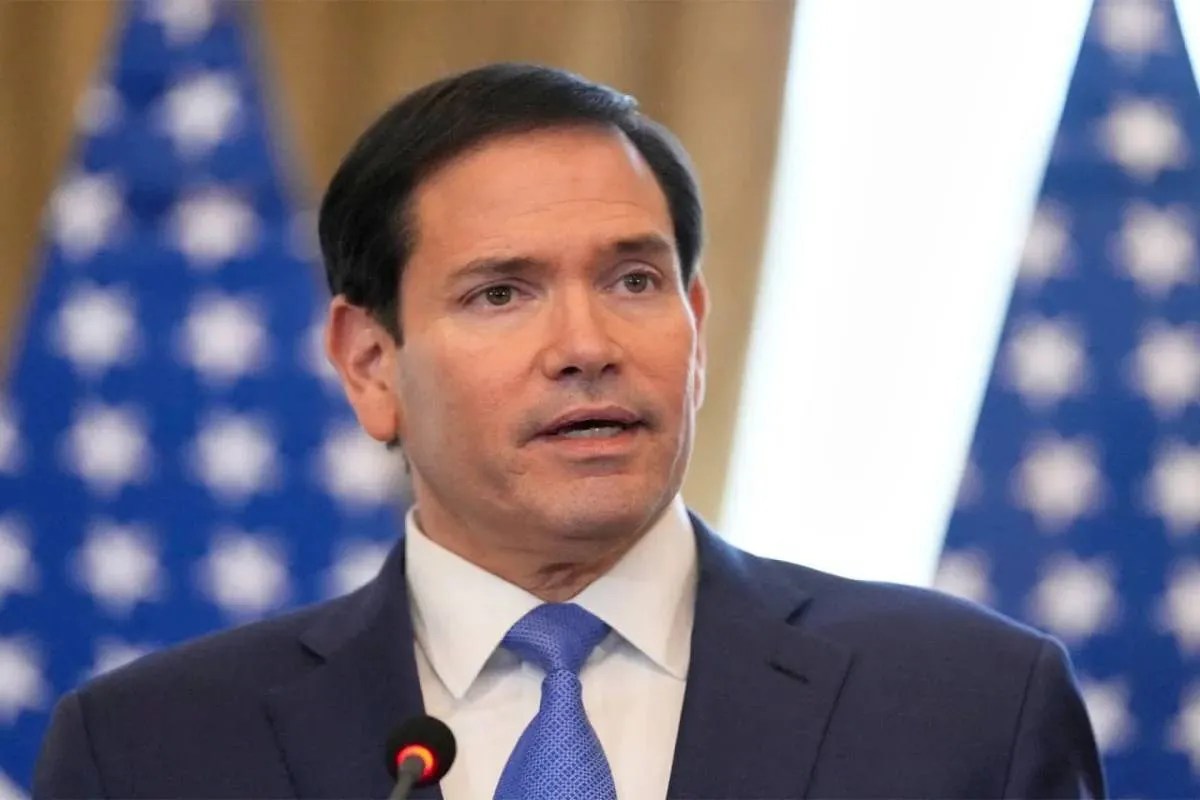
When United States Senator Marco Rubio publicly voiced stark concerns regarding threats to this crucial maritime artery, political circles in Washington took notice. But the real alarm resonated far beyond diplomatic chambers. Rubio’s warnings highlighted a reality long whispered in energy trading rooms: a sudden disruption in the Strait would not merely raise gas prices; it would stall global trade within hours.
Consider the physical reality of the passage. Out of those twenty-one miles of water, the actual deep-water navigation channels used by supertankers are only two miles wide in each direction. Imagine compressing twenty percent of the world’s vital economic energy through a space no wider than a airport runway, flanked by military batteries, naval mines, and high-speed attack boats.
One bad afternoon in the Gulf can freeze the gears of global commerce.
The Anatomy of a Panic
It has happened before. History leaves clear footprints in the sand.
During the Tanker War of the 1980s, commercial vessels moving through the Gulf were targeted repeatedly. Insurance rates for maritime shipping skyrocketed overnight. Captains demanded danger pay just to steer through the channel. The cost of moving a single barrel of crude surged, sending inflationary shocks across Western economies that took years to unravel.
When political figures highlight the risk of new conflict in the region, markets do not wait for the first missile to fly. They react to the probability of violence.
Traders at trading desks in Singapore, London, and New York operate on raw perception. When risk rises, they buy up oil futures to protect against potential shortages. The price of crude jumps immediately on the spot market.
Within forty-eight hours, that price bump travels down the refining line. Chemical plants pay more for raw inputs. Plastic manufacturers pass their costs to distributors. Farmers paying higher diesel prices for their tractors raise the price of wheat and corn.
The political soundbite delivered on a Sunday morning news broadcast in Washington transforms, by Thursday evening, into a higher grocery bill for a family in suburban Chicago.
The Invisible Network Under Pressure
We tend to think of energy security in abstract terms. We talk about strategic reserves, national grid capacities, and policy frameworks. But energy security is ultimately physical. It lives in steel pipes, ocean hull thicknesses, and the nerves of merchant sailors.
If a confrontation were to close the Strait, even temporarily, the math is unforgiving.
Saudi Arabia and the United Arab Emirates operate pipelines that bypass the Strait, running overland to the Red Sea or the Gulf of Oman. But those pipelines can handle only a fraction of the total daily volume. Millions of barrels would remain trapped inside the Gulf, locked behind a geographical dead end.
There is no magical vault of surplus oil waiting to be opened elsewhere that could instantly replace twenty million barrels a day. The global buffer is thin. When the buffer vanishes, rationing begins.
A temporary shutdown forces nations to choose who gets fuel first. Emergency services, power plants, and agricultural supply lines take precedence. Civil aviation slows down. Shipping lines reduce transit speeds to conserve fuel, extending supply chain delays from days to weeks.
The Reality of the Horizon
The threat to the Strait of Hormuz is not a hypothetical war game played out in war rooms. It is a persistent, structural vulnerability built directly into the blueprint of modern civilization.
We built an entire global economy on the assumption that ocean lanes would remain open, quiet, and cheap to navigate forever. We built hyper-efficient supply chains that hold minimal inventory, relying on just-in-time deliveries across deep ocean routes.
When those routes are threatened by rising geopolitical friction, the illusion of seamless global efficiency evaporates.
Back at the quiet truck stop in Ohio, Marcus hangs up the pump nozzle. The final charge reads significantly higher than it did last week. He climbs back into the cab, turns the key, and listens to the heavy diesel engine roar to life. He engages the gear shift and pulls out onto the dark highway, unaware of the exact nautical coordinates of the Strait of Hormuz, but acutely aware that something distant, massive, and beyond his control is pulling the strings of his life.
The water in the Gulf remains choppy, dark, and narrow. And as long as the modern world runs on petroleum, those twenty-one miles will remain the most dangerous water on Earth.