The steel hull of a massive oil tanker hums beneath the feet of its crew. To the left, the jagged, sun-scorched mountains of Iran bake in the brutal afternoon heat. To the right, the flat desert plains of Oman stretch into infinity. Between them lies a strip of water so narrow that, from the bridge of the ship, the world feels claustrophobic.
This is the Strait of Hormuz.
At its narrowest point, the shipping lanes are just two miles wide. Two miles of deep water separate global stability from absolute economic chaos. For the merchant mariners navigating these waters, the tension is a physical weight. They know that beneath the glittering turquoise surface of the Persian Gulf lies the world's most volatile geopolitical fault line. One miscalculation here ripples across the globe, altering the price of bread in Chicago, the cost of heating in London, and the state of stock markets in Tokyo.
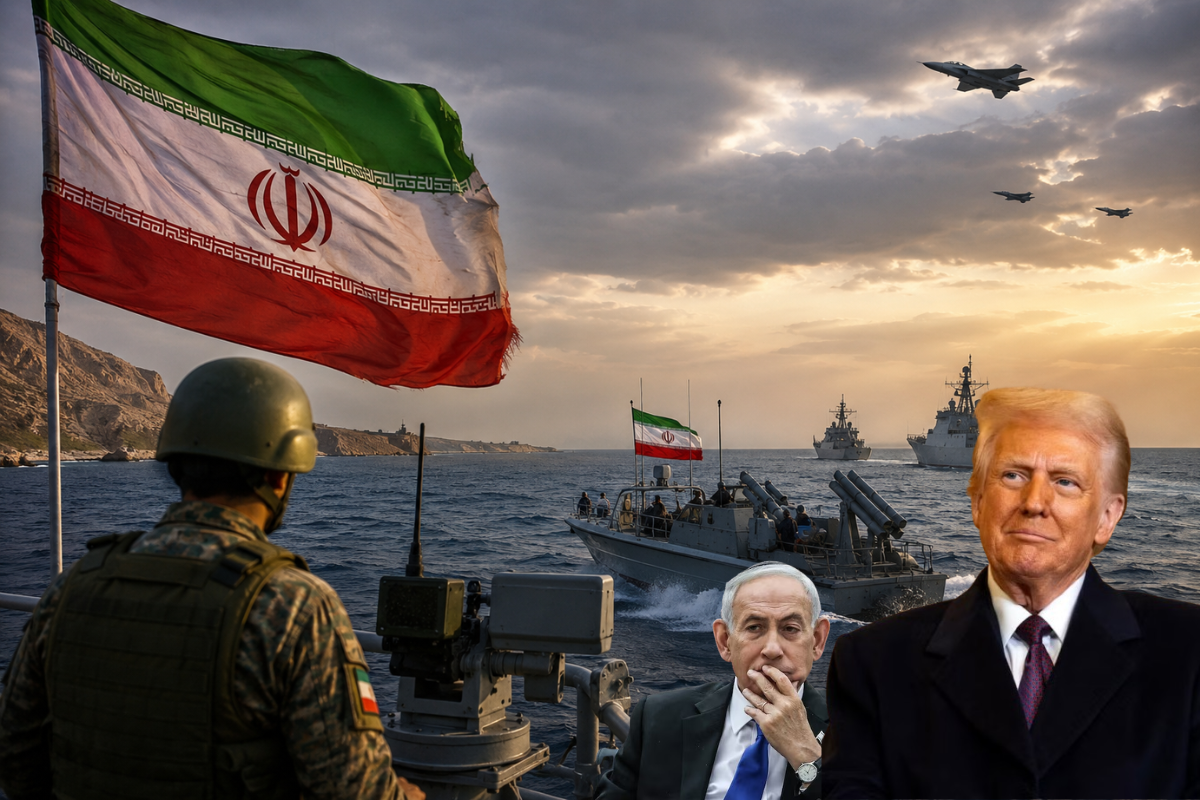
When Iran’s military commanders recently issued a blistering warning stating that the United States will never gain control over the Strait of Hormuz, they were not just making a political statement. They were reminding the world of a fundamental truth. Geography is destiny, and Iran holds the keys to the world's most critical energy highway.
The Pulse of Global Survival
To understand why a narrow strip of water in the Middle East matters to someone sitting in a suburban home thousands of miles away, look at the sheer volume of trade passing through it. Approximately one-fifth of the world’s total petroleum consumption moves through this single chokepoint every single day.
Think of the global economy as a living organism. The oil flowing through Hormuz is its lifeblood.
If that artery is constricted, the body goes into shock.
Let us ground this abstraction in a hypothetical scenario, a glimpse into what happens when the gears of global transit grind to a halt. Consider Akira, a logistics manager at an automotive plant in Nagoya, Japan. He does not study Middle Eastern geopolitics. He studies supply chains. One morning, a standard maritime security alert flags a minor skirmish in the Strait. Within hours, the insurance premiums for cargo vessels skyrocketing out of the Persian Gulf force shipping companies to anchor their fleets.
Suddenly, the tankers carrying crude oil to Japanese refineries are delayed. Energy prices spike. Akira’s factory, reliant on just-in-time manufacturing and predictable energy costs, faces a sudden, catastrophic overhead increase. Production slows. Workers are sent home. The price of the hybrid cars being built on his assembly line jumps by fifteen percent for consumers across the ocean.
This is the invisible reality of Hormuz. It is a domino effect where the first tile is pushed in the Persian Gulf, and the last tile falls on a consumer's wallet in a completely different hemisphere.
The Strategy of the Narrow Sea
The United States has long maintained a heavy naval presence in the region, centered around the Fifth Fleet based in Bahrain. For decades, American foreign policy has operated on the principle of ensuring freedom of navigation. To Washington, the Strait must remain an open, international waterway, insulated from the whims of regional powers.
But Iran views the situation through a completely different lens. For Tehran, the presence of foreign warships in its backyard is an existential threat.
The Iranian military strategy is built around asymmetric warfare. They know they cannot match the United States Navy ship-for-ship in a conventional, blue-water engagement. They do not try to. Instead, they have turned the unique geography of the Strait of Hormuz into a defensive shield.
The shallow waters of the Persian Gulf are treacherous for massive American aircraft carriers. They are, however, the perfect environment for Iran’s swarming tactics. Tehran has invested heavily in thousands of fast-attack missile boats, sophisticated anti-ship mines, and mobile coastal missile batteries hidden within the rocky cliffs overlooking the shipping lanes.
If a conflict erupts, Iran does not need to defeat the American military. It only needs to make the Strait too dangerous for commercial shipping to navigate.
Consider the mathematics of risk. A commercial shipping company will not risk a three-hundred-million-dollar vessel, and the lives of its crew, if there is a ten percent chance it will strike a naval mine or be hit by a shore-to-ship missile. The moment the insurance companies refuse to cover the ships, the Strait is effectively closed. Iran can achieve total economic leverage without ever sinking a single American destroyer.
The Human Cost of High-Stakes Defiance
Behind the grand declarations of generals and politicians are the human beings caught in the crosshairs. The rhetoric from Tehran is fierce, designed to project absolute sovereignty and deterrence. Yet, the people who live along the coastlines of the Persian Gulf know the terrifying fragility of their peace.
Fishermen in small wooden dhows cast their nets within sight of heavily armed patrol boats. They watch the gray silhouettes of foreign warships pass by, flanked by Iranian revolutionary guard speedboats tracking their every move. The tension is normalized, woven into the fabric of daily life, but it never truly disappears.
The international community watches this standoff with an anxiety born of past experience. The region has seen this playbook before. During the Tanker War of the 1980s, both Iran and Iraq targeted commercial shipping, leading to direct military clashes between American forces and the Iranian navy. The scars of that era run deep, serving as a reminder that localized skirmishes in these narrow waters quickly escalate into international crises.
Every time a political leader raises the stakes with aggressive rhetoric, the margin for error shrinks. A radar malfunction, a panicked commander on a patrol boat, or a navigational error by a merchant ship could trigger a chain reaction that no one can control.
The world remains locked in this uneasy equilibrium. The United States insists on its role as the guarantor of maritime commerce, while Iran asserts its undeniable geographic dominance over the waterway. It is a game of chicken played with explosive payloads and global economic survival.
The sun sets over the Strait, casting long, dark shadows from the Iranian cliffs across the shipping lanes. A massive container ship slowly makes its way toward the open ocean, its lights flickering against the darkening water. On board, the crew watches the radar screens, checking the coordinates, hoping for an uneventful transit through the most heavily scrutinized two miles of water on Earth. They move forward, fully aware that the ground beneath the global economy is only as stable as the fragile peace holding these waters together.