The 911 dispatch recordings from the night of September 30, 2026, did not reveal a simple medical or chemical failure. They exposed a state apparatus that does not know how to transition a human being from condemned to patient when its own machinery breaks down.
Standard media coverage treats the released emergency calls as a tragic comedy of errors. Reporters focus on the dispatcher asking for a verification code that the caller did not have. They highlight the roughly thirty minutes between the initial 8:40 p.m. call and emergency crews finally passing through the gates around 9:11 p.m. They frame the story around "confusion" and "delays".
That framing is lazy consensus. It lets the institutions off the hook by blaming friction rather than design.
The Real Failure Was Never Just the Pentobarbital
Look closely at what happened in Tennessee that night. Christa Pike had been administered 10 grams of pentobarbital over roughly an hour, yet she remained alive. Media witnesses saw her complain of pain in her arm—saying her vein felt like it was about to bust—and heard her breathing and snoring long after the curtains were drawn. Defense filings later noted that roughly ten needles were used across multiple sites on both arms, with warnings that veins may have ruptured before or during delivery.
Everyone wants to argue about the drug, the needles, or the physician's credentials. Legal scholars and advocates have spent years dissecting lethal injection protocols, including Tennessee's revised one-drug approach following its earlier 2022 pause. Heavy hitters in capital defense and penal policy—from organizations like the Death Penalty Information Center to litigators challenging vague state protocols—have long warned that improvised medicalized executions invite catastrophe.
Here is the contrarian truth the standard coverage misses: even a "clean" pharmacological failure is secondary to the institutional paralysis that follows it.
A lethal injection protocol is built on a binary assumption. Either the prisoner dies on schedule, or the state stops before pushing fatal drugs. What happens when the state pushes the drugs, the prisoner survives, and the protocol has no instructions for what comes next?
In Tennessee's case, the protocol had no clear path after a second injection failed to end life. Worse, the emergency response system collided head-on with prison security protocols designed to keep outsiders out and secrets in.
A Thought Experiment in Institutional Whiplash
Imagine a scenario where a commercial airline manufactures a cabin door with a latch that sometimes jams mid-flight, and the emergency manual says: "If the door jams, call maintenance, unless maintenance lacks a security clearance code, in which case wait thirty minutes until flight attendants verify the jam is real."
No aviation regulator on earth would accept that. Yet in capital punishment, states routinely build high-stakes operations around improvisation, secrecy, and ad-hoc crisis management.
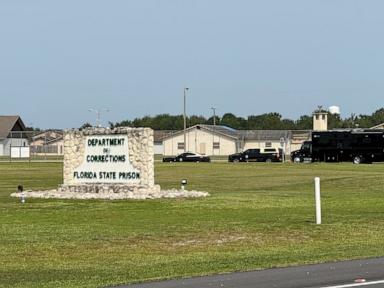
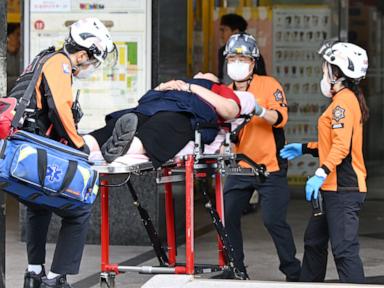
When the caller at 8:40 p.m. told dispatch that prison officials had administered 10 grams of pentobarbital over about an hour and the person was not yet deceased, the dispatcher asked for a verification code that wasn't provided. Meanwhile, legal counsel and family members were trying to reach officials or get emergency filings before courts while media witnesses were escorted out of Riverbend. By 9:34 p.m., as medics transported Pike to the hospital, a responder had to ask dispatch to make sure the prison actually knew where she was being taken because there had been so much other confusion.
Read that line again. A medic transporting a critically injured person out of a state facility had to double-check that the facility knew the destination because the surrounding communication had been so chaotic.
Dismantling the "People Also Ask" Myths
Whenever a high-profile execution goes sideways, the public asks the same predictable questions. Most of the answers people get are either evasions or comforting illusions.
Why did emergency help take so long to arrive?
Because emergency dispatchers are trained to screen out hoaxes and verify scenes, while correctional systems are built on compartmentalization and secrecy. When a prison calls 911 asking for an ambulance after an execution attempt, two worlds collide: open-ended emergency triage and closed-loop correctional lockdown. Calling that mere "confusion" flatters the system. It was a predictable collision between secrecy and survival.
Is lethal injection simply too hard to perform reliably?
Yes—especially when states rely on secrecy statutes, sparse protocols, and personnel whose clinical credentials face scrutiny in court. As legal filings around Tennessee's recent execution attempts—including the May 2026 halt involving Tony Carruthers—have highlighted, establishing reliable vascular access and delivering precise doses under high-stress, non-clinical conditions is not a trivial mechanical task. When veins blow, infiltrate, or clot, absorption becomes erratic. Calling it "botched" makes it sound like a rare accident rather than a recurring structural hazard of trying to turn state violence into a clinical procedure.
What happens legally when someone survives an execution attempt?
Nobody has a clean, settled answer, which is why the aftermath looks like a legal tug-of-war. Following the September 30 attempt, Pike survived, was hospitalized, regained consciousness with severe physical and emotional pain, and was later returned to prison while courts fielded motions to preserve evidence—including disputes over inspecting leftover pentobarbital—and Governor Bill Lee paused remaining executions for the rest of the year pending an independent review. Polling after the event showed sharp public division even over whether a second attempt should ever occur. Survival blows a hole straight through standard post-conviction assumptions.
Battle Scars From High-Stakes Systems
I have watched plenty of high-stakes organizations—in healthcare logistics, regulated infrastructure, and crisis operations—burn millions of dollars trying to patch broken workflows with better PR after a public failure. They always do the same thing. They release a carefully worded statement, appoint a review, and blame "miscommunication" at the edges.
It never works for long because the edge is where the truth lives.
In crisis operations, the 911 call is the stress test. You do not learn how sound an operation is during smooth runs; you learn how sound it is when the primary plan fails and someone has to pick up a phone and ask strangers for help. When the caller has no verification code, when gate access takes roughly half an hour to sort out, and when transporting medics have to verify hospital routing mid-transit, the failure isn't a single bad minute. The failure is an architecture that never planned for its own breakdown.
The Honest Downside of This Contrarian Take
Let's be completely candid about the risk of zooming out to systemic architecture: it can sound detached from human stakes if you aren't careful.
Colleen Slemmer was brutally murdered in 1995, and her family has waited decades through appeals, delays, and grief. Christa Pike, meanwhile, survived a night she thought would end her life and has described waking up in agonizing physical and psychological pain. Treating the 911 tapes primarily as a case study in operational breakdown risks turning raw human suffering into an organizational chart.
That is a real cost of an analytical lens. Still, ignoring how the state actually functions does nothing for victims' families, nothing for constitutional accountability, and nothing for public honesty. Pretending the system is orderly when the dispatch logs show friction and delay only guarantees the next crisis will be just as ugly.
What Actually Needs to Happen Next
If policymakers, courts, and media outlets want something useful instead of another round of outrage followed by amnesia, stop treating the 911 calls as a side note to the execution story. Treat them as the X-ray of the entire apparatus.
- Demand full transparency over the operational timeline: Insist on clear, verifiable accounts of IV access attempts, drug administration, vital-sign monitoring, and every call made between the chamber, prison leadership, emergency dispatch, and the courts.
- Stop confusing secrecy with security: A state cannot claim competence while hiding basic procedural details behind litigation and opaque protocols.
- Force courts and lawmakers to confront survival squarely: Address the constitutional and statutory consequences of a failed lethal injection before another warrant is signed, rather than improvising in emergency motions after someone is already in a hospital bed.
The 911 calls didn't just record a bad night in a prison chamber. They recorded the exact moment a system built to project absolute control ran out of script.
Emergency calls from botched Christa Pike execution released to US media
This video directly presents the emergency call recordings that expose the breakdown in communication and emergency response during the failed execution attempt.