Stand on the wooden floorboards of a Swiss chalet when the autumn wind comes down from the Eiger, and you can hear a silence that feels engineered. It is not the absence of sound. It is the sound of an entire nation holding its breath, waiting to see if the roof is about to leak.
For centuries, that roof was neutrality. Not merely a policy of non-alignment, but a philosophy of the horizon. It said to the empires of Europe: fight your fires elsewhere, we have cheese to age and clocks to build.
Yet identity in the Alps is shifting.
Consider a hypothetical watchmaker in a narrow valley near Bern. Let us call him Jakob. Jakob spends his mornings looking through a jeweler’s loupe at gears the size of a pinhead, working with an ancient, stubborn patience. He knows that if a single tooth on an escape wheel is off by a micron, the entire movement stops. To Jakob, precision is sacred. When he hears politicians in Bern argue over whether Switzerland should tighten its neutrality laws—banning weapon re-exports or keeping distant from international sanctions—he does not hear legal jargon. He hears someone shaking the workbench while he is setting the balance spring.
The debate that recently brought Swiss citizens to the ballot boxes was ostensibly about rules, definitions, and paragraphs in international law. A right-wing populist party pushed for a constitutional amendment that would enshrine absolute, rigid neutrality. No weapons sold to conflict zones. No participation in economic sanctions that favor one belligerent over another. A literal steel door slammed against the outside world.
The voters said no.
They looked at the rigid proposal and sensed a trap. They realized that in a world where supply chains stretch across oceans and cyber-attacks cross borders before a coffee can cool, pretending you do not live in the neighborhood is not neutrality. It is blindness.
To understand why this referendum mattered far beyond the borders of a landlocked Alpine confederation, you have to look backward into the machinery of European history.
Neutrality was never a birthright. It was an invention born of exhaustion. After the slaughter of Marignano in 1515, where Swiss mercenaries learned the bitter cost of foreign intervention, the cantons decided they had business elsewhere. They pulled back. They built a fortress of neutrality not out of cowardice, but out of a fierce, protective selfishness. It worked. Through the smoke of the Thirty Years' War, through the Napoleonic storms, through the industrialized meat-grinders of the twentieth century, Switzerland remained an island.
Trains rolled past bullet-scarred borders. Banks held ledgers for both sides. It was messy, morally complicated, and fiercely guarded.
The modern myth of Swiss neutrality is comfortable. It smells of old paper, secure vaults, and clean mountain air. But comfort is a fragile armor.
When war returned to the European continent with the invasion of Ukraine, that armor was scratched. The European Union looked across the border and asked a blunt question: When your neighbor's house is on fire, do you sell buckets or do you lock your doors and check your insurance policy?
Switzerland did something remarkable, and deeply controversial. It adopted the EU sanctions against Russia. To critics on the right, this was a betrayal of centuries-old tradition. To critics on the left, it was a half-measure that compromised moral clarity.
Enter the referendum. The populist right wanted to freeze time. They wanted to take the 19th-century definition of neutrality and nail it to the masthead, legally binding the government to a hands-off doctrine no matter how the global chessboard shifted.
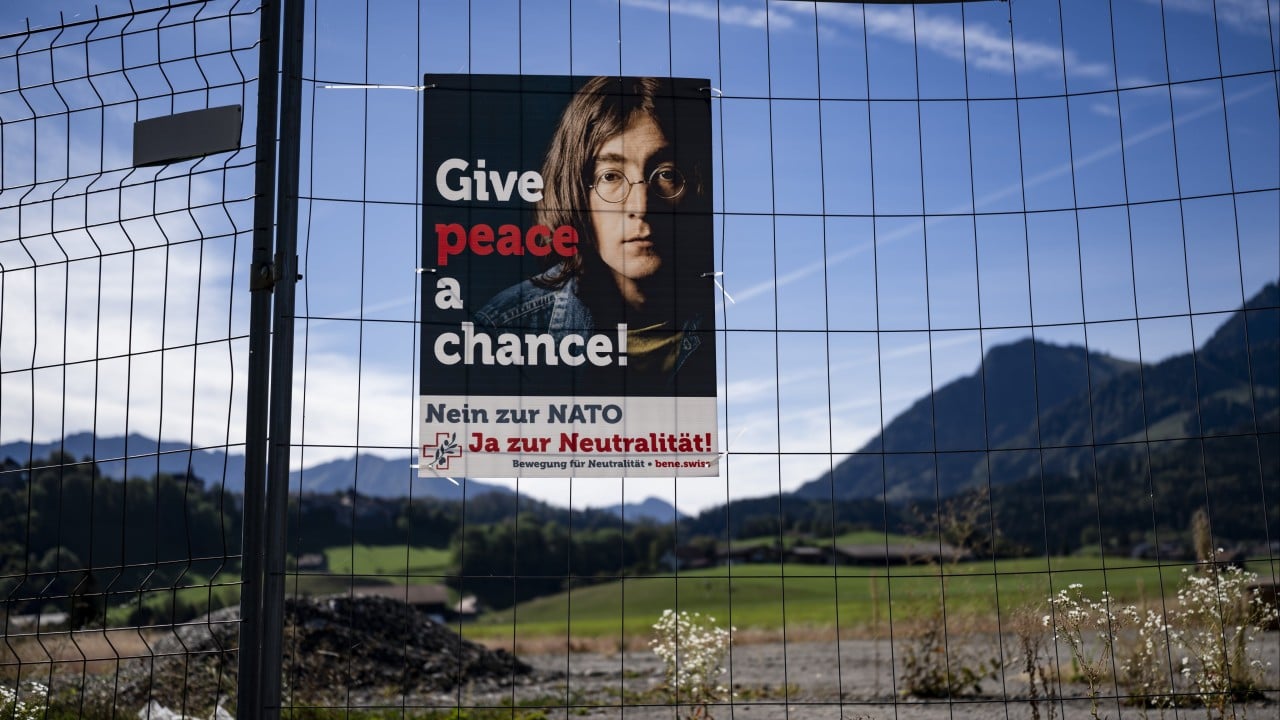
The campaign was fierce. Billboards appeared in train stations showing the Swiss flag wrapped in protective barbed wire. Town halls echoed with warnings about losing the soul of the nation.
And yet, when the envelopes were counted, the initiative failed. By a clear margin, the Swiss electorate chose ambiguity over rigidity.
Why?
Because the Swiss understand the paradox of the vault. A vault is only useful if it is part of a larger economy of trust. If you lock yourself inside permanently, you are no longer a guardian of wealth or a mediator of peace; you are simply a prisoner in a very expensive room.
The vote was not a rejection of neutrality itself. It was a rejection of fundamentalism. It was an acknowledgment that in the twenty-first century, absolute isolation is a luxury no connected nation can afford.
Walk through Zurich on a rainy Tuesday evening, and you will see bankers, engineers, and students sitting in cafes arguing over these exact tensions. They speak in whispers, as if raising their voice might disturb the peace of the lake. They are intensely proud of their independence. They do not want to join NATO. They do not want to become an outpost for any foreign power.
At the same time, they use smartphones built with minerals mined in Central Africa, buy gas piped from distant fields, and send their children to universities connected to a global web of research. They know they are implicated. They know that to live in the modern world is to have dirty hands.
Rigid neutrality is an attempt to wash those hands before the meal has even begun.
The failure of the referendum means Switzerland remains in the gray zone. It is a place of uncomfortable compromises. It is where diplomats in quiet rooms negotiate prisoner swaps between hostile superpowers, even as newspapers publish editorials condemning economic policies. It is where humanitarian aid is dispatched alongside quiet financial compliance.
It is messy. It lacks the cinematic purity of a Hollywood speech about good versus evil.
But real life is rarely cinematic. Real life is Jakob at his workbench, squinting through the loupe, adjusting a gear that must fit into a mechanism it did not choose, working alongside parts made by hands it will never see.
The mountains do not care about political parties. They stand indifferent to referendums, treaties, and parliamentary debates. Avalanches do not ask if a valley has signed a neutrality pact before they fall.
When the snow melts in the high passes, the water flows down into the Rhine, into the Rhone, into the Po. It crosses borders whether anyone gives permission or not.
The Swiss voters looked at their ballots, looked out at a burning world, and chose the river over the wall. They chose the complicated, dangerous work of staying engaged while keeping their own counsel.
The clock keeps ticking. The gears turn. And somewhere in the valley, the workshop light stays on late into the night.