For decades, German authorities viewed some of the world's most influential techno clubs through the exact same legal lens as brothels, sex cinemas, and gambling halls. It sounds ridiculous because it is. If you run a venue that shapes global music trends, curates avant-garde artistic lineups, and draws millions of international travelers, you are categorized as an "amusement facility" under outdated zoning laws. This means urban developers can easily push you out, noise complaints can shut you down instantly, and building codes restrict you from opening in residential neighborhoods.
That is finally about to change.
Last week, Friedrich Merz’s cabinet approved a fundamental shift in building regulations. This update formally recognizes nightclubs with a clear artistic focus as spaces of cultural and artistic value. Instead of being lumped in with red-light district table dance bars, these music venues are getting reclassified as facilities for cultural purposes. It places them on the same legal footing as theaters, opera houses, and museums.
This isn't just a win for late-night revelers. It's a vital lifeline for a nightlife scene that has been pushed to the absolute brink.
The Reality Behind the Clubsterben Crisis
If you think German nightlife is invincible, you haven't been paying attention. The phenomenon known as Clubsterben—the death of clubs—has turned from a slow burn into a raging fire. Berlin, the historic epicenter of electronic music, is watching its cultural fabric tear at the seams.
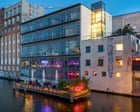
Legendary queer institution SchwuZ, which had been operating since 1977, faced massive disruption. Watergate, a 22-year staple of the riverside electronic scene, announced its closure. Mensch Meier shut its doors. These aren't just isolated business failures. They're the result of a brutal combination of skyrocketing real estate costs, shifting post-pandemic habits, and aggressive urban development.
The Clubcommission, a dedicated nightlife advocacy group in Berlin, dropped a terrifying statistic recently. They estimate that nearly half of the city's remaining clubs are currently considering throwing in the towel. When a city risks losing half of its cultural incubators, the government has to step in.
Why the Legal Shift Matters on the Ground
So, what does this building code rewrite actually do? To understand why club owners are cheering, you have to understand how building laws dictate urban survival.
Under the old rules, clubs were banned from most inner-city areas and residential zones. If an investor bought the plot of land next to your venue to build a luxury apartment complex, the residents' noise complaints would almost always win in court. The law treated the club as a nuisance, an amusement business designed solely for commercial profit rather than community value.
The new legislation flips that script. By upgrading clubs to cultural status, the law gives urban planners the actual tools they need to protect these spaces.
- Mixed-Use Integration: Clubs will be generally permitted in mixed-use urban areas.
- Residential Exceptions: Venues can operate exceptionally within specific residential zones, provided they meet strict modern acoustic requirements.
- Development Protection: It becomes significantly harder for a corporate developer to evict a venue operator to build another generic, profit-driven office complex.
Federal Culture Minister Wolfram Weimer, who has historically had a tense relationship with alternative, non-mainstream culture, threw his weight behind the change. He openly stated that distinguishing curated music venues from pure entertainment halls is a necessity to protect the live music ecosystem.
The Catch Not Everyone Benefits
Let's be completely clear about one thing. This law isn't a blanket hall pass for every business with a sound system and a liquor license.
To qualify for these new protections, a venue must prove its cultural reference. Organizations like LiveKomm, the Federal Association of Music Venues in Germany, have emphasized that the upgrade applies specifically to spaces with a dedicated focus on artists, young talent development, and curated programming.
If you run a commercial mega-club that relies on top-40 hits and cheap drink promos without any real artistic curation, the building law still views you as an amusement facility. The burden of proof lies on the operators to show they are operating as a cultural asset, much like an independent art gallery or a community playhouse.
Is It Too Little Too Late
While the nightlife sector welcomes the decision, a lot of operators feel the government dragged its feet for far too long. This isn't a new conversation. The German Bundestag actually passed a political declaration of intent back in 2021 to classify clubs as cultural spaces. But that declaration lacked actual teeth. It was a symbolic gesture with zero legal weight in a zoning dispute.
It took five more years of closures, gentrification, and intense lobbying to finally get the cabinet to approve concrete changes to the building code. For many spaces, the damage is already done.
Jakob Turtur, who runs the collaborative cultural space and nightclub collective Jonny Knüppel, expressed a sentiment shared by many grassroots organizers. He notes that while the change is a massive victory, it likely comes too late for his own venue and several others that have already been displaced by corporate real estate. The legal battle might be won, but the physical spaces have already been lost to concrete office blocks.
The Economic Argument for Subculture
Germany isn't doing this purely out of the goodness of its heart or a love for four-to-the-floor kick drums. There is a massive economic engine driving this policy.
Before the pandemic disruptions, data from the Parliamentary Forum Club Culture and Nightlife showed that club tourism brought roughly three million visitors to Berlin alone every year, injecting over €1.5 billion directly into the local economy. Beyond the direct cash flow into hotels, restaurants, and transport, a vibrant subculture acts as a magnet for the young, highly skilled workforce that Germany's tech and creative sectors desperately need to attract.
If you sanitize a city and strip away its nightlife, you lose the cultural edge that makes people want to move there in the first place. Treating clubs like museums recognizes that electronic music is Germany's modern classical music—a major export and a point of national pride.
What Happens Next
The cabinet approval is a massive milestone, but the law still has to clear a few more hurdles. It needs to pass through the Bundestag and the upper house, the Bundesrat, to be officially codified into German law. Because the initiative enjoys rare cross-party support spanning from the left to the conservative CDU/CSU coalition, industry insiders expect it to pass without major blockades.
If you are a club owner, a promoter, or an urban planner, you need to prepare for how these rules play out locally. The federal government sets the framework, but local municipalities will handle the execution.
Start documenting your cultural programming now. Keep meticulous records of your artist bookings, community workshops, and curation strategies. When the new zoning laws take effect, you will need that paper trail to prove to local building authorities that your venue belongs in the cultural category. Work closely with regional branches of the Clubcommission or LiveKomm to ensure your acoustic setups meet the standards required for mixed-use neighborhoods. The legal shield is coming, but you have to be organized to use it.