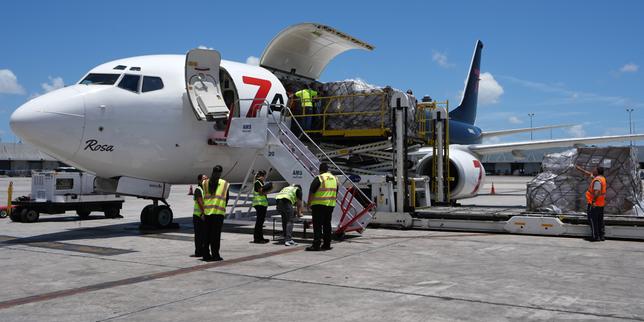
When a Miami cargo charter carrying 700 pallets of food and hygiene kits lifted off for Cuba, it represented a calculated shift in American foreign policy. The delivery marks the first tranche of a $60 million direct assistance package. Nominally designed to relieve a starving population, the aid arrives alongside an aggressive energy blockade that has brought the island's economic engine to a dead halt. Washington is applying two opposing forces at once: crushing the state apparatus through economic strangulation while attempting to nourish the populace through non-state channels.
This dual strategy marks a radical evolution in United States policy toward its long-time Caribbean adversary. For decades, sanctions were broad instruments designed to apply systemic pressure on the Castro regime, often punishing ordinary citizens alongside political elites. Today, the strategy has been refined into a surgical clampdown paired with parallel humanitarian distribution. By utilizing Catholic Relief Services and local parish networks, the State Department aims to feed families while denying the ruling military hierarchy a single grain of rice or drop of fuel. It is a high-stakes gamble intended to weaken the political elite without causing a human collapse on Florida's doorstep.
Squeezing the Grid to Break the State
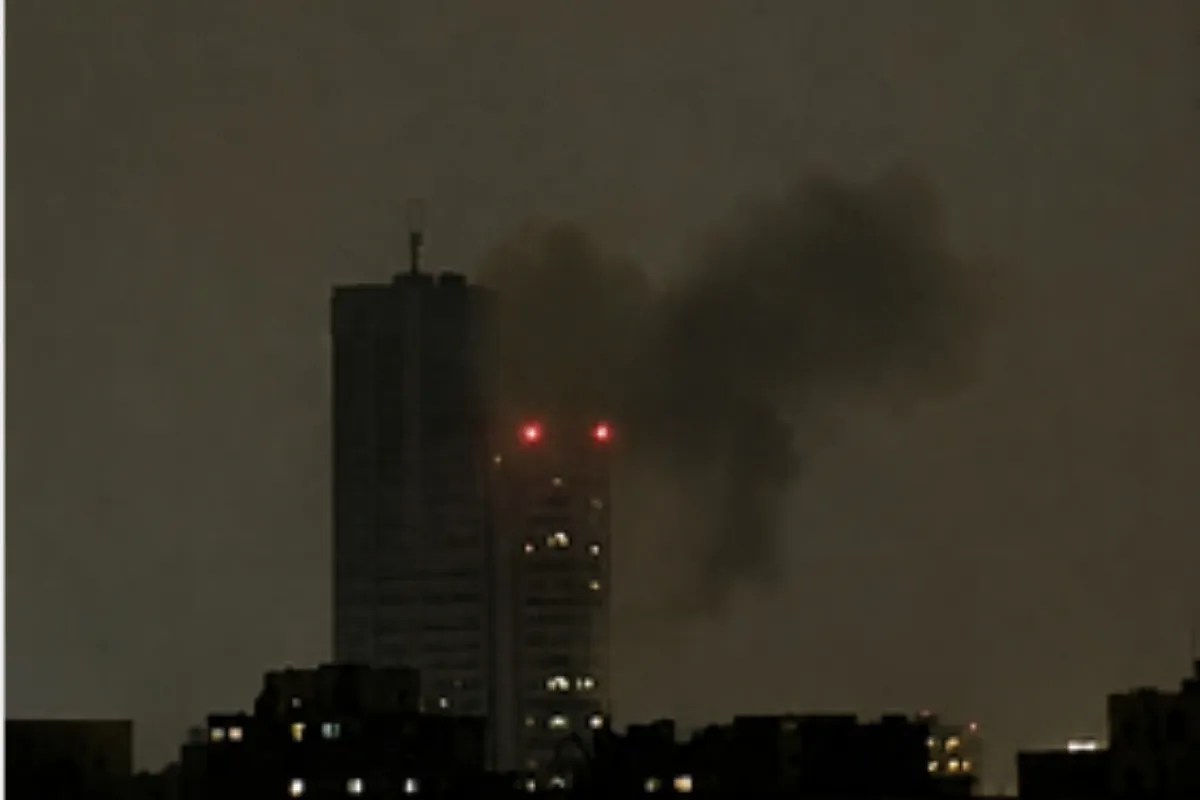
The economic reality inside Cuba is dire. The country faces unprecedented daily power blackouts, paralyzed transportation networks, and shuttered state operations. Cuban officials report that the island has endured months without receiving vital shipments of diesel, fuel oil, gasoline, or liquefied petroleum gas. The state power grid generates barely a fraction of its operational baseline, forcing cities into prolonged darkness and leaving food to spoil in unpowered refrigerators.
                               CUBAN ENERGY INFRASTRUCTURE CRISIS

  +--------------------------------+                  +--------------------------------+
  |  US Energy & Oil Embargo       |                  |  Cuban Domestic Production     |
  |  Strict maritime sanctions     |                  |  Covers ~40% of fuel needs     |
  +---------------+----------------+                  +---------------+----------------+
                  |                                                   |
                  +-----------------------+---------------------------+
                                          |
                                          v
                         +----------------------------------+
                         |  Crushing 60% Supply Shortfall   |
                         +----------------+-----------------+
                                          |
                                          v
                         +----------------------------------+
                         |  Recurrent National Grid Collapses |
                         |  Blackouts, Idle Transit, Food   |
                         |  Spoil, Widespread Paralyzation  |
                         +----------------------------------+
Washington’s sanctions explicitly target the foreign companies, shipping lines, and financial intermediaries that supply fuel to the island. Any vessel that docks at a Cuban port faces a 180-day ban from entering United States waters. That single rule scares away commercial maritime operators who cannot afford to lose access to North American trade routes. The commercial risk outweighs the reward of selling fuel to an insolvent government in Havana.
The administration’s target is not merely the civilian government, but GAESA, the massive military-run conglomerate that controls the lucrative sectors of the Cuban economy, including international trade, tourism, and retail. By blocking energy imports, Washington starves GAESA of the fuel required to run state-owned hotels, transport agricultural goods, and power regime offices. State Department officials argue that the political elite has historically siphoned off imported fuel to sustain their security forces while leaving hospitals and residential neighborhoods in the dark.
Havana views this maneuver as outright warfare. Foreign Minister Bruno Rodríguez dismissed the $100 million assistance pledge as a public relations stunt. He noted that $100 million covers roughly five days of financial damage caused by the embargo. Cuban authorities insist that if Washington genuinely cared about human welfare, it would lift restrictions on oil shipments rather than sending cargo planes filled with flour and soap.
Bypassing the Palace to Reach the Parish
The logistical architecture of the new American assistance program represents an intentional attempt to short-circuit state control. Historically, foreign aid entering Cuba was funneled through state distribution agencies. Government officials controlled the warehousing, inventorying, and ration-book distribution, allowing the regime to claim credit for aid while extracting administrative fees or diverting goods toward loyalists.
The current administration refused those terms. State Department officials made the $100 million offer contingent on total control over the supply chain. Under the agreement hammered out with local authorities, the food packages fly directly into regional airports and transfer immediately into trucks managed by Catholic Relief Services and local Caritas networks.
                             AID DISTRIBUTION PATHWAYS

       TRADITIONAL STATE PATHWAY                      DIRECT FAITH-BASED PATHWAY
     +--------------------------+                   +--------------------------+
     |   US / International Aid |                   |   US / International Aid |
     +------------+-------------+                   +------------+-------------+
                  |                                              |
                  v                                              v
     +--------------------------+                   +--------------------------+
     |  State Warehousing Agency|                   |   Miami Cargo Transport  |
     +------------+-------------+                   +------------+-------------+
                  |                                              |
                  v                                              v
     +--------------------------+                   +--------------------------+
     |  Regime Ration Outlets   |                   | Catholic Relief Services |
     |  (Diverted / Monetized)  |                   +------------+-------------+
     +------------+-------------+                                |
                  |                                              v
                  v                                 +--------------------------+
     +--------------------------+                   | Local Parish Distribution|
     |    Selected Citizens     |                   +------------+-------------+
     +--------------------------+                                |
                                                                 v
                                                    +--------------------------+
                                                    |  196,000 Target Families |
                                                    +--------------------------+
Local priests and parish volunteers deliver packages directly to identified vulnerable households. The target list includes an estimated 196,000 families facing severe malnutrition and health risks.
| Operational Parameter | Traditional State-Run Aid | Direct Faith-Based Delivery |
|---|---|---|
| Logistical Control | Ministry of Foreign Trade (MINCEX) | Catholic Relief Services & Caritas |
| Primary Beneficiaries | State ration card system users | 196,000 vulnerable families |
| Regime Siphon Risk | High (diverted to tourism/military) | Extremely Low (audited by church staff) |
| Diplomatic Framing | Bilateral state cooperation | Human-to-human direct assistance |
Getting Havana to consent to this arrangement required weeks of delicate behind-the-scenes negotiation. President Miguel Díaz-Canel initially balked, calling the offer a violation of Cuban sovereignty. But as blackouts stretched into days and spontaneous local protests erupted across outer provinces, the government retreated. Accepting the aid carries a deep political cost for Havana. It forces the government to concede that it can no longer guarantee basic subsistence for its own population, while allowing the Catholic Church—a historical rival of the communist state—to step in as the primary provider of social relief.
The Geopolitical Stakes Beyond the Gulf
Washington's maneuver is not occurring in a vacuum. It is part of a wider geopolitical competition for influence in Latin America and the Caribbean. As the United States tightens its financial grip, other global powers are moving to fill the vacuum.
| Country / Actor | Type of Assistance | Strategic Goal |
|---|---|---|
| United States | Direct food/hygiene aid ($100M total) | Apply pressure for political change while bypassing regime |
| Mexico | Flotilla shipments, fuel transfers, solar panels | Regional solidarity, counteracting US dominance |
| China | Solar technology, grid hardware, basic grain | Expanding Caribbean footprint, securing strategic ports |
| CARICOM | Medical supplies, water storage, powdered milk | Regional stability, preventing refugee surges |
Mexico has stepped up as a vital lifeline for the island. Flotillas organized by international activists and backed by Latin American governments have docked in Havana, delivering solar panels, bicycles, medical supplies, and food. The ships are symbolic, carrying names like "Granma 2.0," designed to directly challenge the legitimacy of the American embargo. Mexican President Andrés Manuel López Obrador and his successor have consistently criticized Washington's energy restrictions, warning that starving an island of fuel risks triggering a catastrophic regional crisis.
At the same time, Beijing has quietly expanded its footprint on the island. Rather than sending short-term food packages, China has focused on hardware, shipping solar generation units and electrical components to help decentralize Cuba's fragile grid. A decentralized grid powered by solar arrays is far harder for foreign sanctions to cripple than a centralized system dependent on imported heavy crude.
Washington understands these dynamics. By launching its own high-profile assistance campaign, the State Department aims to counter Chinese and Latin American narratives that portray the United States as heartless. The message to everyday Cubans is clear: the United States is willing to feed you, but it will not allow your leaders to keep the lights on until systemic political changes occur.
A Fractured Path Forward
The fundamental flaw in Washington’s strategy lies in the assumption that humanitarian packages can offset the total collapse of a nation's basic infrastructure. Food kits keep people alive, but they do not run water treatment plants, power surgical theaters, or run public transit systems. When a city has no power for 20 hours a day, economic activity stops dead. Small businesses close, agricultural transport rots in the fields, and young Cubans leave the island in record numbers.
The administration’s policy creates a volatile, pressure-cooker environment. By squeezing the energy supply, Washington accelerates the collapse of state services. By shipping aid through the church, it seeks to manage the social fallout. Yet history shows that desperate populations under severe economic strain do not always stage democratic uprisings; more often, they focus entirely on daily survival or flee across maritime borders.
If the goal is to force structural economic opening in Havana, direct relief combined with severe energy sanctions is an untried experiment. The strategy assumes the Cuban military elite will break before the social fabric fractures completely. But as cargo planes continue their runs from Miami and blackouts drag on across the island, the line between pressure and total human catastrophe grows thinner by the day. Washington is banking on a delicate balance, but in a nation operating in near-total darkness, delicate balances rarely survive.