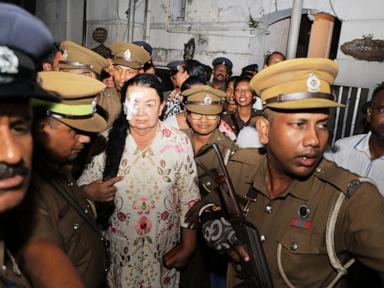
The architecture of absolute power in South Asia has always relied on an unspoken cushion of permanent immunity. For decades, political dynasties treated state assets and public donations as personal inheritances, insulated by loyal bureaucracies and executive fiat. That illusion fractured when Sri Lanka’s anti-graft authority arrested former first lady Shiranthi Rajapaksa in Colombo.
The 73-year-old wife of former President Mahinda Rajapaksa was taken into custody by the Commission to Investigate Allegations of Bribery or Corruption (CIABOC) over allegations involving the misuse of a 10-million-rupee donation intended for a children's hospital. While her legal defense maintains her innocence, the arrest itself marks a profound structural shift. It demonstrates that the political machinery which once shielded the nation's most prominent family from accountability is no longer omnipotent.
To understand why this arrest matters, one must look past the immediate courtroom drama and examine the anatomy of the financial allegations. The core of the state's case centers on funds raised for medical equipment—specifically a diagnostic scanner—at a time when public health infrastructure was buckling under resource constraints. Investigators allege that donations meant for vulnerable pediatric patients were mismanaged or diverted through charitable fronts linked to the inner circle. The defense counters that no misappropriation occurred, setting up a high-stakes evidentiary battle.
Yet, the legal particulars are merely symptoms of a deeper political realignment. This crackdown did not happen in a vacuum. It is the direct consequence of the 2024 presidential election, which brought Anura Kumara Dissanayake to power on an explicit anti-corruption mandate. For an electorate scarred by the catastrophic economic collapse of 2022—which saw fuel shortages, hyperinflation, and mass protests drive President Gotabaya Rajapaksa from office—accountability for financial mismanagement is not a secondary concern. It is the core metric of national survival.
The domino effect across the family tree underscores the systemic nature of the current investigations. Earlier in the legal sequence, eldest son and former minister Namal Rajapaksa faced detention over inquiries tied to commercial aviation acquisitions, while other relatives have faced overlapping scrutiny regarding state assets. For a political lineage that dominated the island's governance for generations, the simultaneous unraveling of multiple family members signals the closure of an era of untouchability.
Critics of the current administration often warn against selective prosecution or political vendettas dressed up as justice. That caution is historically warranted in emerging democracies, where transitions of power frequently trigger retributive cycles against outgoing regimes. However, the sheer public fatigue with institutional looting provides these proceedings with a different kind of gravity. When public hospitals lack basic diagnostics while charitable funds flow into opaque channels, the demand for transparency transcends partisan politics.
As the legal process plays out in Colombo's courts, the broader implications stretch far beyond the Rajapaksa name. This investigation establishes a live test for whether Sri Lanka's investigative bodies can permanently pierce the armor of elite impunity, transforming anti-corruption pledges from campaign rhetoric into enforceable legal reality.
For a deeper visual overview of these developments and the ongoing legal proceedings, watch this report on Former Sri Lankan First Lady Arrested Over Corruption Allegations.