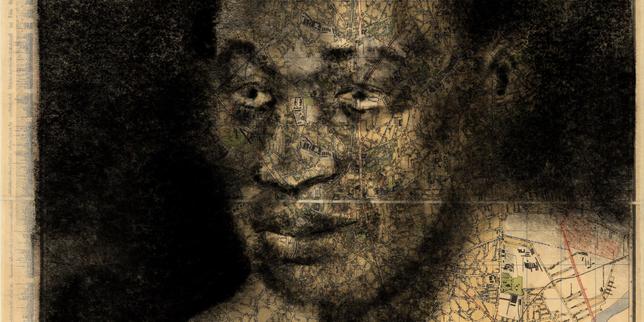
On February 24, 1966, a military coup d'état code-named "Operation Cold Chop" overthrew Kwame Nkrumah, the first president of Ghana, while he was en route to Peking on a peace mission. Within days, Ahmed Sékou Touré, the president of Guinea, declared Nkrumah the co-president of the Guinean Republic. This political maneuver remains one of the most anomalous occurrences in the history of modern state sovereignty: a deposed head of state arriving in a foreign capital and instantly receiving a share of executive authority.
The conventional narrative framing Nkrumah’s exile in Conakry (1966–1972) treats this period as a tragic, isolated epilogue to a brilliant career. This view is analytically incomplete. Nkrumah's exile did not represent a retirement; it served as a highly active ideological workshop that fundamentally shifted his political theory from state-led constitutional reform to transcontinental armed revolution. Deconstructing this period requires analyzing the economic vulnerabilities that caused his fall, the political-legal mechanics of the Guinean co-presidency, the intellectual production function of his late-stage theory, and the geopolitical crises sparked by his presence in Conakry. Don't forget to check out our previous coverage on this related article.
The Macroeconomic Collapse of the Ghanaian State
The military intervention that deposed Nkrumah was not merely a localized military conspiracy; it was the direct consequence of structural vulnerabilities within the Ghanaian economy between 1957 and 1966.
[Mono-Crop Dependency (Cocoa)] ---> [Global Price Crash (1964-1965)] ---> [Fiscal Deficits & Reserves Depletion]
                                                                                      |
[IMF Credit Guarantees Denied (1965)] <--- [Structural Adjustments Refused] <----------+
         |
         v
[Domestic Inflation / Goods Shortages] ---> [Popular Discontent & Military Coup (1966)]
The Cocoa Price Volatility Loop
Ghana’s developmental model depended heavily on a single commodity: cocoa. Under British colonial rule, the Gold Coast had been structured as an primary-resource exporter. Post-independence, Nkrumah attempted to use the revenues generated by the Cocoa Marketing Board (COB) to fund ambitious industrial infrastructure, such as the Akosombo Dam and regional manufacturing plants. To read more about the context here, The New York Times provides an informative breakdown.
This strategy assumed stable or rising global commodity prices. In the early 1960s, global cocoa production expanded rapidly, outpacing demand. Between 1964 and 1965, the price of cocoa crashed on international exchanges. The loss of foreign exchange reserves crippled the state's capacity to service its mounting external debts, which had been contracted to build capital-intensive projects.
The IMF Credit Bottleneck
By late 1965, the Ghanaian state faced a severe balance-of-payments crisis. The International Monetary Fund (IMF) and Western creditors refused to grant credit guarantees or reschedule Ghana's debt unless Nkrumah halted his socialist industrialization programs, privatized state enterprises, and cut public spending. Nkrumah viewed these conditions as neo-colonial economic blackmail designed to undermine sovereign policy choices.
His refusal to accept IMF-mandated structural adjustments led to a complete freeze in Western credit. The resulting domestic inflation, scarcity of basic consumer goods, and salary freezes created the domestic discontent that the National Liberation Council (NLC) exploited to execute the 1966 coup.
The Legal and Political Mechanics of the Dual Executive
The joint presidency established by Sékou Touré in March 1966 was a highly calculated strategic action.
Guinea’s unilateral "No" to the French constitutional referendum of 1958 had resulted in the immediate withdrawal of all French administrative personnel, capital, and physical infrastructure. Isolated by pro-French neighbors such as Senegal and Côte d'Ivoire, Guinea sought a counterweight. The 1958 Ghana-Guinea Union, followed by the Ghana-Guinea-Mali Union in 1961, established a framework for political integration. While these unions remained largely symbolic due to logistical, linguistic, and financial barriers, they provided the legal precedent for Sékou Touré’s actions in 1966.
                     +---------------------------------------+
                     |    Sékou Touré (De Facto Executive)   |
                     |  - Administers Guinean State Machine  |
                     |  - Controls Armed Forces & Resources   |
                     +---------------------------------------+
                                         |
                       Shared Sovereign Legitimacy Framework
                                         |
                     +---------------------------------------+
                     |    Kwame Nkrumah (Co-President)       |
                     |  - Directs Revolutionary Propaganda   |
                     |  - Coordinates Liberation Movements   |
                     +---------------------------------------+
The division of labor within this dual executive was strictly defined:
- Operational Sovereignty: Sékou Touré retained absolute domestic administrative control, commanding the Guinean armed forces, police, and civil service. Nkrumah had no direct authority to sign Guinean legislation or command Guinean troops.
- Diplomatic Representation: Nkrumah was granted full diplomatic honors, including access to state guest houses (Villa Syli) and a dedicated security detail. He acted as a roving ambassador for Guinea, meeting with foreign delegations, including Soviet, Chinese, Cuban, and Algerian diplomats.
- Revolutionary Authority: Touré positioned Nkrumah as the supreme theorist of the African revolution. This served Guinea's domestic ideological agenda, validating Touré's claim that Guinea was the vanguard state of African liberation.
The Conakry Laboratory and the Evolution of Nkrumaism
During his years in Conakry, Nkrumah’s political philosophy underwent a fundamental shift. Before the 1966 coup, his approach was defined by constitutionalism and state-led pan-African institution building. He believed that political independence, once achieved, could be leveraged to build continental unity through diplomatic negotiations and constitutional treaties, such as those that led to the creation of the Organisation of African Unity (OAU) in 1963.
The coup shattered this belief system. In exile, Nkrumah formulated a far more radical ideological framework. This transition is documented in the books he researched and authored from Conakry, including Challenge of the Congo, Class Struggle in Africa, and the Handbook of Revolutionary Warfare.
| Phase of Thought | Primary Political Mechanism | Conceptual Target | Institutional Focus |
|---|---|---|---|
| Accra Period (1957–1966) | Constitutionalism, state planning, non-alignment, diplomatic consensus | The post-colonial state as the primary vehicle for development | Organisation of African Unity (OAU) |
| Conakry Period (1966–1972) | Armed struggle, transnational class warfare, socialist integration | Neo-colonialism and domestic comprador classes | All-African People’s Revolutionary Party (A-APRP) |
The Three Core Pillars of Late Nkrumaism
1. The Inevitability of Armed Struggle
In the Handbook of Revolutionary Warfare, Nkrumah abandoned the idea of peaceful constitutional transitions. He argued that because international finance capital operated globally, it would always use military force—via client-state armies and intelligence networks—to depose progressive leaders. Revolutionary violence was therefore the only viable mechanism to dismantle neo-colonial structures.
2. The Comprador Class Analysis
In Class Struggle in Africa, Nkrumah rejected the popular nationalist notion that post-colonial Africa was a classless society. He identified a sharp class conflict between the African masses (peasants and urban proletariat) and a domestic comprador bourgeoisie (military officers, bureaucratic elites, and traditional chiefs) whose economic interests were directly tied to Western multinational corporations.
3. Transnational Command Structure
He proposed the creation of the All-African People’s Revolutionary Army (AAPRA) and the All-African People’s Revolutionary Party (A-APRP). These organizations were intended to operate across colonial-era borders, rendering national boundaries irrelevant in the fight against neo-colonialism.
Geopolitical Blowback and the Hostage Mechanism
Nkrumah’s presence in Conakry triggered immediate diplomatic and security crises, exposing the fragile nature of post-colonial sovereignty in West Africa.
In October 1966, a Pan American World Airways flight carrying a high-level Guinean delegation—including Foreign Minister Louis Lansana Beavogui—landed in Accra for a scheduled transit stop en route to an OAU meeting in Addis Ababa. The new military regime in Ghana (the NLC) immediately boarded the aircraft and detained the entire Guinean delegation.
[Guinean Foreign Minister Lands in Accra] ---> [Ghanaians Kidnap Foreign Minister]
                                                            |
                                        (Demands Release of Ghanaians in Guinea)
                                                            |
                                                            v
[US Diplomats Detained in Conakry] <--- [Sékou Touré Retaliates Against US]
The NLC justified this kidnapping by claiming that Guinea was holding several dozen Ghanaian citizens against their will in Conakry. Sékou Touré reacted by placing the United States Ambassador to Guinea under house arrest and detaining several American officials, accusing the US government of complicity in the Ghanaian action due to the involvement of an American commercial airline.
This incident demonstrates how the personal alliance between Nkrumah and Touré directly affected international transport networks, Cold War diplomatic relations, and regional security dynamics. Guinea remained highly isolated, surrounded by hostile regimes and constantly threatened by internal dissidents and foreign intelligence operations, culminating in the Portuguese-backed amphibious invasion of Conakry in November 1970 (Operation Green Sea).
Strategic Limitations and the Modern Lesson
The intellectual output of the Conakry period remains highly influential in radical pan-African circles, yet the strategy failed to achieve its immediate practical goals. Analyzing these failures reveals two fundamental strategic limitations:
- The Overestimation of Transnational Class Consciousness: Nkrumah’s late-stage writings assumed that class solidarity would easily transcend ethnic, linguistic, and national divisions. In practice, the newly independent African states quickly consolidated their national identities. The bureaucratic and military elites of these states were highly incentivized to protect their territorial sovereignty, making the establishment of a unified, transnational revolutionary command structure structurally impossible.
- The Vulnerability of Localized Safe Havens: Guinea was a fragile host. The country's socialist economic policies, combined with the flight of French capital and constant security threats, led to severe domestic economic contraction and political repression. Sékou Touré’s regime became highly paranoid, launching political purges that undermined the very revolutionary framework Nkrumah was trying to build. A revolutionary movement cannot sustain a continental campaign when its primary state sanctuary is facing chronic economic and administrative instability.
The critical lesson of the Conakry exile is that ideological clarity cannot compensate for structural economic vulnerability. Nkrumah's transition from a state builder to a revolutionary theorist highlights the difficulty of challenging global economic structures from a position of domestic financial weakness. For modern analysts of international relations and development, the Conakry period serves as a case study in the limits of symbolic political power. Genuine political sovereignty is impossible to maintain without first establishing structural economic resilience.
Historical overview of the Nkrumah-Touré alliance provides a deeper look into the close political and personal relationship that led Sékou Touré to take the unprecedented step of declaring Kwame Nkrumah co-president of Guinea in 1966.