The sun hadn’t yet crested the horizon in the Persian Gulf when the steel doors of a cramped cabin swung open. For months, a handful of sailors had been the living currency in a high-stakes poker game played by men in suits thousands of miles away. They were the crew of a seized tanker, caught in the invisible friction between Tehran and Washington. As they stepped onto the tarmac, blinking against the harsh morning light, they were free. But for the rest of the world, that freedom came with a surcharge.
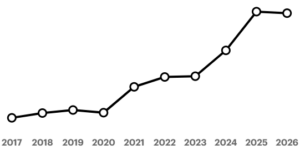
While those men hugged their families, the digital tickers on Wall Street began to bleed red. Oil prices didn't just climb; they lunged. We are witnessing the highest surge since the regional conflict began, a fiscal fever dream sparked by a volatile mix of military blockades and the iron-willed rhetoric of a president who seems perfectly comfortable watching the world’s energy charts spike.
The Invisible Ledger
Think of the global oil market not as a spreadsheet of numbers, but as a massive, interconnected web of glass tubes. When a hand tightens around one end of the tube in the Middle East, the pressure doesn't stay local. It vibrates through the line until it hits a gas station in Ohio, a trucking firm in Lyon, and a cargo ship in the Pacific.
Donald Trump’s recent declaration that he is "happy" to extend the naval blockade is the hand tightening on that glass tube. To the administration, it is a lever of "maximum pressure." To the average commuter, it is a slow-motion heist of their monthly savings.
There is a specific kind of anxiety that settles in the chest when you watch the digits on a fuel pump spin faster than the gallons. It’s the feeling of losing control. You aren't paying for the gasoline; you are paying for the risk that the gasoline might not be there tomorrow. The market isn't reacting to a shortage of physical oil—not yet. It is reacting to the ghost of a shortage. It is trading on fear.
The President and the Blockade
The geopolitical strategy being deployed is as blunt as a sledgehammer. By maintaining a blockade and essentially suffocating the Iranian export economy, the U.S. is betting that the regime will buckle before the global economy breaks.
"I'm happy to keep it going," Trump remarked, a phrase that sent tremors through the Brent Crude markets. In the world of high finance, "happy" is an expensive word. It signals a lack of desperation. It tells traders that there is no relief coming, no secret deal in the works, and no intention of backing down.
When a leader expresses satisfaction with a stalemate, the market assumes the stalemate is the new permanent reality. Consequently, speculators began buying up futures as if they were lifeboats on a sinking ship. The price per barrel didn't just reflect the cost of extraction and transport; it absorbed the cost of a potential total war.
The Human Currency
We often speak of "tanker seizures" and "crew releases" as if we are moving wooden pieces across a Risk board. Consider the captain of that released vessel. He spent weeks wondering if he would become a permanent footnote in a history book about a war he didn't start. His release is a humanitarian victory, but in the cold calculus of the oil market, it was a "sell the news" event.
The release of the crew was a momentary softening of the tension, a brief exhale in a room where everyone had been holding their breath. But that exhale was cut short by the realization that the ships—the steel hulls that carry the lifeblood of modern civilization—are still being used as barricades.
The blockade remains. The tankers that should be moving through the Strait of Hormuz are instead sitting idle or taking the long way around, burning more fuel just to deliver fuel. It is a staggering irony. To avoid the zone of conflict, ships are forced to consume the very commodity that is becoming too expensive to buy.
The Ripple Effect on the Kitchen Table
Let’s move away from the geopolitical theater and into the cab of a long-haul truck.
Meet Elias. He’s not a diplomat. He doesn't have an opinion on the intricacies of the Joint Comprehensive Plan of Action. He knows two things: the weight of his trailer and the price of diesel. When oil prices surge to these historic highs, Elias doesn't just lose a few dollars at the pump. The thin margin of his livelihood evaporates.
If it costs Elias 20% more to move a crate of oranges from the coast to the city, those oranges don't stay the same price. The grocery store passes that cost to the mother of three. The mother of three cuts back on something else. This is how a blockade in the Gulf becomes a missed dance lesson or a delayed car repair in a suburb half a world away.
The "human element" isn't just the sailors on the ships; it's the billions of people whose daily lives are tethered to the price of a barrel. We are all stakeholders in this conflict, whether we want to be or not. We are the involuntary investors in a war of nerves.
The Paradox of Maximum Pressure
The logic of the blockade is built on the idea that if you make life difficult enough for a nation, they will eventually choose the path of least resistance. But history suggests that pressure often breeds a different kind of resolve. As the U.S. doubles down on the blockade, Iran has shown a willingness to engage in asymmetrical responses.
Every time a drone is spotted or a naval exercise is announced, the "risk premium" on oil ticks upward. We are currently living through the highest prices of the Iran conflict yet because we have reached a point where neither side can afford to look weak.
In a standard business negotiation, there is usually a middle ground—a price point where both parties walk away slightly unhappy but functional. In this shadow war, the middle ground has been swallowed by the sea. The administration’s happiness to extend the blockade suggests they believe they have the "bigger engine" in this race. They believe the U.S. economy can outrun the rising costs longer than Iran can outrun the starvation of its exports.
The Mechanics of the Surge
To understand why the price jumped so violently this time, we have to look at the "Just-In-Time" nature of our modern world. We do not keep massive, endless reserves of oil sitting in every city. We rely on a constant, flowing stream.
Imagine a garden hose. If you put your thumb over the end, the pressure inside the hose builds instantly. You don't have to wait for the water to stop flowing at the source; the pressure change is immediate and felt all the way back to the faucet. The blockade is the thumb on the hose.
- Supply Uncertainty: Traders don't know if the next tanker will make it through or be redirected.
- Insurance Costs: Shipping companies are seeing their insurance premiums skyrocket. Someone has to pay for the risk of a multi-million dollar vessel being hit by a limpet mine.
- Political Rhetoric: Statements of "happiness" regarding a blockade remove the hope of a quick "dip" in prices, forcing buyers to lock in higher rates now for fear of even higher rates later.
This isn't a "game-changer"—to use a tired phrase—it is a weight. It is a heavy, leaden weight dropped into the middle of a global economy that was already treading water.
The Ghost in the Machine
There is a psychological component to these prices that no algorithm can fully capture. It is the "What If" factor. What if the blockade leads to a direct kinetic exchange? What if the Strait is closed entirely?
When Trump says he is happy to extend the blockade, he is essentially telling the market that he is comfortable dancing on the edge of that "What If." For a hedge fund manager, that's a signal to buy oil. For a commuter, it's a signal to worry.
The release of the tanker crew was supposed to be a de-escalation. In any other era, it might have been. But in the current climate, it was treated as a mere housekeeping detail. The crew is home, but the ships are still at a standstill. The humans are safe, but the commodity is under siege.
The Fragility of the Status Quo
We have spent decades building a world that assumes the oceans are a neutral, open highway. We designed our cars, our cities, and our very lives around the assumption that energy would always be available and relatively affordable.
This current surge is a reminder of how fragile that assumption really is. We are watching the intersection of 19th-century naval tactics and 21st-century high-frequency trading. The result is a volatility that feels personal. It feels personal because it is personal. It’s the difference between a family vacation and a "staycation." It’s the difference between a small business turning a profit or shuttering its doors.
The rhetoric coming out of the White House is designed to project strength and unyielding resolve. And perhaps, on a geopolitical level, it achieves that. But strength has a price tag. The highest prices we’ve seen yet are the invoice for that resolve.
Beyond the Ticker Tape
As night falls over the Gulf, the tankers continue to bob in the dark water, shadows in a larger game of shadows. The released crew members are likely sleeping in their own beds for the first time in months, a small, beautiful mercy in a landscape of cold calculations.
But the tickers will wake up tomorrow. They don't sleep. They will continue to digest every word, every tweet, and every naval movement. They will continue to translate the "happiness" of leaders into the hardships of the led.
We find ourselves in a moment where the cost of fuel is no longer determined by the earth, but by the ego. The oil is there, deep beneath the sand and the sea, ready to be moved. The bottleneck isn't geological; it is intentional. It is a choice made in the name of strategy, paid for by the person standing at pump number four, watching the numbers climb, wondering when the pressure will finally break the glass.
The tanker is empty of its crew, but the world is full of the consequences.