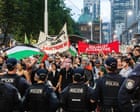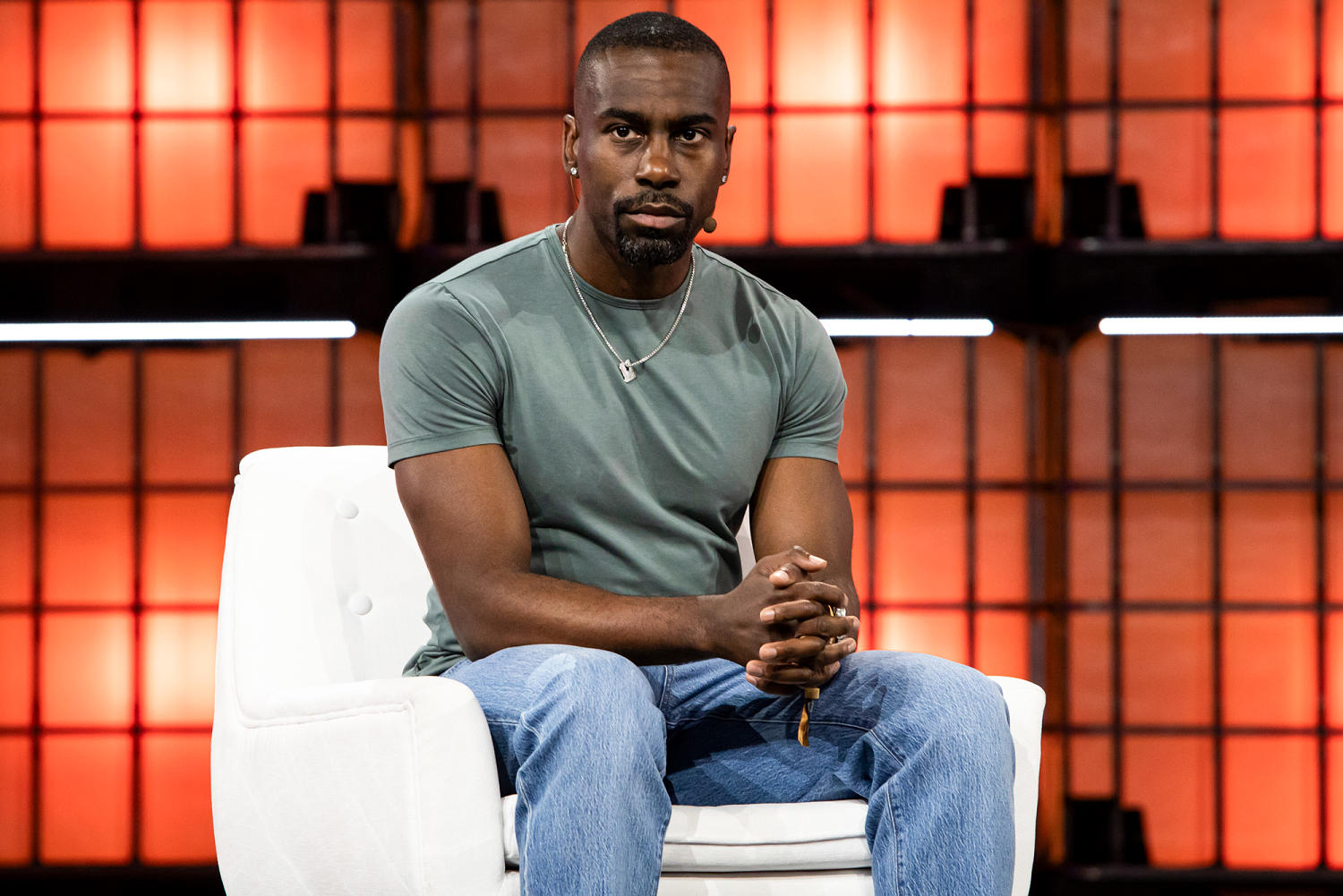
The air in Baton Rouge on that July night in 2016 didn’t just hang; it pressed. It was the kind of Southern heat that turns oxygen into a thick, wet wool, clinging to the skin of the thousands who had gathered to turn their grief into a physical presence. Among them was DeRay Mckesson, a man whose name had become shorthand for a movement. He wasn't throwing stones. He wasn't breaking windows. He was walking.
Then came the heavy crack of a projectile.
A police officer, identified only as Officer John Doe in the legal filings that would follow for nearly a decade, was struck in the face by a rock or a piece of concrete thrown by an unknown person in the crowd. The impact was brutal. Teeth were lost. A jaw was shattered. A career was forever altered.
In that moment of violence, a silent, invisible clock started ticking. It wasn't just ticking for the recovery of an injured man or the fate of a protest. It was ticking for the very idea of what it means to stand in a group and speak your mind in America.
If someone you don't know throws a rock at a rally you organized, should you lose your house? Should you be bankrupted by a lawsuit for a crime you didn't commit, didn't incite, and didn't even see happen?
The Architecture of a Precedent
For years, the answer was a firm "no." We have relied on a legal shield forged in the fires of the Civil Rights Movement. In the 1980s, the Supreme Court ruled on a case involving a NAACP boycott in Mississippi, establishing a clear boundary: you cannot be held liable for the violent acts of others just because you were the leader of a peaceful group. It was the "Claiborne Hardware" rule. It was the floor we all stood on.
But the floor is currently being sanded down to nothing.
The lawsuit against Mckesson has taken a long, winding, and terrifying path through the Fifth Circuit Court of Appeals. The argument brought against him is a subtle, dangerous bit of alchemy. The court didn't say Mckesson threw the rock. They didn't even say he told someone else to throw it. Instead, they suggested that because he led the protest onto a highway—a move that is technically illegal (blocking traffic)—he created a "negligent" environment.
In simpler terms: because you broke a small rule, you are now responsible for every large crime committed by anyone within earshot of your megaphone.
Imagine you are a local parent. You’re fed up with the speeding cars on your street, so you organize a "slow down" walk. You and forty neighbors march into the intersection, blocking the road for ten minutes to get the mayor’s attention. It’s a technical violation of local traffic laws. Now, imagine a stranger—someone you’ve never met—sees the commotion, gets angry, and hurls a bottle at a passing patrol car, injuring an officer.
Under the logic currently threatening to become the law of the land, that officer could sue you. Not for the bottle, but for the "negligence" of being there in the first place. You become the insurance policy for every bad actor in a five-block radius.
The Chilling Effect is a Deep Freeze
Legal scholars call it a "chilling effect," but that phrase feels too clinical. It doesn't capture the stomach-churning anxiety of a community leader looking at a permit application and realizing that signing their name might mean losing their children’s college fund.
When we talk about the First Amendment, we often focus on the "freedom of speech" part—the right to yell your truth from the rooftops. But the right to "peaceably assemble" is the muscle of democracy. Speech is a solo act; assembly is a chorus. It is the only way the unheard can create a sound loud enough to move the needle of power.
If the Supreme Court or the lower appellate courts allow this "negligence" theory to stand, they aren't just punishing DeRay Mckesson. They are placing a "Tax on Dissent." They are saying that if you want to exercise your constitutional rights, you must first be wealthy enough to afford the liability of a riot you didn't start.
Judge Don Willett, a member of the Fifth Circuit who initially sided against Mckesson, eventually had what can only be described as a crisis of legal conscience. He changed his mind. In a powerful, lone dissent, he warned that this logic "imperils" the very foundation of American protest. He realized that if we hold leaders responsible for the "foreseeable" violence of others, then no protest is safe. Because in a polarized world, violence is always "foreseeable" to a lawyer looking for a target.
The Invisible Stakes
We live in a culture that loves to pick sides. If you don’t like the Black Lives Matter movement, you might find yourself nodding along with the idea that its leaders should be held accountable for the chaos that sometimes follows their events. But the law doesn't care about your politics. The law is a tool that, once sharpened, can be used by anyone.
Consider the other side of the coin. Think of a "March for Life" rally or a "Second Amendment" gathering. These are massive, emotionally charged events. Under this new legal standard, a counter-protester could infiltrate a peaceful pro-life march, throw a brick at a window, and suddenly the organizers of that march are facing a multi-million dollar negligence suit in civil court.
The weaponization of negligence turns every organizer into a hostage of the most radical person in the crowd. It creates a world where the only "safe" protest is one that stays in a designated "free speech zone," tucked away behind a chain-link fence where no one can see it, and no one can hear it.
That isn't a protest. That's a rehearsal.
A Fracture in the Shield
The case is currently hovering in a state of high-stakes limbo. The Supreme Court declined to take it up recently, which sounds like a technicality but functions as a slow-motion disaster. By not stepping in, they allow the Fifth Circuit’s ruling to stand as the law in Texas, Louisiana, and Mississippi.
In those states, the shield is already cracked.
If you are a student at LSU or a worker in Houston, the risks of showing up for what you believe in have just been recalculated by a computer-generated actuarial table. You have to ask yourself: Is this cause worth my house? Is this cause worth my future wages being garnished for the next thirty years?
For most people, the answer will be "no." And that is exactly the point.
The history of progress in this country—from women’s suffrage to the labor movement to the fight for civil rights—was written by people who were willing to be "negligent" in the eyes of the law. They blocked bridges. They sat at lunch counters they weren't supposed to be at. They filled streets they didn't have permits for.
They did these things knowing they might be arrested. They did them knowing they might be beaten. But they did them under the assumption that the law would at least recognize the difference between a person seeking justice and a person seeking violence.
We are losing that distinction.
When we blur the line between the organizer and the outlier, we don't make the police safer. We just make the public quieter. We turn the vibrant, messy, loud marketplace of ideas into a graveyard of "what-ifs."
The rock thrown in Baton Rouge didn't just break an officer's jaw. It hit a nerve that runs through the very center of the American experiment. We are now watching to see if the wound will be allowed to heal, or if it will be used as an excuse to amputate the right to stand together entirely.
The heat in the South is still thick. The grievances are still real. But the streets are getting lonelier, and the silence that follows isn't the silence of peace. It's the silence of a people who have realized that in the eyes of the court, their presence is a liability.
The cost of standing still has never been higher. Yet, the cost of moving forward might now be everything you own.
Justice shouldn't require a down payment.