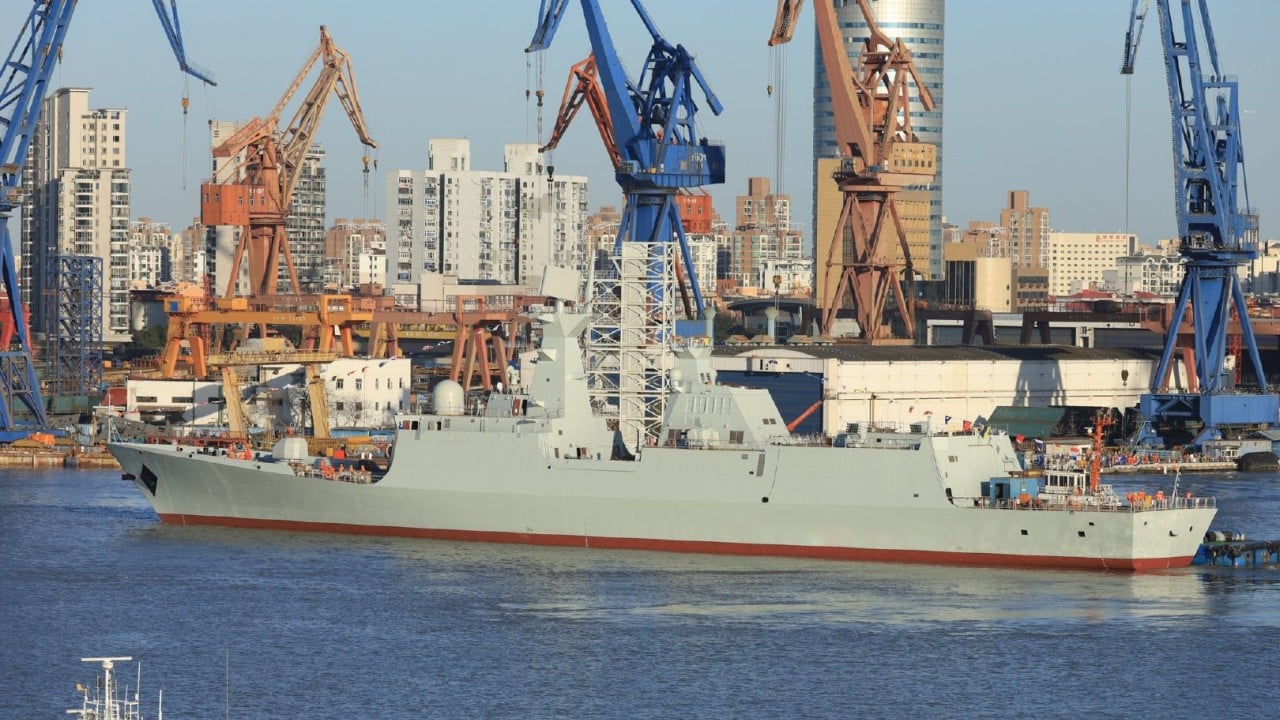
The panic over dry docks misses the point entirely. Every defense analyst in Washington is staring at the raw tonnage numbers, hyperventilating over a stark ratio that shows mainland shipyards outproducing American yards by orders of magnitude. Headlines scream about a two-to-one or even twenty-to-one advantage in commercial and naval construction capacity, painting a picture of an inevitable industrial steamroller ready to crush American naval presence in the Western Pacific.
It is a comfortable delusion for defense contractors seeking budget increases and a lazy narrative for pundits who confuse manufacturing output with combat effectiveness. You might also find this connected story insightful: Michigan Exposed: What Comes After the Assembly Line.
I have watched strategists obsess over steel plate throughput while ignoring the actual physics of modern maritime conflict. Counting hulls in a port is like counting horses before the invention of the combustion engine. It measures the wrong century.
The Industrial Fallacy of Modern Naval Power
Look closely at the standard argument. Analysts point to cavernous assembly halls in Bohai or Shanghai, citing deadweight tonnage and slipway counts as the ultimate metric of military destiny. They assume that whoever pours the most concrete and welds the most bulkheads wins the Pacific. As highlighted in recent coverage by Al Jazeera, the results are worth noting.
This assumes a protracted World War Two style industrial attrition battle. That is not the war anyone is fighting tomorrow.
Modern precision strike regimes change the calculus fundamentally. When a surface combatant can be located, tracked, and targeted by hypersonic anti-ship missiles or long-range loitering munitions from a thousand miles away, the value proposition of massive naval platforms shifts dramatically. A shipyard churning out large surface combatants at high speed is simply creating more targets for low-cost, high-velocity attrition weapons.
Building big ships fast does not protect them from modern sensor-shooter chains. If a fleet can be blinded and dismantled by shore-based fires, submarine wolfpacks, and autonomous aerial swarms, then having ten extra assembly lines just means you can lose inventory at a higher rate.
The Geography Trap
Geography dictates the terms of any engagement across the Taiwan Strait, and geography mocks the sheer volume of mass production.
The first island chain is a cage, not a springboard. Any force attempting to cross the Taiwan Strait must navigate a bottleneck choked with subsurface sensors, anti-ship cruise missiles, and tactical air power operating from decentralized, hardened bases. No amount of commercial shipbuilding capacity solves the hydrographic reality of amphibious assault. Crossing ninety miles of open water against a defender armed with modern anti-access capabilities is a meat grinder, regardless of how many auxiliary ships you built in civilian yards last Tuesday.
Washington worries about repair capacity and mobilization timelines, while Beijing worries about crossing that water corridor without losing an entire amphibious fleet to coastal defense batteries. The strategic bottleneck is not the speed of the shipyard weld; it is the vulnerability of the transit chokepoint.
Focusing on shipyard tonnage is a distraction engineered to keep old procurement models alive. The future belongs to distributed lethality, undersea dominance, and attritable autonomous systems that cost a fraction of a destroyer and carry double the punch.
Stop counting dry docks. Start counting sensors, software integration, and underwater endurance. The next conflict will be decided by microelectronics and algorithms, not by who has the biggest pile of scrap metal waiting to be launched.