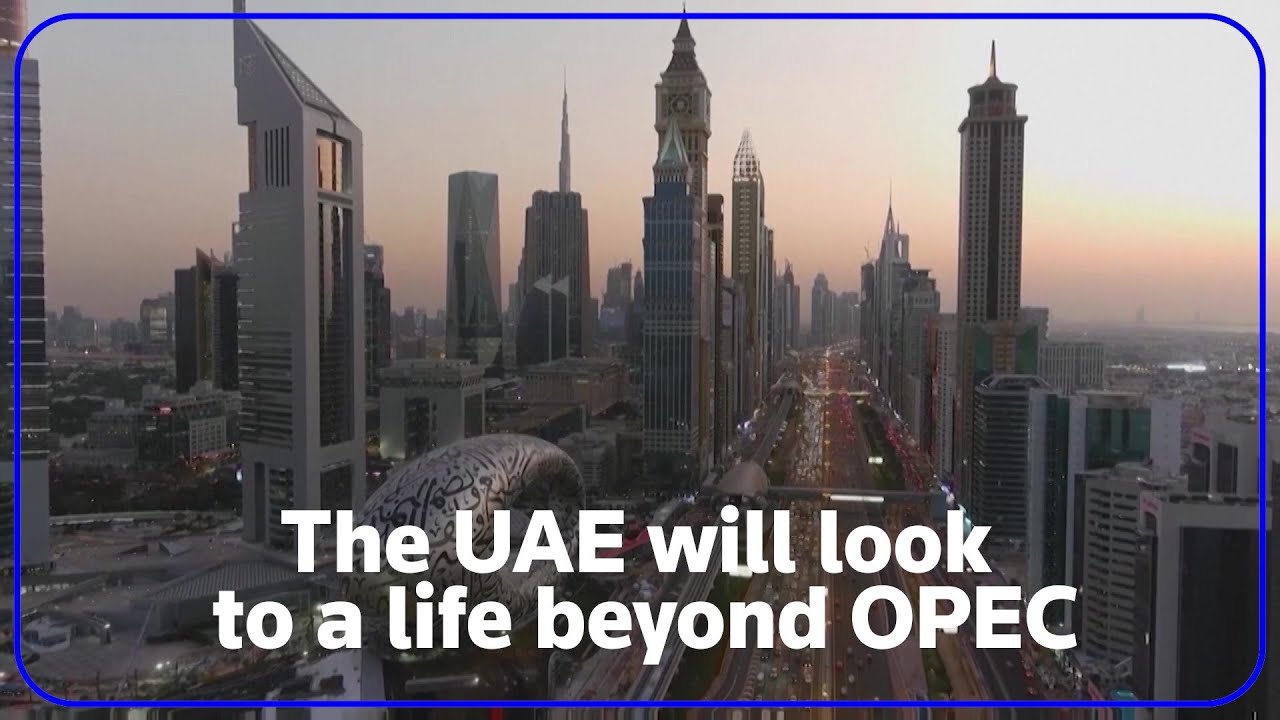
The global energy market is currently witnessing the slow-motion dissolution of an era. While analysts often focus on the immediate fluctuations of Brent crude or the latest production quotas, the real story is the fundamental breakdown of the alliance that has dictated global energy prices for sixty years. The United Arab Emirates (UAE) is no longer content to be the junior partner in a Saudi-led cartel. Their strategic pivot away from the constraints of the Organization of the Petroleum Exporting Countries (OPEC) represents more than just a diplomatic spat. It is a calculated recognition that the era of managed scarcity is dying, replaced by a desperate race to monetize reserves before the window of carbon relevance slams shut.
For decades, the math of the oil market was simple. OPEC, spearheaded by Riyadh, would tighten the taps to keep prices high. Members would grumble, occasionally cheat on their quotas, but ultimately fall in line because the collective benefit outweighed the individual cost. That calculation has flipped. The UAE has spent hundreds of billions of dollars expanding its production capacity to five million barrels per day. Under current restrictions, they are forced to leave a massive portion of that investment idling in the sand. This is no longer sustainable for a nation trying to fund a post-oil economy.
The Death of the Long Game
The traditional OPEC strategy relied on the idea that oil in the ground was like money in a high-yield savings account. You could wait. You could defer production to keep the price at $80 or $90. But the rise of American shale, the rapid electrification of transport in China, and the aggressive decarbonization targets in Europe have introduced a "terminal demand" risk.
Abu Dhabi's leadership sees the writing on the wall. They understand that every barrel not sold today might never be sold at all. This creates a "use it or lose it" mentality that is diametrically opposed to the Saudi strategy of price defense. When a major producer decides that volume is more important than price, the cartel loses its teeth. The UAE isn't just looking for a higher quota; they are looking for an exit from a philosophy that no longer serves their national interest.
A Marriage of Convenience Turned Sour
The tension between Riyadh and Abu Dhabi has been building behind closed doors for years. It surfaced briefly in 2021 during a heated standoff over production baselines, but the roots go much deeper. The UAE has successfully diversified its economy into tourism, logistics, and technology. They have a sovereign wealth fund that is increasingly focused on green energy and global infrastructure.
Saudi Arabia, under Crown Prince Mohammed bin Salman, is attempting a similar transition through Vision 2030. However, the Saudi project is massive, expensive, and requires a high oil price to remain solvent. The UAE has a smaller population and a more advanced non-oil sector. They can afford a period of lower prices if it means they can capture a larger share of the global market. This fundamental divergence in fiscal requirements makes a unified production policy almost impossible to maintain.
The Specter of American Shale
We cannot discuss the decline of OPEC’s grip without acknowledging the permanent ceiling established by West Texas. Every time the cartel cuts production to boost prices, they essentially hand a gift to American drillers. High prices act as a massive subsidy for Permian Basin operators, allowing them to hedge their production and lock in profits.
The UAE recognizes that by restricting their own output, they are merely ceding market share to the United States, Brazil, and Guyana. They are tired of subsidizing their competitors. The "OPEC+" arrangement, which brought Russia into the fold, was a temporary fix that has now become a liability. Russia’s need for oil revenue to fund its military ambitions means they are often selling at a discount, further undermining the official price targets that the Gulf states are supposed to defend.
The Logistics of a Breakup
If the UAE follows through on a full departure, the institutional weight of the cartel evaporates. Without the UAE, OPEC becomes essentially "Saudi Arabia and Friends." It loses its claim to being a global representative of oil producers.
The mechanism of the breakup is already visible in the way the UAE handles its flagship Murban crude. By launching the ICE Abu Dhabi Futures exchange, the UAE moved toward a market-driven pricing model, similar to WTI or Brent. This was a direct challenge to the traditional "Official Selling Price" (OSP) system favored by other cartel members. It was a declaration of independence. They want their oil to be a liquid, globally traded commodity that responds to supply and demand, not the whims of a committee meeting in Vienna.
The Myth of the Swing Producer
The world has long relied on the idea of a "swing producer" who could stabilize the market during shocks. Saudi Arabia has filled this role for half a century. But a swing producer only works if they have the spare capacity and the political will to use it.
The UAE’s massive capacity expansion means there are now two potential swing producers in the Gulf with very different goals. If one wants to swing up while the other wants to swing down, the result is volatility, not stability. Traders have already begun to price in this internal friction. The "OPEC premium"—the extra cost added to a barrel of oil because of the cartel's perceived control—is shrinking. In its place is a "disunity discount."
The Guyana and Brazil Factor
Outside of the Middle East, new giants are rising. Guyana’s offshore discoveries are some of the most significant in recent history. Brazil is steadily increasing its pre-salt production. These countries are not part of the cartel. They have no interest in cutting production to support a price target set by others.
The UAE sees these new entrants and realizes that the world is entering a period of abundance, not scarcity. If they remain shackled to OPEC quotas, they will be the ones left holding the bag while Guyana and Brazil capture the remaining years of high oil demand. It is a classic prisoner's dilemma, and Abu Dhabi has decided to look out for itself.
The Hard Reality for Global Markets
Investors who have spent decades looking to OPEC for guidance need to recalibrate. The era of the "Viennese Oracle" is over. We are moving into a fragmented market where national interests override collective agreements. This means more price swings, more geopolitical maneuvering, and less predictability.
For the consumer, this might seem like good news. More competition usually means lower prices at the pump. But in the long term, the lack of a market stabilizer could lead to periods of extreme under-investment followed by violent price spikes. The UAE’s pivot is a signal that they no longer believe the cartel can prevent this cycle.
The Fiscal Breaking Point
Every country in the region has a "break-even" price—the amount they need per barrel to balance their national budget. For Saudi Arabia, that number is estimated to be north of $80. For the UAE, it is significantly lower. This gap is the fault line.
When the price dips to $70, Riyadh feels the burn and demands cuts. Abu Dhabi, with its more diversified revenue streams and lower costs, can stay the course. By refusing to cut, the UAE is effectively forcing the Saudis to carry the entire burden of market stabilization. It is a brilliant, if ruthless, move. It forces Riyadh to choose between losing money or losing market share.
The Institutional Inertia of Vienna
OPEC as an organization is struggling to justify its existence in a world focused on ESG (Environmental, Social, and Governance) and carbon neutrality. The UAE’s leadership is keenly aware of their global image. They hosted COP28. They are positioning themselves as leaders in the energy transition. Being tied to a "petro-cartel" is increasingly a brand liability for a nation that wants to be seen as a modern, diversified global hub.
The exit isn't just about barrels; it's about the future of the UAE's identity. They are betting that the future belongs to the flexible and the fast, not the rigid and the collective. The internal debates are no longer about five percent more or less production. They are about whether the UAE belongs in an organization that was designed for a 1970s world.
The friction we see today is the beginning of a structural shift that cannot be reversed by a single meeting or a temporary compromise. The UAE has built the infrastructure for independence, and they are now exercising it. The cartel's grip hasn't just slipped; the hand has started to wither.
Expect the UAE to continue pushing the boundaries of its quotas, daring the rest of the group to expel them. They won't leave quietly; they will leave by making the current rules irrelevant. The global energy map is being redrawn, and the center of gravity is moving away from the committee rooms of Vienna toward the individual trading floors of Abu Dhabi and Houston.
Move your capital accordingly. The safety net of the cartel is gone.