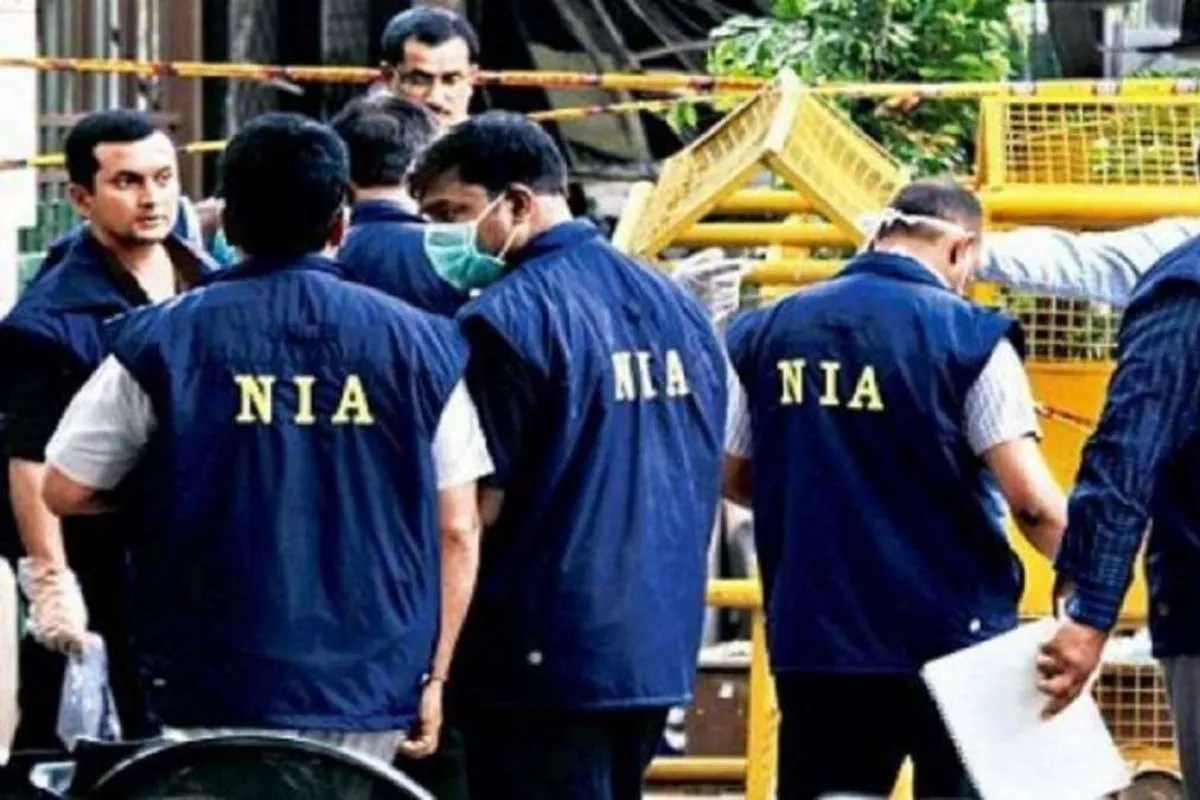
Standard breaking-news reports on the arrest of Surinder Singh alias Thikriwal at Delhi's Indira Gandhi International Airport following his deportation from the United States treat the event as a single law-enforcement milestone. A rigorous intelligence and security audit reveals something more structural: a single deportation arrest exposes the friction points between domestic counterterrorism prosecution, transnational information sharing, and digital radicalization networks tied to the banned Khalistan Zindabad Force.
To understand why this arrest matters beyond the headline, readers need a clear analytical blueprint: how a cross-border removal feeds into an active National Investigation Agency probe into the April 27, 2026 Shambhu-Rajpura railway line blast, what structural gaps standard news coverage leaves unexamined, how transnational enforcement and digital amplification actually operate, and which operational steps determine whether enforcement disrupts networks rather than merely detaining individuals.
Deconstructing Standard Coverage and Its Analytical Blind Spots
Conventional coverage of the November 18, 2026 arrest follows a predictable dispatch arc. It names the suspect, notes his link to Thikriwal village in Barnala district, states that United States authorities deported him to India, records his detention by the National Investigation Agency at Delhi airport, connects him to the Shambhu-Rajpura railway track explosion between Shambhu and Rajpura stations, cites his alleged social media glorification of the blast and references to Ranjeet Singh alias Neeta, notes the active Look Out Circular and prior criminal cases across Punjab districts, and adds that he is the eighth person arrested in the case while investigators pursue foreign links and funding.
That reporting logic is linear rather than causal. It treats each detail as a separate fact instead of mapping how the pieces interact. Three analytical blind spots stand out:
- Deportation versus extradition mechanics: Standard coverage conflates administrative removal from the United States with formal criminal extradition. Removal or deportation turns on immigration status, border controls, and bilateral cooperation, whereas evidentiary admissibility and trial strategy in India depend on chain-of-custody records, digital forensics, and Indian criminal procedure.
- Online glorification versus operational role: Reports state that Singh praised the railway blast on Facebook, called the Khalistan Zindabad Force a community organization, and referred to Ranjeet Singh alias Neeta as a general of the community. Treating public posts as proof of direct physical participation in the April 27, 2026 blast blurs distinct evidentiary thresholds—incitement, glorification, facilitation, and conspiracy—that prosecutors must separate in court.
- Headcount arrest metrics: Citing eight total arrests in the Shambhu-Rajpura case measures investigative momentum, not network dismantling. Arrest counts rise quickly during early sweeps and plateau when investigators reach encrypted channels, offshore facilitators, or cross-jurisdictional financial trails.
Known Facts Versus Working Hypotheses
Clear analysis requires separating verified public facts from investigative hypotheses that remain to be tested in court.
Known facts from official and public reporting: National Investigation Agency custody followed Surinder Singh alias Thikriwal's deportation from the United States and arrival at Delhi airport on November 18, 2026. The arrest relates to the explosion on the dedicated freight corridor railway line between Shambhu and Rajpura stations on April 27, 2026, attributed by the agency to Khalistan Zindabad Force operatives. Investigators had issued a Look Out Circular against him, multiple criminal cases were registered against him across districts in Punjab, he allegedly posted a Facebook video praising the blast and supporting accused conspirators including Jagroop Singh—who died while carrying out the explosion—and his arrest brought total arrests in the case to eight.
Educated hypotheses requiring evidentiary proof: Investigators are working to establish whether online glorification reflects deeper coordination, logistics, or funding between overseas supporters and domestic cells. In counterterrorism investigations of this type, agencies test whether digital cheerleading is an isolated ideological signal or part of a structured command-and-support chain. Publicly available reporting does not by itself establish whether Singh directed tactical execution on the ground in Punjab or operated primarily as an external amplifier.
The Three Pillars of Cross-Border Counterterrorism Friction
When a suspect moves from a foreign jurisdiction into domestic anti-terror custody, three structural pillars govern how fast and effectively the case progresses.
1. Jurisdictional Asymmetry and Look Out Circular Enforcement
A Look Out Circular alerts Indian immigration and security checkpoints when a named individual attempts to cross a border under Indian jurisdiction. Once a person is outside Indian territory, a Look Out Circular alone does not compel a foreign sovereign to arrest or transfer them. Actual transfer depends on foreign immigration or law-enforcement action, diplomatic coordination, and timing at the port of entry. In game-theoretic terms, jurisdiction creates a two-stage bottleneck: Stage One requires foreign custody and removal, and Stage Two requires immediate domestic interception at arrival before local contacts or legal maneuvers can delay custodial interrogation.
2. The Evidentiary Cost Function of Digital Attribution
Proving criminal conspiracy across borders carries a high evidentiary cost function. Every step away from physical crime-scene recovery increases friction:
- Platform preservation: Social media posts can be edited, deleted, or contested before metadata and account records are formally obtained and authenticated.
- Intent versus speech boundaries: Prosecutors must connect celebratory or ideological language—such as praising a rail sabotage incident or honoring a deceased operative—to actionable statutory offenses under Indian law rather than mere political rhetoric.
- Cross-border admissibility: Information shared informally during bilateral coordination does not automatically become admissible trial evidence without certified documentation and statutory compliance.
3. The Network Disruption Curve
Law-enforcement agencies often describe their goal as breaking funding and infrastructure. In practice, illicit and militant support networks follow a diminishing-returns curve. Early arrests capture local actors, obvious intermediaries, and individuals with visible digital footprints or prior local case files. As the arrest count reaches eight, each subsequent link becomes harder to trace because surviving nodes shift toward compartmentalized communication, informal value transfer, or decentralized sympathizers who lack direct operational contact with core planners.
Cause-and-Effect Chains Standard Reports Miss
Infrastructure sabotage on high-throughput rail corridors, such as the dedicated freight corridor section between Shambhu and Rajpura, carries systemic consequences that go beyond physical track damage. Freight corridors move commercial goods on tight schedules; any disruption forces rerouting, increases transit delays, and tests confidence in regional law and order.
Online glorification amplifies that shockwave even without adding a single physical explosive. When an overseas account praises an attack and elevates militant figures or deceased operatives, it serves two functions at once: it signals solidarity to domestic sympathizers and provokes outrage in the affected state. That dynamic creates a feedback loop where high-profile arrests generate heavy media coverage, which in turn feeds polarized narratives on both sides of the border.
Interception at Delhi airport closes a travel gap and gives investigators custodial access to a named suspect, yet custodial access is an input to intelligence, not a complete solution. What matters next is whether questioning yields verifiable financial trails, device artifacts, or corroborated links to remaining co-conspirators before memories fade or associates alter their digital habits.
Operational Playbook and Hard Limits
Evaluating counterterrorism and security workflows from an operational standpoint requires clear sequencing and candid recognition of constraints.
Tactical Sequence for Post-Deportation Investigations
- Isolate digital and travel artifacts immediately: Secure travel records, entry logs, and seized devices under strict forensic chain-of-custody protocols upon arrival at the port of entry so timelines remain unassailable in court.
- Map role tiers before charging theory: Separate accused individuals by functional role—tactical execution, local logistics, financial facilitation, and online propaganda—so conspiracy charges rest on specific acts rather than broad association.
- Cross-reference multi-district case files: Consolidate prior criminal cases registered across Punjab districts with the National Investigation Agency case record to identify recurring aliases, associates, or funding conduits without duplicating investigative effort.
- Follow money and infrastructure over headlines: Prioritize financial tracing and facilitator mapping over public arrest tallies, since financial and logistical choke points degrade operational capability more durably than arresting peripheral amplifiers.
Structural Limitations and No Silver Bullets
No single arrest or deportation eliminates transnational extremism or online radicalization. Legal standards of proof in democratic courts require strict adherence to procedure, which means some suspects or overseas facilitators will remain beyond immediate reach due to jurisdictional limits, privacy laws, or evidentiary gaps. Over-claiming a single airport arrest as a decisive blow risks complacency, while treating every online post as proof of direct operational command risks weak prosecutions.
Strategic Forecast
Expect cross-border removals and targeted financial-network probes to remain the primary levers used by security agencies in cases linking domestic infrastructure incidents with overseas supporters. The decisive test in the Shambhu-Rajpura investigation will not be whether the arrest count rises past eight, but whether investigators convert custodial interrogation and digital records into court-admissible proof of funding and coordination across borders.


