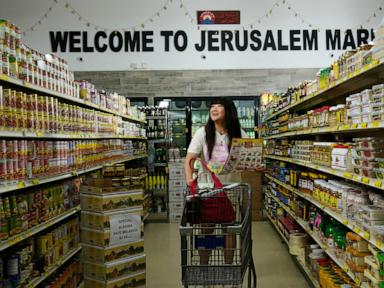
Public performance art rarely functions as direct economic development infrastructure. Most cultural commentary treats entertainment as an end product consumed within insulated metropolitan spaces, ignoring its capacity to alter local commerce patterns. When comedian Jenny Yang constructs a tour designed around independent immigrant-owned grocery stores, she utilizes the mechanisms of live performance to redirect consumer traffic toward localized retail assets. This structural intervention challenges conventional distribution channels for minority-owned enterprises. Understanding how a touring comedian modifies urban retail economics requires examining the intersection of community-based marketing, cultural preservation, and foot-traffic generation.
The Mechanics of Immigrant Retail Vulnerability
Independent immigrant grocery stores operate within strict margin constraints. Unlike national supermarket chains that leverage supply-chain economies of scale and sophisticated predictive inventory analytics, small grocers rely on high local density and steady daily transactions. These businesses face distinct structural disadvantages that limit their long-term viability. Read more on a connected topic: this related article.
Supply Chain Isolation and Margin Compression
Small-scale operators lack the purchasing power to secure optimal wholesale pricing from major distributors. Consequently, their cost of goods sold remains artificially high. To remain competitive with mid-market chains, these grocers absorb the cost through compressed retail margins, leaving minimal capital for customer acquisition, marketing, or digital infrastructure upgrades.
Geographic and Informational Asymmetry
Many of these businesses occupy neighborhood footprints with low foot traffic from outside their immediate demographic enclave. They suffer from informational asymmetry—potential consumers in the broader metropolitan area remain unaware of their inventory, specialty items, or unique cultural value propositions. Traditional digital advertising via paid social media campaigns often yields poor conversion rates for hyper-localized physical retail because digital impressions rarely translate into physical proximity. Further reporting by The Hollywood Reporter highlights similar perspectives on the subject.
Entertainment as a Foot-Traffic Accelerator
Live performance possesses a unique capacity to mobilize audiences into specific physical nodes. By anchoring a comedy tour around independent grocery stores, the intervention bypasses traditional digital marketing barriers and utilizes the artist's existing audience base to inject physical volume directly into low-margin retail environments.
[ Touring Performer ]
        │
        ▼ (Audience Mobilization)
[ Targeted Retail Footprint ]
        │
        ▼ (Direct Transactional Volume)
[ Marginal Revenue Stabilization ]
The Transference of Trust
Audiences attending a culturally specific comedy performance share an implicit affinity with the artist's perspective. When the artist designates a specific local grocer as a partner, that endorsement functions as a trust transfer. Consumers treat the retail location not merely as a store, but as an extension of the cultural ecosystem being celebrated on stage. This reduces consumer friction and trial anxiety for first-time visitors from outside the neighborhood.
Direct Transactional Injection
Unlike passive social media impressions, physical visitation guarantees a high probability of transaction. A tour stop that directs hundreds of attendees to purchase goods within a single weekend creates an immediate revenue spike. For a micro-enterprise operating on thin weekly margins, this concentrated volume can offset fixed overhead costs for an entire month, stabilizing cash flow during seasonal slumps.
Evaluating the Scalability and Limitations
While integrating entertainment into local retail promotion offers immediate financial relief, this model faces distinct scalability challenges. A thorough economic evaluation requires identifying the operational boundaries of artist-led commerce interventions.
The Problem of Repeatability
Touring schedules are finite and physically demanding. An artist cannot maintain a permanent presence inside a single retail location without abandoning their primary economic engine, which is ticket sales and media production. Therefore, the grocery store model functions as a promotional catalyst rather than a permanent operational fix. Once the tour departs, the store must convert the influx of new visitors into repeat customers through organic service and product differentiation.
Operational Strain on Micro-Enterprises
An influx of hundreds of customers over a compressed timeframe can overwhelm micro-enterprises. Independent grocers often operate with minimal staff, frequently consisting solely of family members. A sudden surge in transaction volume risks inventory stockouts, extended wait times, and operational bottlenecks that can degrade the customer experience and deter the very repeat visitors the intervention aims to secure.
Strategic Play for Cultural and Commercial Alignment
Maximizing the economic impact of artist-led retail interventions requires transforming temporary tour visits into durable institutional frameworks. Independent businesses and cultural producers must establish repeatable protocols that survive the conclusion of the performance tour.
Local enterprises must capture first-party data from every tour-driven visitor through simple loyalty mechanisms or community newsletters, converting transient foot traffic into permanent local consumer bases. Concurrently, performers and community organizers should codify these partnerships into digital directories that maintain consumer awareness long after the physical tour departs a given metropolitan area.