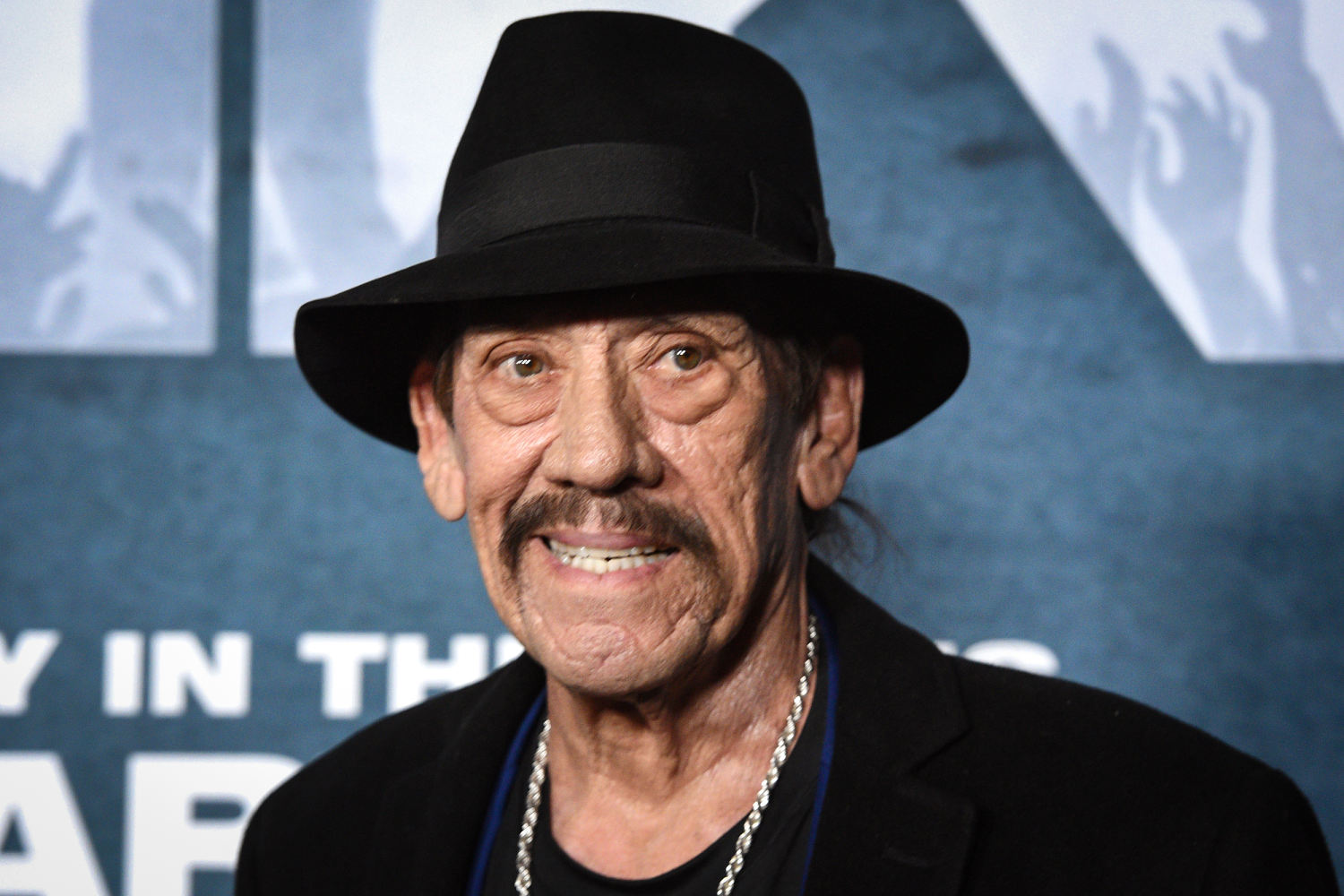
Danny Trejo pushed back against furious online backlash in October 2026 after his casting in Pawn Shop, a feature film produced by Ben Shapiro’s The Daily Wire, drew accusations that the veteran actor had signed onto a pro-ICE project. Addressing the uproar on Instagram, the 82-year-old actor declared he is a proud Mexican, pro-immigrant, and "not pro ICE," framing his role around his craft as a storyteller rather than an endorsement of federal immigration enforcement. Yet the controversy exposes a much messier reality inside modern film financing, contract mechanics, and political media where an actor’s public identity rarely matches the ideological banner flying above the call sheet.
Anyone who has covered Hollywood financing for twenty-five years knows that a marquee name on a set does not always mean a neat ideological alignment. Producers assemble budgets from patchwork equity, tax credits, distribution advances, and co-financing deals that shift mid-stream. When a project becomes politically radioactive before cameras even stop rolling, the public usually demands a simple morality play—traitor or hero, sellout or principled holdout. Working actors live in a far more transactional and legally binding world.
What Sparked the Backlash Over Pawn Shop
The storm around Pawn Shop—directed by Michael Polish and written by Jake Harlen—did not start with a press release. It started on the ground in Livingston, Montana, where filming began in late September 2026.
Residents noticed streets blocked off and sets built out as a pawn shop and a neighboring Korean grocery store. Word spread quickly through local group chats and news outlets after leaked script details surfaced and residents connected the plot to flashpoints in federal immigration enforcement. Reporting on the script described unrest surrounding Immigration and Customs Enforcement arrests and scenes echoing the fatal January 2026 shooting of U.S. citizen Renée Nicole Good by an ICE agent in south Minneapolis during an enforcement operation.
For many longtime fans of Trejo, seeing his name alongside Harvey Keitel, Henry Thomas, and Myles Clohessy on a Daily Wire production felt jarring. Trejo has spent decades cultivating a public image rooted in working-class solidarity, second chances, and support for immigrant communities. He had previously backed campaigns aiding migrant farmworkers and urged families affected by ICE raids to keep hope and support one another.
Critics online wasted no time pointing out the contradiction. To furious commenters, lending his face to a movie produced by Ben Shapiro—one of the most prominent conservative media figures in the country—looked like a betrayal of the very community he has long championed.
A working actor’s public reputation is built over decades of interviews and personal gestures, while a film’s political meaning is often hardened in the edit and marketing months later.
Inside the Contract Trap and Production Shifts
Outrage from afar skips the unglamorous mechanics of how independent and genre films actually get made. Trejo’s son, Gilbert Trejo, offered a blunt window into those mechanics in interviews following the backlash, arguing that his father was effectively locked into the commitment.
According to Gilbert Trejo, Ben Shapiro’s company came on board about two weeks into filming, after Danny had already logged substantial time on camera. Walking away mid-shoot is not as simple as sending a polite text to an agent. Walkouts trigger breach-of-contract exposure, insurance headaches, schedule collapse, and potential financial ruin for cast and crew members whose paychecks depend on keeping production moving.
The economics of acting at Trejo’s age also matter, even for a recognizable screen icon with more than 450 credits. Audiences often assume every familiar face on screen is sitting on a fortress of passive wealth. Gilbert pushed back against that assumption, noting that his father is a working actor who has dealt with real financial pressures over the years and takes work to earn a living rather than turning down paychecks.
Consider a hypothetical example of how an actor’s career math works on a mid-budget shoot. Suppose an actor books a two-week block on an independent thriller with an outside production entity, completes half the principal photography, and learns mid-shoot that a major political media brand has stepped in as financier or distributor. Leaving on principle might feel righteous on social media, yet it can expose the performer to legal claims, stalled residuals, and a reputation among producers as a liability—while still not stopping the movie from being finished with a stand-in or rewrites.
That reality does not erase the frustration of fans who feel let down. It does explain why "just quit" is rarely a frictionless button a performer can press once call sheets are issued and scenes are in the can.
How Political Media Uses Mainstream Faces
There is a strategic reason politically branded outfits court familiar character actors from mainstream cinema. Ben Shapiro and The Daily Wire have spent years building an entertainment arm aimed at audiences alienated by traditional Hollywood messaging. Casting recognizable performers who bring street credibility or classic screen history adds texture that a purely partisan roster cannot match.
When controversy erupts over a shoot, political media operators often treat the friction itself as fuel. During the Livingston standoff—where city officials briefly paused filming amid protests, traffic and food pantry access complaints, and disputes over permits before reinstating permissions days later—Shapiro framed the pushback as political censorship and a badge of honor. Producer Carter Boehm likewise argued that national headlines around the clash boosted awareness far beyond what quiet production news would have achieved.
| Stakeholder | Primary Pressure Point | Core Argument or Defense |
|---|---|---|
| Danny Trejo | Fan trust and cultural identity | Insists he is pro-immigrant and not pro-ICE, calling his work storytelling |
| Gilbert Trejo | Contract and crew fallout | Argues his father was deep into filming when Shapiro’s company joined and could not easily walk |
| The Daily Wire and Producers | Permitting and culture-war momentum | Claim permits were valid, protesters disrupted lawful work, and backlash raises profile |
| Livingston Locals and Officials | Municipal rules and daily disruption | Cite lack of advance notice, food pantry access, and local policy gaps |
The gray area here is real. An actor can claim no allegiance to an agency or political movement while still participating in a commercial product that critics view as ideological. At the same time, audiences are not obligated to separate an actor’s public statements from the projects that pay them, especially when those projects touch raw nerves around enforcement, protest, and real-life deaths.
Local Friction and the Permitting Blind Spots
Lost in some of the national commentary is how much of the immediate anger in Livingston came down to mundane municipal friction rather than grand ideological debate alone. Filming in a small Montana town can quickly strain narrow streets, local merchants, and nearby nonprofits.
Residents and service providers pointed out that cones and crew activity affected access near the Livingston Food Resource Center across from the set, while noise, armed security guards, and scarce advance notice rattled neighbors. City officials acknowledged that standard film permit reviews look at logistics and public safety rather than policing a script’s politics, prompting discussions about closing loopholes in how local permits are handled.
Crew members, too, found themselves caught in the crossfire. Reporting from the set indicated some crew workers were caught off guard by the project’s political direction after hearing it pitched in simpler action terms, with several choosing to leave.
What This Clash Reveals About Modern Entertainment
Trejo’s statement—that he knows where he comes from, supports his community, and views acting as telling a story—will not satisfy everyone who views Pawn Shop as a line crossed. Nor will it silence Shapiro or the film’s backers ahead of its planned 2027 rollout.
What the episode really underscores is how blurred the boundary between entertainment commerce and political branding has become. Today, a script can be written in one register, shot in a quiet mountain town, financed or distributed by a vocal ideological media company, and judged on social media as a loyalty test before a single ticket is sold. Watch how cast interviews and marketing roll out closer to release, because the real battle over Pawn Shop will be fought not on Montana streets, but over who gets to define what the finished film means.


