Sarah sits at a cheap laminate desk in a rented duplex in Glendale, watching a cursor blink against a white screen. It is 2:15 AM. The air smells faintly of stale coffee and the eucalyptus trees outside her window. On her desk lies a pitch deck for a drama series she has spent three years writing, rewriting, and dreaming into existence.
Five years ago, Sarah (a pseudonym for a very real class of mid-level television writers in Los Angeles) had eight different doors she could knock on to sell this story. Today, after a relentless wave of corporate consolidation, that number has shriveled to three. If the latest corporate marriage goes through, that number will drop to two.
When giant media conglomerates talk about mergers, they speak in the bloodless dialect of boardrooms. They talk about debt reduction, streaming scale, and shareholder value. They use clean, sterilized numbers to justify messy, human disruption. But on the ground, in the writers' rooms, on the soundstages, and in local production offices across the country, those numbers translate into a very simple, terrifying reality: the slow death of choice.
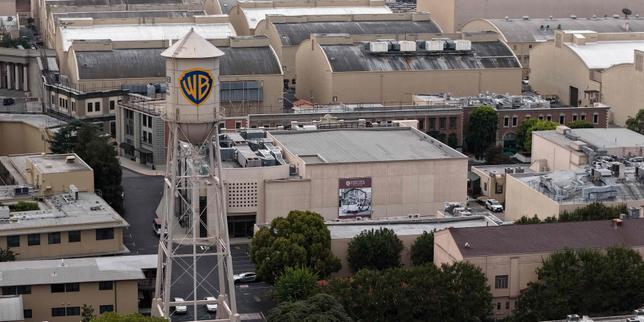
The latest seismic tremor threatening to reshape the cultural landscape is the proposed tie-up between Warner Bros. Discovery and Paramount Global. To Wall Street, it looks like a desperate, defensive play to survive the streaming wars. To the people who actually make the shows we watch, it looks like an existential threat.
The Shrinking Room
To understand why a writer like Sarah is terrified, you have to understand how a script becomes a television show. It is not a meritocracy where the best idea wins. It is a highly competitive auction.
When you have multiple buyers, you have leverage. If Warner Bros. passes on your script, you take it to Paramount. If Paramount hesitates, you tell them Universal is interested. This competition does more than just drive up paycheck sizes; it protects the integrity of the stories themselves. It prevents a single corporate entity from deciding what kind of art is allowed to exist.
Take that competition away, and the power dynamic shifts entirely.
The Writers Guild of America (WGA) saw this coming. They watched the Disney-Fox merger erase thousands of jobs and kill off projects that had been in development for years. They watched the AT&T acquisition of Time Warner, followed quickly by the Discovery merger, turn storied creative institutions into cost-cutting playgrounds.
When the news broke that Paramount and Warner were eyeing a union, the guild did not just issue a standard press release. They sounded an alarm. For them, this is not a business transaction. It is an eviction notice for the creative class.
When two massive entities merge, they do not double their output. They prune it. They look for duplicate departments, redundant staff, and "overlapping content." In plain English, that means writing rooms are shuttered, development executives are laid off, and experimental, risky shows are quietly strangled in their cribs to make room for safer, cheaper, franchise-driven intellectual property.
Twelve States and a Silent Crisis
This is not just a Hollywood story. If it were, the rest of America might look on with mild amusement, viewing it as a squabble among pampered elites in the West Coast sunshine.
But the resistance to this merger has spread far beyond the borders of Los Angeles County. Twelve state attorneys general have stepped into the arena, raising their voices in formal opposition. Why do politicians in states hundreds of miles away from a red carpet care about who owns the rights to a legacy film library?
Because the economic gravity of entertainment stretches far beyond California.
Consider the crew members in Georgia, New Mexico, and Ohio. Over the last two decades, states across the country built thriving local economies by offering tax incentives to attract film and television productions. Thousands of camera operators, makeup artists, carpenters, caterers, and local hotel owners rely on these productions to pay their mortgages.
When a merger happens, production budgets are slashed globally. A combined Warner-Paramount would inevitably consolidate its production pipeline.
A camera assistant in Atlanta, who we will call Marcus, does not care about the stock price of the newly formed entity. He cares about whether two competing shows shooting in his city are suddenly merged into one, cutting his potential working weeks for the year in half. For Marcus, the math is simple and brutal. Less competition means fewer bidding wars for his labor. It means lower wages, longer hours, and fewer safety protections on set.
The state attorneys general understand this dynamic. They recognize that antitrust laws are not just dry legal theories designed to keep prices down at the grocery store. They are shield walls built to protect local labor markets from being crushed by monopolies. When a single boardroom in New York or Los Angeles controls a vast percentage of the cultural output of the nation, they hold the power to starve local economies with the stroke of a pen.
The Illusion of the Infinite Scroll
The argument from the corporate side is always the same. They claim that in the age of Netflix, Apple, and Amazon, traditional studios must band together to survive. They paint themselves as the underdogs, fighting against the tech giants of Silicon Valley. They argue that this merger is necessary to preserve "consumer choice."
But walk through this logic for a moment.
When you open a streaming app, you are presented with an seemingly infinite scroll of colorful tiles. It feels like an abundance of choice. But this is a psychological trick. The illusion of variety hides a stark consolidation of ownership.
If three companies own eighty percent of those tiles, you do not have choice. You have a curated monoculture.
When a single company owns both the platform and the content, they control the distribution pipeline. They decide what gets promoted, what gets buried in the algorithm, and what gets deleted entirely from existence for a tax write-off—a practice we have already seen used with heartbreaking frequency over the last few years. Beautiful, completed films and series have vanished from servers, leaving no physical media behind, simply because a corporate accountant decided it was worth more dead than alive.
This is the hidden cost of consolidation. It is not just that subscription prices go up, though they inevitably do. It is that our collective cultural history becomes fragile, subject to the whims of quarterly earnings reports.
The Human Toll of the Balance Sheet
We have arrived at a strange moment in cultural history where the people who create the stories we love are treated as line items to be optimized, while the executives who manage the debt are treated as the true heroes of the narrative.
Sarah looks back at her screen. She knows the odds are against her. Even if she sells her script, the path to getting it made is narrower than it has ever been. She remembers a time when writing for television felt like joining a vibrant, noisy community of creators. Now, it feels like fighting for scraps in a colosseum where the walls are slowly closing in.
The opposition from the WGA and the twelve state attorneys general is a rare moment of alignment between the labor force and the regulatory power of the state. It is a recognition that some things are too valuable to be sacrificed on the altar of corporate consolidation.
We are not just talking about corporate market share. We are talking about the stories we tell ourselves about who we are. When those stories are filtered through a single, massive corporate lens, we all lose something irreplaceable.
The cursor keeps blinking on Sarah's screen. She starts to type anyway, because the alternative is silence. But as she writes, she cannot shake the feeling that the real drama is no longer happening on the page, but in the sterile conference rooms where the fate of her industry is being decided by people who have never written a line of dialogue in their lives.

