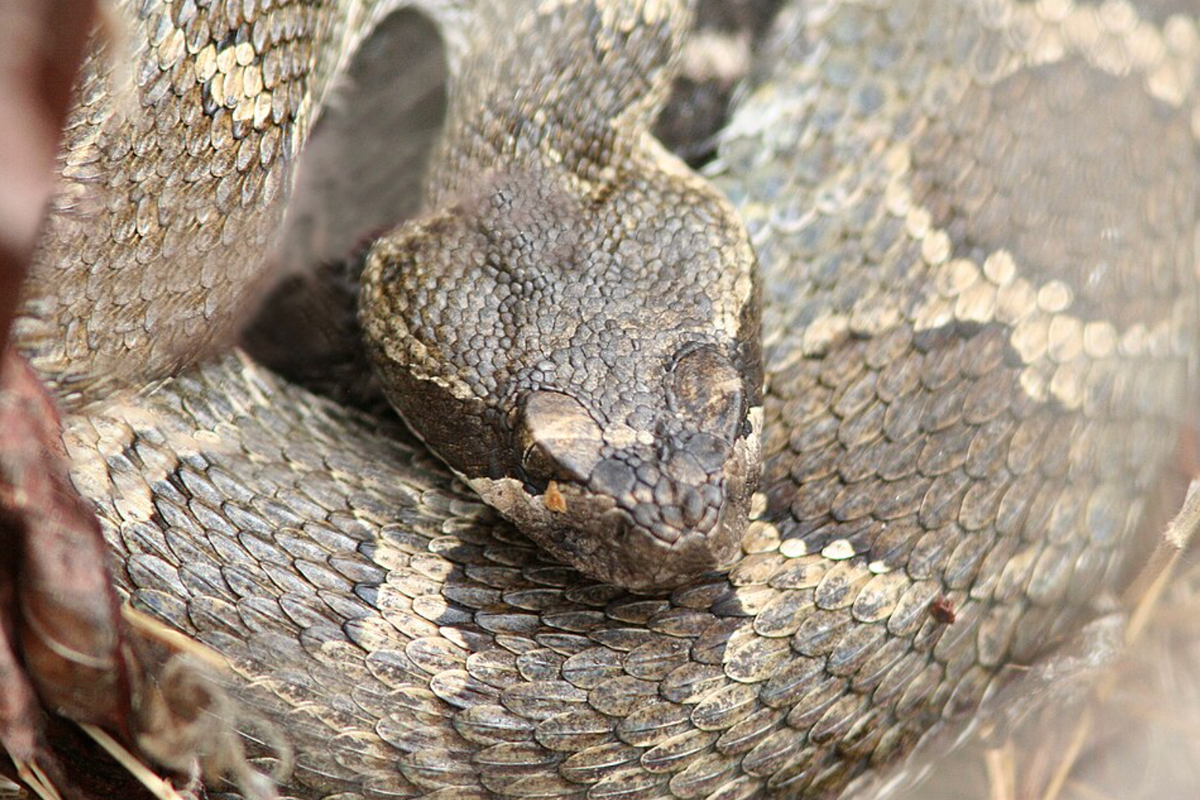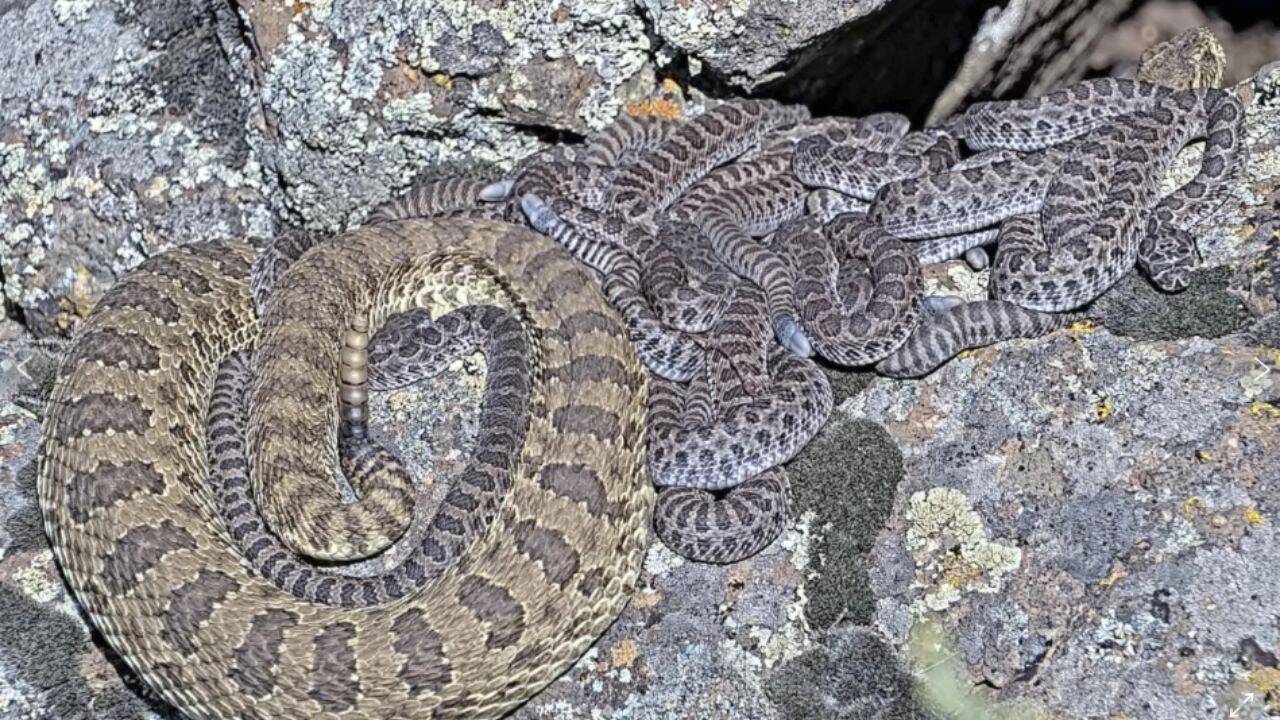
For decades, campfire lore and emergency room waiting rooms have echoed the same urgent warning. Watch out for the babies, people say. The juvenile rattlesnakes are the real killers because they cannot regulate their venom, dumping their entire lethal payload into your system in a panicked strike.
It is a terrifying narrative. It is also entirely wrong.
Toxicologists and herpetologists have quietly fought this misconception for years, but the myth remains stubborn. The reality of pit viper envenomation is governed by physics, anatomy, and biological resource management, not a lack of chemical self-control in juvenile snakes. When you look at the hard data from poison control centers and evolutionary biology labs, a much more dangerous truth emerges. Adult rattlesnakes cause the vast majority of severe, life-threatening envenomations. They do this simply because they possess massive venom glands and longer fangs capable of deep tissue delivery. The tiny volume of a baby snake's strike pale in comparison to the sheer destructive volume of a fully grown adult.
Understanding why this myth persists requires looking at how we evaluate risk, how the human body reacts to pit viper venom, and how a snake actually deploys its biological weaponry.
The Anatomy of a Strike
To dismantle the myth, we have to look closely at how a rattlesnake produces and stores its cocktail of proteins and enzymes. Venom is expensive. From a metabolic standpoint, synthesizing these complex proteins requires significant energy. A snake that wastes its venom on a non-prey item, like a human boot or a hiking dog, faces a serious problem. It is left temporarily defenseless and unable to hunt effectively until its glands replenish.
Adult rattlesnakes understand this implicitly. They often deliver what clinicians call a dry bite. This is a defensive strike where no venom is injected at all. Estimates suggest that up to 25% of all adult rattlesnake bites on humans are dry. The snake is issuing a clear, low-cost warning to a massive predator to back off.
Juvenile snakes strike defensively too. Because of their small size, they are incredibly vulnerable to birds, mammals, and even other snakes. They strike quickly and repeatedly. This frantic behavior likely birthed the myth that they lack control.
But look at the hardware. A baby rattlesnake possesses tiny venom glands, often holding only a few milligrams of fluid. Even if a juvenile dumps 100% of its stored venom into a bite, the total volume is mathematically minuscule. An adult rattlesnake, carrying hundreds of milligrams of venom, can deliver a partial metered dose that still dwarfs the entire lifetime capacity of a newborn.
Volume matters. In clinical toxicology, the severity of a bite is directly tied to the total mass of venom injected relative to the victim's body weight. The sheer volume of an adult strike overwhelms human tissue in ways a juvenile simply cannot achieve.
The Microchemistry Illusion
There is a kernel of scientific truth that myth-believers weaponize, though they usually misunderstand it. The chemistry of rattlesnake venom changes as the animal matures. This process is known as ontogenetic venom variation.
Proteases vs Neurotoxins
In many species, such as the Southern Pacific Rattlesnake (Crotalus helleri), juvenile venom actually contains a higher concentration of highly toxic fractions, including specific neurotoxins or specialized toxins that target small prey like lizards and mice. This venom is incredibly potent drop for drop.
As the snake grows, its diet shifts toward larger mammals like squirrels and rabbits. The venom chemistry adapts. The adult venom becomes richer in proteolytic enzymes and metalloproteinases. These chemicals are designed to break down tissue and begin the digestive process from the inside out before the snake even swallows its meal.
- Juvenile Venom: Often highly toxic drop for drop, leaning toward neurotoxic or specific lethal fractions to immobilize fast prey quickly.
- Adult Venom: Highly destructive, enzyme-heavy, and delivered in massive quantities designed to digest large mammals.
This chemical shift gives rise to the misunderstanding. A drop of baby rattlesnake venom might kill a laboratory mouse faster than a single drop of adult venom. But snakes do not inject single drops. They inject volumes determined by the size of their storage tanks. The adult's ability to deliver a massive volume of tissue-destroying enzymes far outweighs the concentrated potency of a baby's tiny dose.
Clinical Realities in the Emergency Department
Step into any trauma center in the American Southwest and the medical records paint a definitive picture. The patients requiring massive doses of antivenom, undergoing emergency surgeries, or fighting systemic coagulopathy are almost exclusively victims of adult snakes.
When an adult rattlesnake strikes, its long fangs penetrate deep into subcutaneous tissue or muscle. This deep delivery allows the venom to rapidly enter the circulatory or lymphatic system. The results are catastrophic. Localized tissue destruction, severe swelling that can cause compartment syndrome, and systemic bleeding disorders occur rapidly.
A juvenile strike is typically superficial. Their fangs are tiny, often barely penetrating the outer layers of human skin. The localized reaction can be painful and requires medical evaluation, but it rarely triggers the systemic crises associated with adult envenomations.
The danger of the myth is that it alters human behavior in ways that can be dangerous. A hiker who spots a small rattlesnake might underestimate the encounter, assuming that because it is small, its behavior is the only wild card. Conversely, someone might encounter a massive adult and assume that because it has better control, a bite will automatically be less severe or a dry bite. Both assumptions can lead to poor decision-making in the field.
Why the Folklore Won't Die
Human psychology loves a counterintuitive narrative. The idea that the small, seemingly helpless creature is actually the most lethal is a classic storytelling trope. It spreads because it feels like insider knowledge.
The myth also gets a boost from the way people report snake encounters. When someone is bitten by a small snake and suffers minimal symptoms, they might credit their survival to luck, or they might rewrite the narrative to claim they survived the ultimate danger. If they are bitten by a large snake and suffer severe tissue damage, it aligns with expectations, so it doesn't challenge the collective imagination.
Furthermore, identifying the age and exact species of a snake during a high-stress encounter is notoriously unreliable. A frightened witness frequently misjudges the size of a snake, inflating a small adult into a monster or mistaking a smaller species of adult pigmy rattlesnake for a baby diamondback. This muddies the public understanding of snake bites.
Immediate Protocols for Envenomation
If you encounter a rattlesnake, regardless of its size, the operational response should remain identical. Treat every encounter with the same level of caution, recognizing that the adult is the true heavy hitter.
Should a strike occur, traditional first-aid steps passed down through old manuals must be actively avoided. Do not use tourniquets. Cutting the wound and attempting to suck out the venom is completely useless and actively worsens tissue damage. Mechanical suction devices sold in outdoor stores are equally ineffective, merely damaging surface tissue while leaving the deeper venom deposits untouched. Ice should never be applied, as it localizes the destructive enzymes, concentrating the tissue damage in a small area and increasing the risk of amputation.
The single effective treatment is time to definitive medical care. Keep the affected limb at or slightly above heart level to manage swelling without restricting arterial blood flow. Remove rings, watches, and restrictive clothing immediately, as swelling can occur with terrifying speed. Get to an emergency department that stocks antivenom. That bottle of antivenom is the only tool that can neutralize the proteins wrecking your system, whether those proteins came from a panicked newborn or a five-foot apex predator.