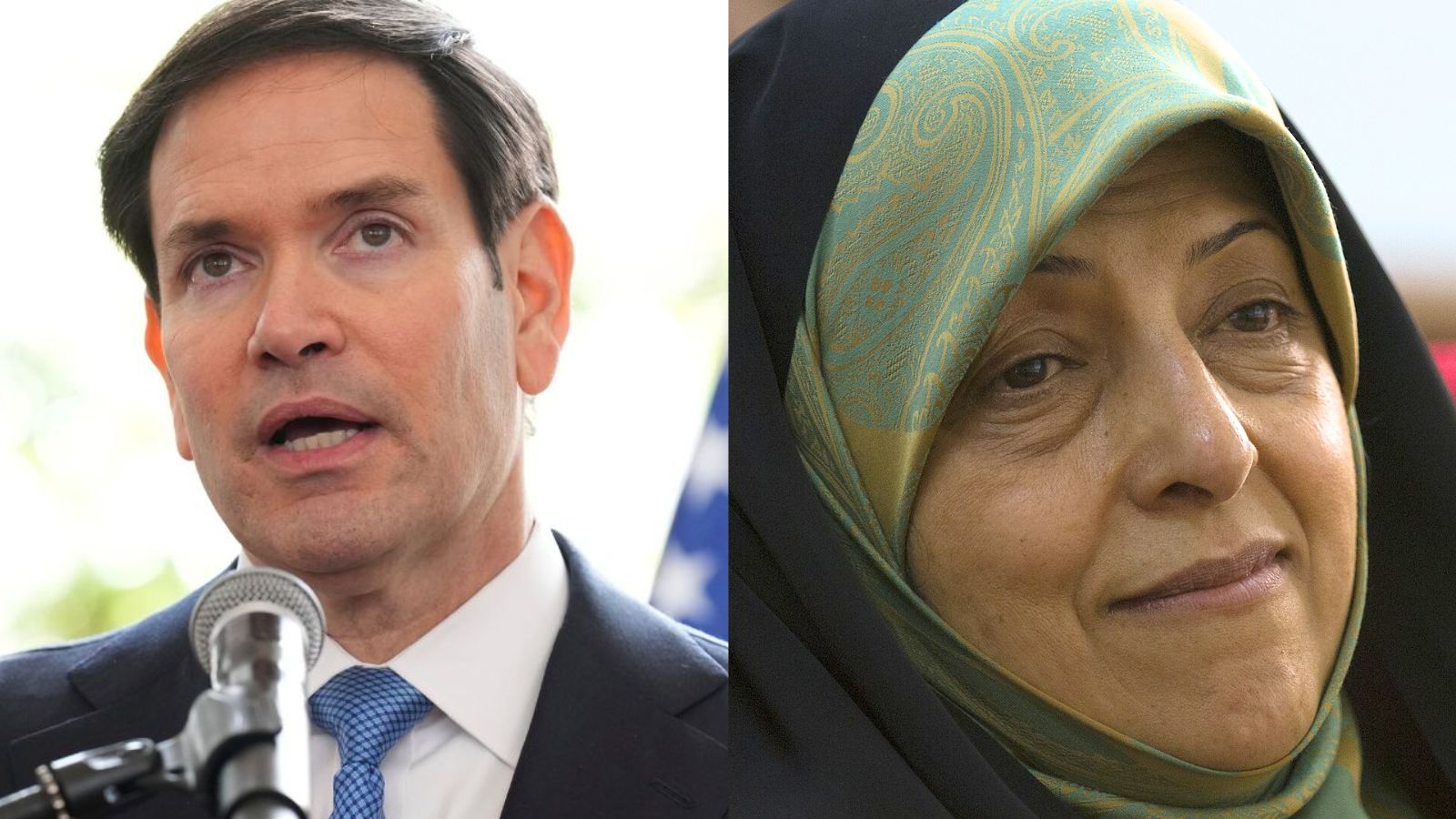
The era of the "regime princeling" living a double life in the West is coming to a violent halt. This week, federal agents from Immigration and Customs Enforcement (ICE) moved on a quiet residence in Los Angeles to arrest Seyed Eissa Hashemi, his wife Maryam Tahmasebi, and their son. The family, who had built a comfortable existence in California, now faces deportation after Secretary of State Marco Rubio took the rare step of terminating their lawful permanent residency. Hashemi is not just any foreign national; he is the son of Masoumeh Ebtekar, the infamous "Screaming Mary" who served as the public face of the 1979 Tehran embassy siege.
For decades, the children of Iran’s ruling elite have utilized a paradoxical loophole. While their parents lead chants of "Death to America" from pulpits in Tehran, the offspring often migrate to the very "Great Satan" they decry, securing elite educations and green cards. Hashemi entered the country on an F-1 student visa in 2014 and secured a green card by 2016 through the Diversity Visa Program. While his mother rose to the rank of Vice President in the Islamic Republic, Hashemi was working as a lecturer at the Chicago School of Psychology.
This crackdown signals a fundamental shift in how the State Department interprets the privilege of residency. It is no longer enough to be a law-abiding resident if your family tree is rooted in the leadership of a hostile state.
The Ghost of 1979 Returns to California
Masoumeh Ebtekar’s legacy is inseparable from the 444 days that traumatized American diplomacy. As the English-speaking spokesperson for the "Muslim Student Followers of the Imam's Line," she defended the holding of 52 American hostages, often acting as the ideological gatekeeper for the militants.
In the years following the revolution, she remained a pillar of the establishment, serving in the cabinets of multiple presidents. This proximity to power provided her family with the kind of global mobility that ordinary Iranians—often the primary victims of U.S. sanctions—could only dream of.
The irony of Hashemi’s presence in the United States was a festering wound for survivors of the hostage crisis. Many viewed his residency as a moral failure of the American immigration system. By revoking his status under Section 212(a)(3)(C) of the Immigration and Nationality Act, the current administration is asserting that the presence of such individuals is "detrimental to the foreign policy interests of the United States."
A Systematic Purge of the Iranian Elite
The arrest of the Hashemi family is not an isolated incident. It is part of a broader, more aggressive strategy to target the families of high-ranking Iranian officials. In recent weeks, the State Department has systematically dismantled the legal status of several high-profile nationals:
- The Soleimani Kin: The niece and grandniece of the late IRGC General Qassem Soleimani were recently detained in Los Angeles after their green cards were revoked.
- The Larijani Connection: Fatemeh Ardeshir-Larijani, daughter of former National Security Adviser Ali Larijani, also saw her legal status dissolved.
- The Diplomatic Mission: Several staffers and diplomats at Iran's mission to the United Nations have had their visas cancelled, stripping away the traditional protections afforded to quasi-diplomatic personnel.
This strategy operates on the principle of "collective accountability." By removing the Western safety net for the families of regime leaders, Washington is attempting to exert internal pressure on the Tehran power structure.
The Mechanism of Revocation
Revoking a green card is significantly more complex than denying a tourist visa. Lawful Permanent Residents (LPRs) typically enjoy constitutional protections and the right to due process. However, the Secretary of State possesses a "discretionary revocation" power that is difficult to challenge in court when tied to national security or foreign policy goals.
When Rubio cites a "national security threat," it often refers to the potential for these individuals to act as conduits for regime influence or simply the optics of allowing them to thrive while their parents orchestrate anti-American activities. The legal threshold for these revocations has been lowered in practice, moving from "active threat" to "symbolic liability."
The Human and Political Cost
There is a stark divide in the reaction to these deportations. Proponents argue that it is a long-overdue correction. They point to the thousands of regular Iranians who are denied visas due to "extreme vetting" while the children of the elite bypass the system. To them, this is about fairness and national dignity.
Critics, including some immigration advocates, warn that this sets a dangerous precedent. They argue that punishing children for the actions of their parents—even if those parents are high-ranking officials—undermines the American principle of individual responsibility. There are also concerns about the fate of these individuals upon their return to Iran. While they are children of the elite, their long residency in the West can sometimes make them objects of suspicion for the regime’s hardline intelligence apparatus.
The immediate impact on U.S. institutions is also notable. Universities and research centers that have employed these individuals now face sudden workforce gaps and potential legal scrutiny. Any organization employing nationals from sanctioned regimes is being signaled to perform deep-dive audits of their employees' political and familial ties.
The message from the State Department is unambiguous. The "extraordinary privilege" of American residency is no longer a permanent shield for those tied to the Iranian establishment. The border, once porous for the well-connected, has become a wall.
This is the new reality of "Maximum Pressure." It is a policy that does not stop at the water's edge or the boardroom; it follows the regime’s legacy into the suburban neighborhoods of Southern California and the lecture halls of American academia.
If you are a member of the Iranian political elite, the United States is no longer a sanctuary for your children.



