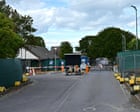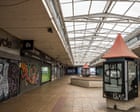
Boarded wood smells different from open brick. It carries the distinct scent of damp cardboard, stale dust, and time giving up. Walk down almost any regional high street today, and you will smell it.
Consider Arthur. For forty-two years, Arthur’s shoe repair shop sat on the corner of a bustling pedestrian precinct in northern England. He knew the precise squeak of Mrs. Henderson’s orthopedic heels from three doors away. He watched children who came in for school shoes grow up, leave for university, and return with children of their own. Then came the shift. It wasn't cinematic or sudden. It happened in slow motion. First, the butcher retired with no one to take over the ledger. Next, the local bank branch replaced its tellers with a glowing blue ATM that eventually went dark, its screen shattered by an idle boot. Finally, the heavy wooden shutters went up on the bakery. Read more on a similar issue: this related article.
Arthur didn't lock his shop because he lacked customers. He locked it because the street outside had turned into a concrete wind tunnel. Nobody lingers where there is nowhere to look except corrugated iron.
For decades, urban planners watched this decay with the detached curiosity of pathologists examining a corpse. They blamed consumer habits. They blamed the internet. They blamed cars, parking fees, and changing tastes. But blaming shoppers for abandoning high streets is like blaming a person for running out of a burning building. The environment itself became uninhabitable. Additional reporting by TIME explores related perspectives on the subject.
That is why the recent pledge of an extra £210 million directed by Andy Burnham toward regenerating boarded-up high streets is not merely an accounting exercise. It is an intervention. It represents a fundamental realization: towns do not die because people stop caring; people stop caring because towns are left to rot.
Let us look beneath the figures. Two hundred and ten million pounds sounds vast until you divide it across the sprawling geography of post-industrial towns, forgotten market hubs, and suburban centers choked by neglect. Yet money, properly targeted, acts like water on parched earth. It fixes roofs, cleans stonework, lowers business rates for independent start-ups, and—most importantly—signals to residents that their home is worth fighting for.
To understand why this matters, you have to step away from macroeconomic policy and look at the psychology of place. Humans are territorial creatures. We anchor our identities to the physical spaces we inhabit. When the local pub closes, when the chemist shuts its doors, when the library hours are cut to two days a week, a subtle psychological erosion takes place. A town tells its inhabitants a story about themselves. If your high street is a gallery of closed shutters and peeling paint, the story you hear every morning on your way to buy milk is one of decline, irrelevance, and abandonment.
Conversely, imagine the alternative. Imagine stepping out on a crisp Tuesday morning to find the baker’s ovens warm again. Imagine a community kitchen occupying the shell of an old department store, or a youth theater group rehearsing where a discount tobacco shop used to stand. This is not nostalgia. It is economic common sense. High streets were never just places of commerce. They were the original social media. They were where news was exchanged, where loneliness was quietly countered by a nod from a greengrocer, and where civic pride was forged in real-time.
Critics often argue that pouring public funds into brick-and-mortar retail is throwing good money after bad. They point to the inexorable rise of digital retail, arguing that we should let the market do its work, let old commercial districts morph into luxury flats or empty lots, and move entirely online.
This view misses the point entirely.
Online retail is efficient, yes. But efficiency is not the sole metric of a civil society. A screen cannot host a farmers' market. An algorithm cannot notice that your elderly neighbor looks unsteady on her feet. A server farm cannot provide a neutral, open, public space where a teenager, a pensioner, and a local councillor breathe the same air without having to buy a latte just for the privilege of sitting down.
When high streets die, civic life shrinks into private bubbles. We retreat behind front doors, interacting with our communities primarily through glowing rectangles of outrage and curated anxiety. The regeneration of these spaces is therefore an act of public health. It is infrastructure for human connection.
Achieving this revival requires more than just a fresh coat of paint and some hanging baskets. It demands a reimagining of space. Successful modern regeneration projects across Europe and the UK prove that town centers must pivot away from pure retail dominance toward mixed-use ecosystems. Combine independent artisan shops with residential apartments above them. Integrate green spaces, seating that doesn't actively deter resting, and cultural hubs that draw foot traffic long after the traditional 9-to-5 closing time has passed.
When you lower the financial barriers for young entrepreneurs through smart municipal investment, you invite experimentation. You get the local potter who couldn't afford commercial rents sharing a revitalized arcade with a zero-waste grocery store and a secondhand bookstore. Suddenly, walking down the street becomes an experience of discovery rather than an obstacle course of decay.
The £210 million committed to this cause will not magically erase decades of disinvestment overnight. Structural change moves at the speed of scaffolding, planning permissions, and community meetings. There will be delays, bureaucratic friction, and skeptical locals asking whether the money wouldn't be better spent elsewhere.
That skepticism is healthy. Taxpayers have every right to demand accountability. But cynicism must not become an excuse for inaction. Doing nothing guarantees the continued spread of the boarded-up aesthetic, turning vibrant communities into sleeping dormitories devoid of character or local economy.
We stand at a crossroads. We can continue down the path of hollowed-out town centers, where the only lights left on after dark are security cameras and chain-store neon. Or we can choose to rebuild the physical commons, brick by brick, grant by grant, conversation by conversation.
Arthur passed away two winters ago, just as the first serious discussions about high street modernization funds began making local headlines. He never got to see his old corner shop transformed into a community pottery studio. But as the winter wind sweeps down the empty pavement today, carrying the faint, unmistakable smell of fresh mortar and wet clay, it is hard not to think he would have approved of the noise. Progress is rarely quiet. It sounds like hammers, voices, and the stubborn refusal to let a place be forgotten.